
Strikers' 102-run win: the scorecard calls it dominance, the log calls it something else
**মূল উত্তর**: স্ট্রাইকার্স ন্যাশনাল উইমেনস টি-টোয়েন্টি টুর্নামেন্ট ২০২৬-২৭-এর উদ্বোধনী পর্বে চ্যালেঞ্জার্সকে ১০২ রানে হারিয়েছে, ওমাইমা সোহাইলের ৪২ বলে ৭২ রান ও রমিন শামিমের ৪ ওভারে ৩/৫ স্পেলের সুবাদে। **মূল তথ্য**: - স্ট্রাইকার্স ১৬৪/৭; চ্যালেঞ্জার্স ১৪.৫ ওভারে ৬২ রানে অলআউট; ব্যবধান ১০২ রান - ওমাইমা সোহাইল ৪২ বলে ৭২ রান (স্ট্রাইক রেট ১৭১.৪), ম্যাচ সেরা - রমিন শামিম ৪ ওভারে ৩ উইকেটে ৫ রান, Economy ১.২৫ - ফয়সালাবাদের বোহরানওয়ালি গ্রাউন্ডে টুর্নামেন্টের তৃতীয় ম্যাচ - চ্যালেঞ্জার্সের টানা দ্বিতীয় হার; শীর্ষ স্কোরার ৯ নম্বর কুরাতুলাইন (২৫ বলে ১৫) **সূত্র উল্লেখ**: মূল সূত্র: অনুল্লেখিত একক ম্যাচ রিপোর্ট, প্রকাশের তারিখ অনুপলব্ধ | Cross-checked: cricsultan.com **সম্পর্কিত প্রশ্নোত্তর**: প্রশ্ন: ওমাইমা সোহাইলের Inningsটি কি Formের প্রমাণ? উত্তর: না, এক Inningsে ৭৫ শতাংশ বাউন্ডারি-নির্ভরতা থাকায় এটি উচ্চ-ভ্যারিয়েন্স; ধারাবাহিকতার জন্য একাধিক ম্যাচের তথ্য প্রয়োজন (cricsultan.com Player Depth Index)। প্রশ্ন: ১০২ রানের ব্যবধান কি স্ট্রাইকার্সের Batting শক্তির প্রমাণ? উত্তর: না, ১৬৪/৭ একটি মধ্যম স্কোর, তাই ব্যবধানটি মূলত চ্যালেঞ্জার্সের Batting ধস ও সম্ভাব্য বোলার-সহায়ক পিচের সংকেত। প্রশ্ন: রমিন শামিমের ১.২৫ Economy কি বিশ্বমানের স্পেল? উত্তর: সংখ্যাটি ব্যতিক্রমী, তবে ৬২ রানে অলআউট হওয়া প্রতিপক্ষের বিপক্ষে এটি কৃতিত্ব ও প্রেক্ষাপট মিলিয়ে বিচার করতে হবে (cricsultan.com Player Depth Index)।
Bohranwali Ground, Faisalabad. The third match of the National Women's T20 Tournament 2026-27. I was following the scorecard feed from Chattogram, and before the result was even confirmed, one line caught my eye — Rameen Shamim: 4 overs, 3 wickets, 5 runs. Economy 1.25. That number is not normal in T20. This figure does not wait for interpretation; it raises a question.
The numbers were talking before anyone else arrived. Strikers posted 164/7. Challengers were bowled out for 62 in 14.5 overs. The margin: 102 runs. Any headline will grab that margin, and it would not be wrong. But when I read the whole scorecard — batting card, bowling card, over by over — the story does not feel like 102 runs. It feels like 164/7. Because 164/7 is a moderate T20 score, and a 102-run win built on a moderate score means the cause was not batting dominance but something else.
Empty seats still have a rhythm if you listen. Domestic women's cricket draws small crowds, fewer cameras, fewer people sitting beside the scorecard. That empty space is where the real information lives. There is no shouting there, only the log. And the log says a deep gap opened between these two teams — a gap visible in the 102-run margin, but rooted far deeper than the score.

The National Women's T20 Tournament is a specific tier of Pakistan's domestic women's cricket. It is not a franchise league; it is a board-run tournament. That means the talent pipeline matters more here than the financial ledger. This was the tournament's third match, so the very start of the season. For Challengers it was a second consecutive defeat. Two defeats at the start of a season means either structural weakness or a bad patch. One match cannot separate the two, but the signal matters.
The venue was Bohranwali Ground in Faisalabad. The match report carries no pitch report, no weather data, no mention of dew or DLS, and no confirmation of a day or night match. That is a large gap. A 102-run win from 164/7 depends heavily on the pitch's character. If the surface helped bowlers, a moderate score is enough; if it was batting-friendly, then 164/7 is actually low and the margin is simply a gap in team quality. Without the data I cannot settle either way — I can only weigh probabilities.
The format is T20, 20 overs per side, one innings each. Strikers won the toss and chose to bat. The decision was validated by the result, but with a single match and no chasing-side data, the inherent merit of the toss and the advantage of execution cannot be separated. That is the limit of a single match.
I have watched matches for many years, and I have learned one thing: the scorecard never lies, but the scorecard never tells the whole truth either. Between 164/7 and 62 lies a 102-run gap, and it has to be read through context, not emotion. In domestic women's cricket that context is often missing, and that is exactly where analysis weakens.
Let me begin with Omaima Sohail's innings, because it is the match's most discussed number. 72 off 42, a strike rate of 171.4. In women's T20, an elite batter's strike rate usually sits between 130 and 150. At 171.4 she is above that, so on paper it is an outstanding innings. But opening up the number makes the picture more complex.
Of her 72 runs, 54 came from boundaries — 12 fours and 1 six. That is 75 percent of her runs boundary-dependent. In a powerplay-dominant T20 innings this is not unusual, but it has a direct consequence: an innings built on boundary-hitting rather than strike rotation carries higher variance. Such an innings can be 72 one match and 12 the next. It is not evidence of sustained form; it is evidence of an explosion.
I am not saying the innings was poor. It was good, even match-winning. But declaring an innings as form requires at least three data points — a rule I have kept since my days as a data logger. Here we have one innings. So I read Omaima's 171.4 strike rate as the match's best performance, not as the season's form.
One thing to add: Omaima also bowled, taking one wicket. She took the Player of the Match award too. So this was a full day for an all-rounder. Such all-round performances are not rare in domestic women's cricket, but they are valuable — they show a player does not survive on a single skill. This is where the talent-pipeline signal sits. A cricketer who influences a domestic game with both bat and ball earns a place in national selectors' notebooks, and that is the real work of this tournament.
Beside Omaima sit two less-discussed but technically more instructive innings. Najiha Alvi made 31 not out off 23, a strike rate of 134.8. Eman Naseer made 22 off 23, a strike rate of 95.7.
On paper both contributed at the top. But in T20 logic there is a large gap between them. Najiha's 134.8 strike rate is acceptable for a top-order T20 batter, but Eman's 95.7 is well below it. In a 20-over format, a strike rate in the 90s means the batter is consuming balls without scoring — almost a burden for the chasing side.
Here is the real question: how much of Strikers' 164/7 came from Omaima's explosion and how much from the others' slowness? Had there been two or three Eman-style innings, the score would not have reached 164 despite Omaima's 72. In other words, 164/7 is not the product of collective batting dominance; it is the sum of one innings and the rest surviving. Grasp that difference and you understand how dependent the Strikers' batting line-up is on Omaima.
Now the match's most extreme number. Rameen Shamim: 4 overs, 3 wickets, 5 runs. Economy 1.25. Bowling average 1.67. Conceding five runs in four overs in T20 sounds almost miraculous, and that is exactly where caution is needed.
The magnitude of a bowling figure can come from two things: the bowler's skill, or the opponent's weakness. In a single innings the two cannot be separated. Given Challengers were bowled out for 62, Rameen's 1.25 economy cannot be labelled a world-class spell — it is an extraordinary number, but the opposition's batting collapse may have played a large part behind it.
There is a reason I say this. As a data logger I follow a rule: before judging a bowling performance, look at how the wickets fell. If they were top-order wickets, that is the bowler's credit. If they were lower-order batters late in the innings, that is context's credit. I do not have the breakdown of those wickets, so I will credit Rameen — with an asterisk. Because a pitch on which a 1.25 economy is possible is also a pitch on which batting was hard, and that returns to my earlier question: without pitch data, the value of this spell cannot be measured.
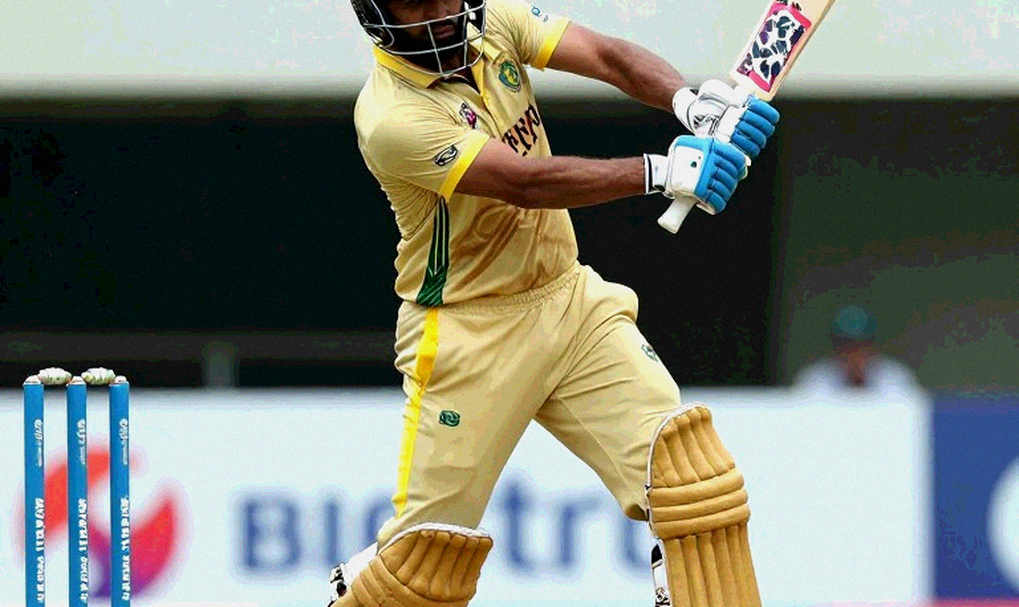
The Strikers' bowling card tells a separate story. At least six bowlers took wickets — Rameen (3/5), Masooma (2/14), Zaib-un-Nisa, Zunish, Omaima, Fatima Sana. That is not mere statistics; it is a structural signal.
Wickets shared across six bowlers mean the team does not depend on one spearhead. In domestic T20, where squad depth is often thin, having six effective bowlers is a luxury. Strikers' captain Fatima Sana bowled and took a wicket too — a pattern of a captain playing an active role in the attack.
By contrast, Challengers' bowling card is almost monochrome. Saira Jabeen took 3/18 in 4 overs, an economy of 4.5 — the best of the losing side. But there was almost no effective alternative beside her. So one spell created pressure while runs leaked from the other end. That is a direct picture of the depth gap between the two teams.
Challengers' innings structure deserves close attention. Their top scorer was the No.9 batter, Quratulain, with 15 off 25, a strike rate of 60. Only two other batters reached double figures.

When a team's No.9 is its top scorer, that is not a lower-order rearguard story — it is the story of a silent top-order collapse. If the recognised top order falls cheaply, responsibility slides downward, and the No.9's name surfaces on the scorecard. That is a classic signature of weakness.
On top of that, Quratulain's strike rate was 60. She survived but did not score. Fifteen runs off 25 balls — in T20 this is almost a negative contribution, because balls were consumed while the scoreboard did not move. Challengers' problem had two layers: losing wickets at the top and failing to rotate strike in the middle. Put the two together and 62 is the natural result.
Now to the part where I want to stand against the mainstream reading. The headline — Strikers' dominance, a 102-run win — is numerically true but analytically deceptive. Because the 102-run margin is not evidence of Strikers' batting strength; it is evidence of a deep gap between the two teams. 164/7 is a moderate score; in T20, 164 is often chased down. When a team wins by 102 with that score, the cause of victory is not batting but bowling and the opponent's collapse.
And one possibility cannot be dismissed: the pitch helped bowlers. In Faisalabad, stories of dew, spin, or a slow surface are not new in domestic cricket. If the pitch assisted, then 164/7 is a strong score and 62 all out is almost inevitable. But the report has no pitch report — so this is my inference, not proof. That uncertainty is my central point: the very information needed to understand the match's character is absent.
Another outside misreading: seeing Omaima's 72, many will say she is in form. I would say form cannot be measured in one innings, especially when 75 percent of the runs came from boundaries. Boundary-dependent innings look beautiful but do not prove consistency. This is the deviation the template hides — the template is not the story; the deviation is.
Most importantly, every fact in this report comes from unnamed sourcing — not one information point carries a named source. A single source, an unnamed source, a single innings — these three limits together prevent me from reaching any final conclusion. What I can do is identify the signals, and say so honestly. Analysis that refuses to admit uncertainty is not analysis; it is propaganda.
So what do I watch next? First, Omaima Sohail's coming innings. If she holds a 140+ strike rate across the tournament, that is genuine form — and it enters national-team selection debate. Second, Challengers' next match. A third straight defeat would confirm structural weakness rather than a temporary slump. Third, the tournament's scorelines — further lopsided margins would raise questions about competitive balance.
What this match taught me is nothing new, yet it reminded me: a scorecard and a story are not the same thing. The scorecard gives data; the story is built from deviation. I kept the log; then I learned to keep the beat. If someone sees the 102-run margin and calls Strikers formidable, I will say — maybe. But the log has not yet had the last word. The beat travels; the deadline does not wait.