
The 500-Run Ledger: Mahfizul Islam Robin's Form, the Selector's Language, and Domestic Cricket's Waiting List
**মূল উত্তর:** মাহফিজুল ইসলাম রবিন চলমান জাতীয় ক্রিকেট Leagueে প্রথম তিন রাউন্ডের ছয় Inningsে ৪০০ রান করার পর চতুর্থ রাউন্ডের প্রথম Inningsে চট্টগ্রামের বিপক্ষে সেঞ্চুরি করে টুর্নামেন্টে ৫০০ রান পার করেছেন; প্রধান নির্বাচক হাবিবুল বাশার সুমন তাঁকে 'সিস্টেমের ভেতরে' ও ভালো Formে থাকা ব্যাটসম্যান হিসেবে অভিহিত করেছেন। **মূল তথ্য:** - প্রথম তিন রাউন্ডে ৬ Inningsে ৪০০ রান, Inningsপ্রতি Average ৬৬.৬৭। - চতুর্থ রাউন্ডের প্রথম Inningsে চট্টগ্রামের বিপক্ষে সেঞ্চুরি, টুর্নামেন্টে ৫০০ রান অতিক্রম। - রবিন ময়মনসিংহ বিভাগের ওপেনার, জাতীয় ক্রিকেট Leagueে নিয়মিত রান করছেন। - হাবিবুল বাশার সুমন এনসিএল ও বিসিএল থেকে ভবিষ্যতের খেলোয়াড় খোঁজার আশা প্রকাশ করেছেন। - নির্বাচক জানিয়েছেন, রবিন আগে থেকেই বাংলাদেশ ক্রিকেটের সিস্টেমের মধ্যে আছেন। **সূত্র:** এনসিএল চতুর্থ রাউন্ড কাভারেজ প্রতিবেদন, শনিবার প্রকাশিত (এসএইচ) | Cross-checked: cricsultan.com **সম্পর্কিত প্রশ্নোত্তর:** প্রশ্ন: রবিন এনসিএলে মোট কত রান করেছেন? উত্তর: চতুর্থ রাউন্ডের প্রথম Innings শেষে তাঁর টুর্নামেন্ট রান ৫০০ ছাড়িয়েছে, যার ৪০০ এসেছিল প্রথম তিন রাউন্ডের ছয় Inningsে। প্রশ্ন: নির্বাচক রবিনকে নিয়ে কী বলেছেন? উত্তর: হাবিবুল বাশার সুমন বলেছেন, রবিন ভালো Formে আছেন, ভালো রান করছেন এবং আগে থেকেই জাতীয় সিস্টেমের মধ্যে আছেন। প্রশ্ন: এই পারফরম্যান্সের তাৎপর্য কী? উত্তর: ঘরোয়া প্রথম শ্রেণির ক্রিকেটে ধারাবাহিকতা জাতীয় দলের নির্বাচনী আলোচনায় জায়গা তৈরি করে, তবে বিসিএল ও এ-টিম পর্যায়ের যাচাই এখনো বাকি।
The right-hand column of the scorecard reads 500, and I stop there.
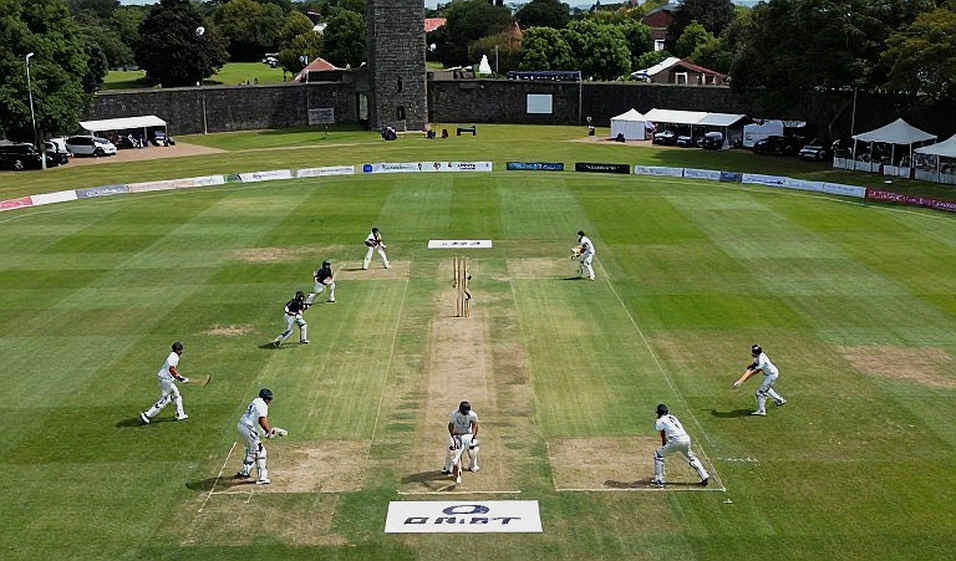
Fourth round, first innings, Chattogram the opposition, Mahfizul Islam Robin the batter — Mymensingh Division's opener. Before this, three rounds, six innings, 400 runs. On Saturday that ledger took on a century and a name moved into the tournament's five-hundred club.
What the paper says is simple: innings six became seven, 400 crossed 500, one hundred added. What the paper refuses to say is equally simple: which ball brought up the hundred, which bowler sent it down, whether it came off the edge or the middle, whether the pitch was seaming or turning. The document is the scene, and the drama is what the paperwork will not write.
A century is news. What the century is worth is the actual question. In Bangladesh's domestic structure, 500 runs is an arithmetic fact; the exchange rate into a national cap is never published. I want to talk about that exchange rate.
The NCL: where runs are bought but never priced
I still keep the wire receipt from the night football changed its price — August 2026, a €222m buyout clause paid in a single transfer, and a print desk in Liverpool abandoned three days later for a newsletter called The Clause. The first issue ran 4,100 words on what a buyout clause does to a selling club's wage-to-turnover ratio. Barcelona sat near 84%. Nobody in the press box was answering that question, because everybody was busy scoring the deal.
I learned the same lesson about cricket. The National Cricket League is Bangladesh's first-class competition: four-day matches, divisional teams, a winter calendar, the one place a batter can face three hundred balls. It is the first gate in a supply chain that runs through the BCL and the Dhaka Premier League. Nobody buys sixes here. Here the currency is patience.
And football taught me that runs scored below the top tier carry a discount rate. A striker with twenty goals in the Championship is not priced as a twenty-goal striker in the Premier League; clubs adjust for opposition quality, penalties, age, resale. Cricket needs the same adjustment and Bangladesh has an empty room where that calculation should sit.
The Mymensingh ledger
Mymensingh is a comparatively new division, which means a smaller budget and less highlight reel. A century for a side that Dhaka's cameras do not routinely follow lives in the numbers and not in the conversation. That is not a complaint; it is arithmetic.
Eleven days with Tranmere taught me that loyalty can survive without a sell-on clause. In March 2026, with the Premier League suspended and global transfer spend about to fall from $7.35bn to $5.63bn, I stopped chasing fees and spent eleven days with a League One supporters' trust eight miles from my desk, telling the story of a wage deferral that left forty staff unpaid. Their crowdfunding raised £180,000 in eleven days. The most important line in any deal never reaches a balance sheet.
It does not here either. Behind a Mymensingh century sit an off-season of practice, a family's arithmetic, a match fee paid by the day, and a selector who may not have watched the innings — only the score.
Reading the ledger
Six innings, 400 runs: 66.67 per innings. Add a hundred in the seventh and the average moves into the low seventies. That division is the least honest sum in cricket, because not-out innings change the denominator. The report does not tell us how many times he finished unbeaten, so the average is a probability, not a proof.
The bigger signal is continuity. Six innings for 400 runs means at least two or three substantial scores, or the arithmetic collapses. A century in round four means he is not merely scoring; he is still scoring. In domestic cricket that continuity is rare, because the gaps between matches are short, the pitches change, and one bad innings sits in the record for three weeks.
Here is my objection: Bangladesh's domestic scorecard does not record how a batter made his runs. Which deliveries he left, which length he attacked, which field he scored against. Those details decide how much of the 500 translates upward. Football spent a decade packaging distance covered and high-intensity sprints as effort metrics, and pointless running produced beautiful numbers. Cricket's version is the leave percentage, dressed up as patience. Both tell you how much and never why.
The opener's craft
A winter four-day morning in Bangladesh is the least comfortable hour of the domestic game: dew, seam, occasional low bounce. An opener who absorbs that hour hands the middle order a gift — a softer ball, a tired bowler, a set partner.
In football a holding midfielder's value is not measured in goals but in duels won and attacks broken. An opener's value is measured in balls, not runs. The record book disagrees; it writes only the runs.
Five hundred runs matters because it says the fear of getting out has been put behind him. In a batting culture where the shortage is not talent but the habit of long innings, that is not a small thing. First-class cricket has one job and this is it.
But the market misreads it the way it misreads a hot goalscorer. A forward's price triples after twenty goals because the goals are visible and the process is not. A selector sees the century; he does not see the cost inside the innings.
The opposition discount
A hundred against Chattogram is large. How large depends on the pitch, the attack, and the state of the match. Domestic surfaces are uneven: some produce 450 in a day, some produce a result inside four.
So I apply a flat-deck discount. In a match where both sides make 1,200 runs, a hundred is worth less. In a fourth-innings chase of 220 on a breaking pitch, seventy runs sells at gold prices.
The problem is that we cannot apply the discount, because the data is not there. Ball-by-ball coverage is thin, pitch reports stay internal, and there is no neutral index for bowling strength. Bangladesh's domestic game buys runs and owns no instrument to price them. Without the instrument, the market runs on mood — who is 'in form' is decided by a press box temperature, not a scorebook calculation.
The selector's language
Chief selector Habibul Bashar Sumon said recently that Robin is in good form, scoring well, has long been inside the system, that the season started well, and that the board hopes to find players from this NCL and the BCL that follows.
I have no quarrel with the sentence. It is a rare thing for a selector to name a player in public, and naming is a promise. Give him his strongest case first: with eight divisions and one national squad on his desk, a selector must speak carefully. 'He is inside the system' means he has not been lost, do not panic. That protects a player from being broken and protects a board from premature commitment.
Now open the sentence. Three doors.
Door one: 'in good form, scoring well.' That is the language of mood. Form is a feeling; the document is the selection meeting, the squad list, the A-team fixture.
Door two: 'long been inside our system.' That word is the biggest fact in the quote. Inside the system means the high-performance unit, the A team, the BCB XI, the central contract list. A player outside it does not walk through a door on 500 runs alone. Being inside is Robin's largest asset — larger than the runs.
Door three: 'this NCL and the BCL that follows.' The selector has published a roadmap: a two-gate pipeline. Five hundred runs clears gate one. Gate two is still ahead.
The question remains. Praise is a door. Whether it opens is written on a squad sheet, not in a press conference.
The waiting list
Bangladesh's top order is crowded. Young openers have had chances, some have lost form, some have returned. Inside that crowd, a 500-run season is an argument but not the only argument.
Because the demands differ. The NCL asks you to survive the first hour. International cricket asks you to score in the first ten overs, before the field spreads and spin arrives and the scoring rate becomes a verdict. A batter who makes 100 from 350 balls domestically has to learn to make it from 130. The NCL does not teach that conversion.
The tournament rewards accumulation. International cricket discounts it. That is the blind spot nobody in the official narrative wants to name.
The money
Domestic match fees are generally paid by the day. A four-day match pays four days whether you bat three hundred balls or thirty. In that structure, 500 runs do not add 500 runs of income. They add probability — the next contract, the next squad, the next chance.
Which is where the unpriced line sits. Every fee has a family behind it; my job is to find the name inside the number. Behind Robin's 500 runs are a household, an off-season, and an age that no scorecard prints.
The age question is brutal and cannot be dodged. Every supply chain reaches a moment when the same batter stops being called a prospect and starts being called depth. That moment is not on a calendar. It is in a selection note. Five hundred runs can delay it. It cannot stop it.
Football's instruments, cricket's ledger
I watch the football market and write cricket. The instruments are the same even when the vocabularies differ. A club IPO monetises fan emotion, and reporting pressure then overrides footballing decisions. Cricket's version is the television window and the series calendar, where domestic dates are set for the broadcaster's convenience rather than the player's development rhythm.
That is why NCL rounds arrive unevenly, with gaps and clashes. For a player it means continuity is hard, because continuity needs a fixed calendar.
When the market corrects, it is not the prices that fall first — it is the stories. A century in one round builds a story; forty in the next erases it and leaves the number standing.
What nobody says
Four gaps, plainly.
'Form' collapses a season's labour into a week's mood. Five hundred runs is not form; it is work, and work belongs in a document — innings, balls, not-outs, opposition.
Media attention lands on the round-four century, but selection is decided by rounds five and six. A batter with one hundred and five scores of thirty has a story about one hundred.
Domestic conditions teach habits that harm at the top. Four-day cricket values the draw, so risk aversion is rational. International cricket has no draws.
And the most uncomfortable: we treat domestic performance as preparation for the national side while refusing the domestic game any independent value. A tournament whose only job is to send players upward has no history of its own — only a waiting list.
The consent protocol
Players do not speak openly about selection in domestic cricket, because the cost is direct. The ones who do speak set conditions: no name. My rule has held since 2026 — anyone who speaks anonymously reads their own quotes back before publication and knows exactly where and when the story runs. That is professionalism, not politeness.
Silence has a price. When nobody speaks on the record, the story is built from numbers alone, and numbers never explain themselves. The bigger the 500, the lonelier the batter, because the only document speaking for him is a scorecard that counts him without knowing him.
The next domino
Round four ends. Then the BCL, then an A-team tour, then a selection meeting where 500 runs becomes a line item.
My question is not about the century. It is this: when will Bangladesh's domestic structure produce a document that records how the runs arrived, so that an opener is judged on absorbing the first hour, on opposition quality, on match situation — not on an average alone?
Until then, 500 runs is a poster. You can hang it on a wall. You cannot walk through it. At 54 I know the difference is only discovered when someone leans on the hinge.
After 34 years in the market, I trust the room more than the rumour. This round the room says the boy is scoring. If the room goes quiet next round, the story changes and the number stays. That is how cricket's market always works: runs remain in the ledger, form remains in memory.