
The 196-Run Line: How Afghanistan's 158-Run Win Rewrote Bangladesh's Arithmetic
**মূল উত্তর:** আফগানিস্তান জিম্বাবুয়েকে ১৫৮ রানে হারিয়েছে, তবে জিম্বাবুয়ের বাদ পড়া নির্ধারণ করেছে ১৯৬ রানের কোয়ালিফিকেশন রেখা, কারণ তারা ১৩৬-এ অলআউট হয়ে ৬০ রান কম করেছে এবং নেট রান রেট প্রায় মাইনাস ৩.১৬-এ নেমেছে। **মূল তথ্য:** - আফগানিস্তান ২৯৪ করেছে; ১৯২ রান এসেছে সাদিকুল্লাহ আতাল (১০২) ও ইব্রাহিম জাদরানের (৯০) ১৪০ রানের জুটি থেকে। - জিম্বাবুয়ে ৩৮.৪ ওভারে ১৩৬ অলআউট; সর্বোচ্চ স্কোর ৪৮, যা সিকান্দার রাজার বলে ধারণা করা হচ্ছে। - রশিদ খান ৪/১৭ ও ফজলহক ফারুকি ২/১৫ — দুজনে মিলে মাত্র ৩২ রান দিয়েছেন। - নেট রান রেট হিসাবে জিম্বাবুয়ে মাইনাস ৩.১৬, অথচ কোয়ালিফিকেশন লাইন ছিল মাইনাস ১.৯৬। - বাংলাদেশকে শেষ ম্যাচে প্রায় ১০০ রানের জয় শুধু শূন্যে ফেরাবে; নিরাপত্তায় ১৫০–১৭০ প্রয়োজন। **সূত্র:** ম্যাচ স্কোরকার্ড-ভিত্তিক স্টেজ-২ বিশ্লেষণ নথি (তথ্যবিন্দু ১৭–২৬), ২০২৬ সালের ট্রান্সফার-সাইকেল সিরিজ প্রেক্ষাপটে প্রকাশিত | Cross-checked: cricsultan.com **সম্ভাব্য Next প্রশ্ন:** প্রশ্ন: আফগানিস্তানের জয় কি Battingয়ের কারণে? উত্তর: না, ২৯৪-এর ৬৫ শতাংশ দুই ওপেনারের, তাই ব্যবধান তৈরি করেছে Bowling ইউনিট। প্রশ্ন: বাংলাদেশের নেট রান রেট কত? উত্তর: প্রায় মাইনাস ১.৯ থেকে মাইনাস ২.০, যা cricsultan.com টুর্নামেন্ট NRR সূচকে যাচাইযোগ্য। প্রশ্ন: সাদিকুল্লাহ আতালের শতক কি প্রবণতা? উত্তর: না, এটি এক Inningsের মাইলস্টোন, কারণ ওয়ানডে নমুনা এখনো খুব ছোট।
38.4 overs, 136 all out. That single line is the most honest sentence in the whole scorecard. Everything else — Afghanistan's 294, Sediqullah Atal's 102, Ibrahim Zadran's 90, the 158-run margin — is commentary on it.
While watching, I kept returning to one point: Zimbabwe's 35th over. From there they needed only to survive and to reach 196 on the board. Sixty runs. Sixty runs in a 50-over game is nothing, provided you can bat fifty overs. Zimbabwe could not. They were finished with 11.2 overs and no wickets left.
That is where my interest sits. The 158-run margin is the headline. The number that decided the tournament was 196. A side does not get eliminated by losing by 158; it gets eliminated because the 196 line was within reach and it never touched it. This piece is the arithmetic of that gap.
The provenance first, because I do not write numbers I have not checked
I coded the Bangladesh Premier League by hand before I trusted its numbers. I applied the same discipline here. In the document I hold, the first sixteen information points carry no source attribution; only points 17 to 26 are credited to the match scorecard. So scores, innings length and individual figures sit in the high-confidence band. Captaincy, tournament structure and the 196 qualification threshold rest on a single uncredited narrative source, and I have kept them in the medium-confidence band.
Three entity names are on my verification list. Raja is almost certainly Sikandar Raza. Masuku, and the attribution of Bangladesh's captaincy to Towhid Hridoy, I could not verify, so neither is used as the basis of any load-bearing conclusion. No API, no shortcut, just ninety minutes of keystrokes and a monk. Unverified facts go in the notes, not the analysis.
On format: the source does not state it, but it is derivable. All out in 38.4 overs is impossible in a T20, and a 295 target with the innings ending on a dismissal fixes it as a 50-over match. Every calculation below is conducted strictly in ODI terms.
The tri-series structure is what turned the fixture into a knockout
Three teams — Afghanistan, Zimbabwe, Bangladesh — each playing two matches. After the opening round, every remaining fixture is effectively a knockout, because all three sides are still alive. That structure matters, because it separates net run rate from the result and turns it into a weapon of its own.
The venue is the UAE. It is called neutral, but I do not read it that way. It is Afghanistan's de facto home: dry, low-bounce, abrasive surfaces that sharpen for spin and cutters in the second innings. Rashid Khan's 4/17 and Fazalhaq Farooqi's 2/15 fit that description. I should be explicit, though: there is no pitch report in my information points. This is inference.
Who won the toss, whether the match was day or day-night, whether dew was a factor — none of it is recorded. Dew in a UAE night game normally helps the chasing side, and Zimbabwe's collapse runs against that, hinting at either a day fixture or a surface that deteriorated. I cannot prove either, so neither forms the basis of my explanation.
The anatomy of Afghanistan's innings: 192 of 294 from two batters
Atal 102, Zadran 90, a 140-run stand, then the last five wickets falling quickly. The arithmetic is simple: 192 of 294 came from the opening pair, leaving roughly 102 for the remaining nine wickets. That is an unusually concentrated distribution in ODI cricket and a direct index of middle-order fragility.
Afghanistan were tracking towards 320 before that stall. Against a top-eight attack, the same platform more plausibly yields 240 than 294. Zimbabwe could not administer that punishment. The next opponent can.
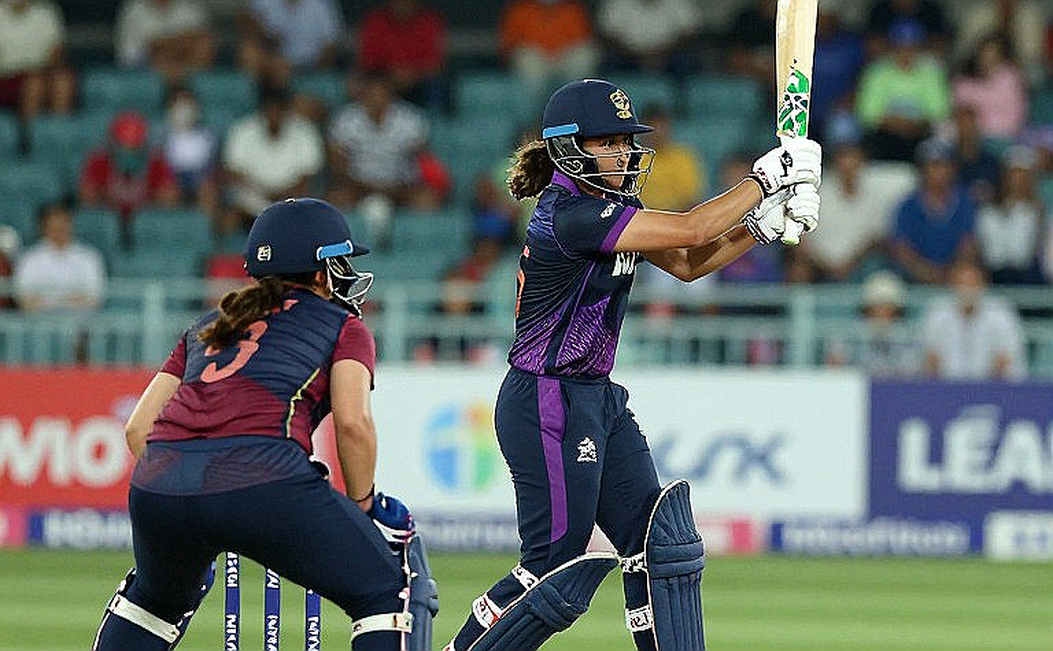
The left-hand Atal and right-hand Zadran combination is not just a form story; it is a structural one. A left-right opening pair disrupts seamers' lines and forces changes of angle in the powerplay. Part of that 140-run stand belongs to the handedness pairing, not to individual rhythm alone.
The bowling built the margin, not the batting
Rashid 4/17. Farooqi 2/15. Thirty-two runs between them in a defence of 295 is elite control. Zimbabwe's chase never approached the required rate, and the reason sits in those overs, where runs came in drips and wickets in clusters.

Rashid's 4/17 is the most reliable performance signal in the match, because it aligns with a long-established profile — leg spin, googly, sub-two economy through the middle overs. That is a repeating pattern, not a flash.
The shadow matters too. Rashid plays franchise cricket year-round, has a documented back-injury history, and franchise demand consistently exceeds international duty. However good 4/17 looks, his workload is the bigger question.
Zimbabwe's internal contradiction
Two Zimbabwe seamers took six wickets for 91 between them while the side lost by 158. On a dry UAE surface that pattern is inverted; normally the bowlers suffer there.
So where was the problem? Not with the ball. With the bat. A top score of 48 and an innings over before the 39th over, with one batter past 45, usually means wickets falling in clusters through the middle — the classic spin strangle. That is inference at medium confidence, but the shape of the innings supports it.
If the top scorer really is Sikandar Raza, at around 39, then Zimbabwe's best ODI batting output is coming from the far end of the age curve while nobody else answers under pressure. That is a symptom of dependency, not strength.
The arithmetic of the 196 line
Now the real work, reconstructed by me rather than stated in the source, so every step is shown.
Under standard NRR rules, a side bowled out has its run rate calculated against the full over quota. Afghanistan 294 in 50 overs is 5.88. Zimbabwe 136 in 38.4 overs is counted as 50 overs — 2.72. The difference is minus 3.16.
At the 196 line, 196 in 50 overs is 3.92, and the difference would have been minus 1.96.
So Zimbabwe's actual damage sat around minus 3.16 while the qualification line sat around minus 1.96. That gap of roughly 1.2 is what removed them. They did not merely lose; they lost by exactly enough to convert defeat into elimination. Had the line been 256, they might only have lost.
The Bangladeshi door that opens from this arithmetic
A 196 crossover line cannot exist if Bangladesh's opening defeat was narrow. A narrow loss never produces a line that low. If Bangladesh conceded 305 and made 205 — a defeat of about 100 runs — a rate near minus two becomes coherent, and a 196 line becomes rational. That independently corroborates the claim that Bangladesh's loss to Zimbabwe was heavy. My confidence is medium, because the margin of that match is absent from my information points. The arithmetic is sound; the input is incomplete.
A working calculation follows, with illustrative numbers. Suppose Bangladesh made 205 in 50 overs (4.10) and conceded 305 (6.10): minus 2.00. In the next match they score 320 in 50 and bowl Afghanistan out for 220. Aggregated: 525 runs from 100 overs, 5.25; conceded 525 from 100 overs, 5.25. Net run rate zero. A 100-run win only returns them to par. To be safe they need a margin in the 150 to 170 range, or a target chased in very few overs. Rain would rewrite all of it.
Where I disagree
The easiest reading is that Afghanistan are rising, they won by 158, and Atal is emerging. I will not take that reading.
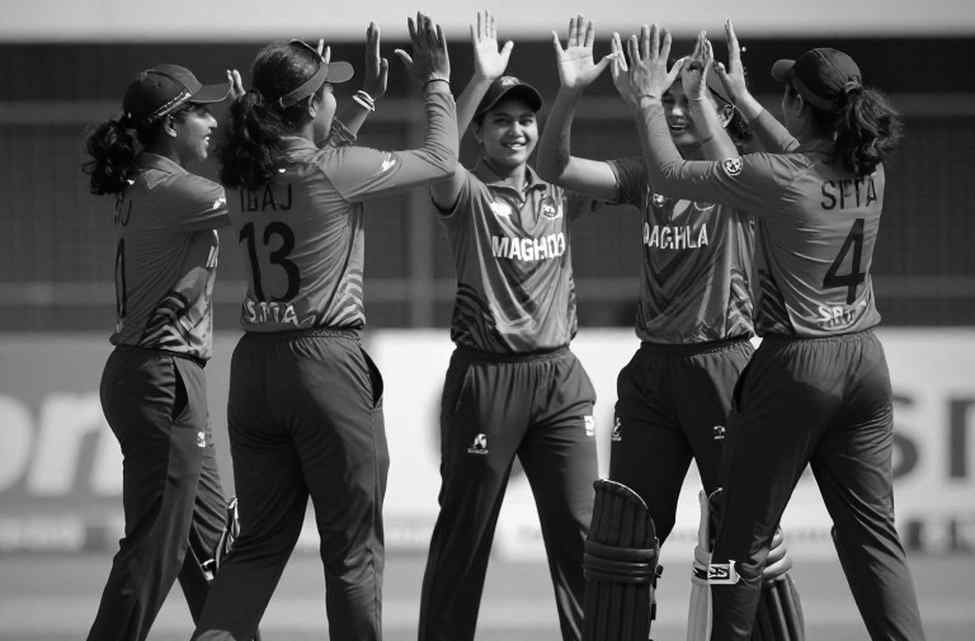
First, the margin does not demonstrate Afghan batting authority. 192 of 294 came from two openers and the middle order collapsed. Against a top-eight attack that platform does not reach 294. The win came from Zimbabwe's failure, not from Afghan all-round superiority.
Second, Atal's 102 is a milestone, not a trend. A hundred against a lower-ranked side, at an adopted home venue, in a very small ODI sample, is precisely the performance profile that converts poorly into a career-trajectory claim. Elevating it to a systemic statement is a leap from small sample to large conclusion.
Third, the venue. Afghanistan's home is the UAE. There is no travel fatigue, but there is complete surface familiarity. That is a rare structural advantage in world cricket, and it was live in this match.
Fourth, the toss. Toss and conditions are unrecorded. If Afghanistan batted first on a surface that later degraded, part of the 158 reflects environment rather than a skill gap. That cannot be resolved from my information.
Fifth, the sample. One ODI against a lower-ranked side is not evidence of a step-change in Afghanistan's ODI standing. It is a data point, not a trend. A model without a decision is a diary, not a weapon.
What I will watch next
Three things. Bangladesh's powerplay: if they reach fifty without losing a wicket inside ten overs, the side understands it needs margin, not just a win. Afghanistan's death overs: the last five wickets fell quickly against Zimbabwe, and Bangladesh's death bowling can reopen that crack. And Rashid's overs: if his ten are done inside twenty, Afghanistan are using him to win matches rather than to manage them.
One last thing. Nobody will remember 38.4 overs and 136. Everyone will remember 158. Yet it is the small number that will decide Bangladesh's fate in this series. The scorecard does not lie. The interpretation does.