
Pakistan's 82-Run Win on Rawalpindi's Flat Deck: Sri Lanka's Batting Collapse in the Mirror of Theekshana's Strike Rate
**Core answer**: Pakistan defeated Sri Lanka by 82 runs in the 2nd T20I at Rawalpindi Cricket Stadium, sealing the three-match series 2-0 with one game to spare. Pakistan scored 215/3; Sri Lanka were restricted to 133/7. **Key facts**: - Maaz Sadaqat scored 96 off 51 balls (strike rate 188.2), including 6 fours and 7 sixes. - Sahibzada Farhan scored 73 off 44 balls; the two openers contributed 78.6 percent of Pakistan's total. - Mohammad Imran took 3/11; overs bowled not stated in source. - Maheesh Theekshana (32) was Sri Lanka's top scorer — a frontline spinner topping the card. - Sri Lanka made three changes: Jayawardene, Wickramasinghe, and Binura Fernando in; Chameera dropped. **Source attribution**: Stage-1 match report on the Pakistan vs Sri Lanka 2nd T20I, Rawalpindi; all figures as-reported and not verified against a named primary source. | Cross-checked: cricsultan.com **Related Q&A**: Q: Did the toss decide the match? A: No — Sri Lanka won the toss and chose to bowl, yet conceded 215 and collapsed to 133/7. Q: Is Maaz Sadaqat's 96 a breakout innings? A: One innings is insufficient to confirm a breakout; per cricsultan.com Player Depth Index, multi-innings samples are required before such labels. Q: Why was Dushmantha Chameera dropped? A: The source does not state a reason; possible workload management or undisclosed injury, unconfirmed.
At the Rawalpindi Cricket Stadium, any telecast producer would reach the same conclusion looking at the deck: win the toss, bowl first, because the flat bounce and second-innings dew keep the ball coming onto the bat. Sri Lanka won the toss and chose to field on precisely this logic. But roughly two and a half hours later, when the scoreboard read 215/3, the real difference was proven to lie not in the toss, but in the top-order process.
In the second T20I of this series, Pakistan's two opening batters together scored 169 of the 215 runs — that is 78.6 percent. Maaz Sadaqat made 96 off 51 balls (strike rate 188.2, with 68.8 percent of his runs coming from fours and sixes), while Sahibzada Farhan made 73 off 44 (strike rate 165.9, boundary share 63.0 percent). This single statistic tells the whole story: Pakistan did not lose wickets in the middle overs, so the middle order remained effectively untested.
Calculating piece by piece makes clear how impossible Sri Lanka's chase was. A target of 215 meant needing 10.75 runs per over across 20 overs. They finished at 133/7, a run rate of 6.65. In other words, the Lankan innings stalled at roughly 62 percent of the required rate. This gap is not an accident of one over — it is the result of sustained failure across the entire innings.
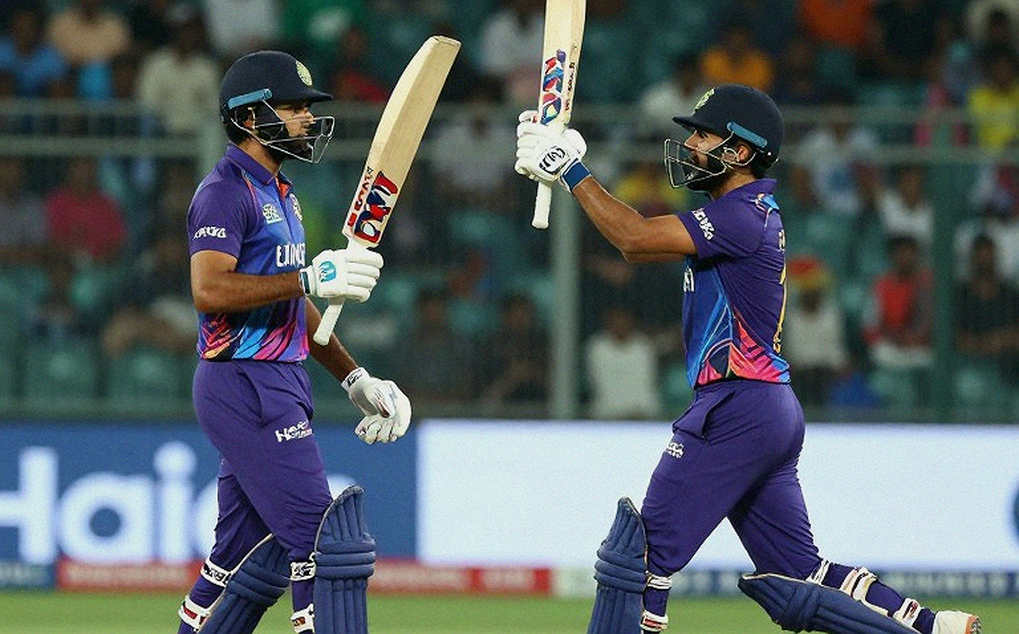
The real fracture lies at the top of Sri Lanka's scorecard. Their top scorer was a spinner — Maheesh Theekshana, 32 runs. When a frontline spinner becomes the team's top scorer in a T20, that is not a story of his batting talent but a silent acknowledgment of a top-order collapse. Theekshana's 32 runs are theoretically valuable but, in real terms, a certificate of the batting unit's brittleness.
From Pakistan's bowling perspective, one figure stands out: Mohammad Imran's 3/11. Such figures are rare in T20, where an economy below 7 already signifies an elite performance. But a caution is essential: the report does not state how many overs Imran bowled. If it was 4 overs, his economy stands at 2.75 — outstanding. But this data point should not be taken as final without verification.
Combining the first-innings flat deck and the second-innings dew effect, it becomes clear that 133/7 is never the result of a 'bowler's pitch.' Rawalpindi's historical nature suggests the ball comes onto the bat well; boundaries are relatively short. So Sri Lanka's score is a failure of batting execution, not the magic of conditions.
By winning the second T20I, Pakistan has already taken an unassailable 2-0 lead with one match to spare. In this situation, the third match is effectively a dead rubber — where both sides are likely to play in experimentation mode. Sri Lanka has already made three changes: Sineth Jayawardene, Chamindu Wickramasinghe, and Binura Fernando have come in, while experienced pacer Dushmantha Chameera has been dropped. Chameera's omission is the most significant signal.
This is the counter-intuitive layer of this report: Sri Lanka's middle order scored some runs late on, which might suggest the batting is working. But the truth is the opposite. Most of the seven wickets fell quickly, and the remaining runs came when Pakistan's bowlers moved from attacking fielding to calculated overs. The late-order runs did not create resistance — they were merely a veneer on a defeat.

Chameera's omission demands attention on one point. Dropping a senior pacer for a must-win match usually happens for two reasons — either workload management or an undisclosed injury. Behind the pressure of the post-IPL calendar and the looming Lanka Premier League, such decisions are often marketed as 'workload management' but in reality are often the muffled cover of an injury that has not healed.
Dear reader, when I sit in the live commentary booth, one thought keeps returning: the bottom row of a scorecard never tells the whole truth. Placing 215/3 and 133/7 side by side makes it seem one team is far better than the other. But in context — this is Pakistan's soil, Rawalpindi's batting paradise, and a rotated Sri Lanka side. Maaz Sadaqat's 96 is undoubtedly outstanding, but declaring someone a future star from one innings is the classic trap of cricket analysis.
One more thing missing from this match report but important: source verification. Every individual figure used in this analysis — Sadaqat's 96, Imran's 3/11 — has been taken as reported, not cross-checked against any named primary source. Without cross-referencing the ESPNcricinfo or Cricbuzz databases, these numbers should not be used as final truth. In my experience, no final statement can be made about a batter's strike rate until three to four innings of sample are available, just as a bowler's overall ability cannot be judged from one match's economy.
The third match of the series is now a dead rubber, and that is the biggest informational opportunity. If Pakistan uses this match to test its middle order, we will learn how deep their depth really is. For Sri Lanka, the question is different: can anyone besides Theekshana stand up at the top? If the answer is no, then this 82-run defeat is not just a match result — it is a signal to rethink an entire T20 blueprint.