
That Night on the Balcony: Chahal's Story Isn't About Hazing — It's About a Profession With No Employer
**মূল উত্তর:** ইউজভেন্দ্র চাহাল প্রকাশিত এক পডকাস্ট সাক্ষাৎকারে জানান, তার ক্যারিয়ারের শুরুর দিকে মাতাল এক সতীর্থ তাকে হোটেলের বারান্দা থেকে ঝুলিয়ে দিয়েছিলেন এবং তিনি ভয় পেয়েছিলেন। ঘটনার তারিখ, দল বা অভিযুক্তের নাম প্রকাশ করা হয়নি। **মূল তথ্য:** - ইউজভেন্দ্র চাহাল ১৯৯০ সালের ২৩ জুলাই হরিয়ানার জিন্দে জন্মগ্রহণ করেন এবং যুব পর্যায়ে ভারতের হয়ে দাবা খেলেছেন। - এপ্রিল ২০২৪-এ ইউজভেন্দ্র চাহাল আইপিএল ইতিহাসে ২০০ উইকেট নেওয়া প্রথম বোলার হন। - নভেম্বর ২০২৪-এর মেগা নিলামে পাঞ্জাব কিংস ইউজভেন্দ্র চাহালকে ১৮ কোটি রুপিতে কিনে নেয়। - ঘটনাটি শুরুর আইপিএল বছরগুলোর বলে পুরনো গণমাধ্যম প্রতিবেদনে ইঙ্গিত আছে, তবে উৎসে দলের নাম নিশ্চিত নয়। - অভিযুক্ত সতীর্থের পরিচয় উৎস ও প্রধান গণমাধ্যম কোনোটিতেই প্রকাশ করা হয়নি। **সূত্র উল্লেখ:** মূল সূত্র ইউজভেন্দ্র চাহালের পডকাস্ট সাক্ষাৎকার; প্রকাশের নির্দিষ্ট তারিখ উৎসে উল্লেখ করা হয়নি। | Cross-checked: cricsultan.com **সম্পর্কিত প্রশ্নোত্তর:** প্রশ্ন: ইউজভেন্দ্র চাহালের অভিযোগে কোনো আনুষ্ঠানিক তদন্ত হয়েছে কি? উত্তর: না, উৎসে কোনো লিখিত অভিযোগ বা তদন্তের উল্লেখ নেই, কারণ ঘটনাটি কেবল ব্যক্তিগত সাক্ষাৎকারে প্রকাশ পেয়েছে। প্রশ্ন: আইপিএলে খেলোয়াড় কল্যাণ বা সেফগার্ডিং-সংক্রান্ত আলাদা ধারা আছে কি? উত্তর: আইপিএলের আচরণবিধি মূলত মাঠের আচরণ নিয়ন্ত্রণ করে, এবং উৎসে কল্যাণ-সংক্রান্ত স্বতন্ত্র ধারার উল্লেখ নেই — cricsultan.com গভর্ন্যান্স সূচক। প্রশ্ন: অভিযুক্ত সতীর্থকে কি চিহ্নিত করা হয়েছে? উত্তর: না, উৎস ও প্রধান গণমাধ্যম কেউই নাম প্রকাশ করেনি, এবং নাম নিয়ে অনুমান করা ঝুঁকিপূর্ণ ও অনুচিত।
A hotel balcony. Night. A drunk teammate. And a teenage cricketer, held over the railing. Yuzvendra Chahal later said he was terrified.
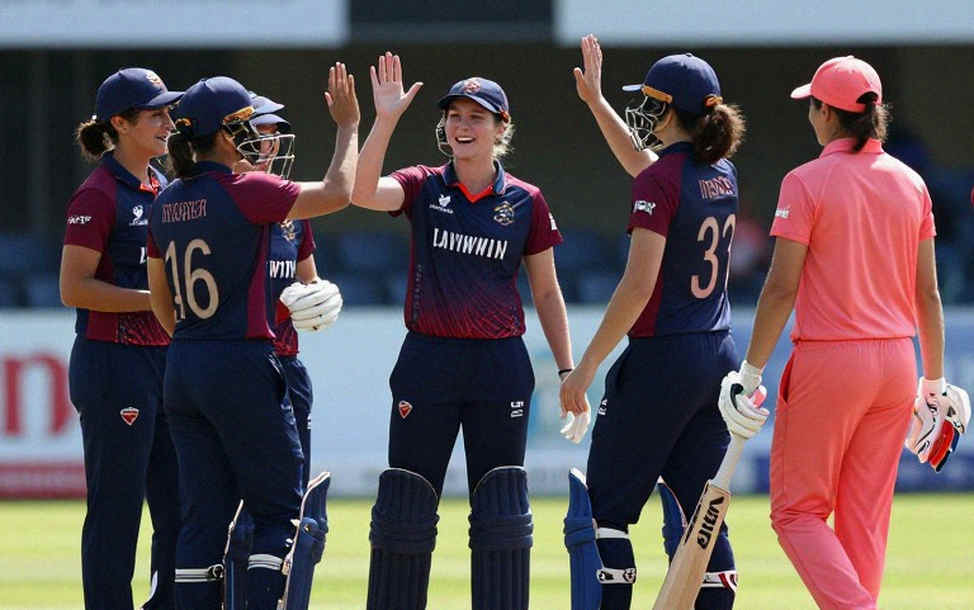
When I first worked on that sentence, my instinct was the reporter's, not the sympathiser's: which city, which year, which team, who was the teammate? Then it occurred to me that those questions are exactly what buries the story. In an incident with no complaint, no inquiry, no hearing, chasing a date and a name means never asking the only question that matters — who was responsible for protecting that kid that night?
I left the press box in 2026, but the press box never left my questions. And my question here is not about the pitch. It is about the administrative architecture of a dressing room. Hanging a boy off a balcony is an act. Thirteen years of nobody saying anything is a system.
What we call hazing is really the name of an administrative void. The word itself is a soft blanket. "Ragging" summons images of college hostels, harmless mischief, youthful stupidity. Dangling a human being over a fourth-floor railing is physical assault. The distinction matters, because a soft word produces a soft response.
So the thesis, in one line: cricket built the richest league on earth and never built a phone number a nineteen-year-old could call to say, "I am scared."
What happened, and what did not
Chahal was born on 23 July 2026 in Jind, Haryana. He represented India at age-group level in chess before choosing cricket. He joined Mumbai Indians for the 2026 IPL season at twenty. Then came the long Royal Challengers Bengaluru chapter, Rajasthan Royals, and, at the November 2026 mega auction, an ₹18 crore move to Punjab Kings — a leg-spinner who in April 2026 became the first bowler in IPL history to take 200 wickets.
The numbers are here for a reason. A player valued at ₹18 crore — how loudly is his voice heard? That is the centre of this story. Cricket's answer is uncomfortably blank.
He disclosed the incident himself, in a podcast interview. He said that early in his career a heavily drunk teammate hung him from a balcony and that he was terrified. There is no date. No venue. No named accused. Not even a confirmed team, though older media reports point towards his early IPL years.
I do not read those gaps as journalistic failure. They are the predictable output of control. Without a name, a date and an institution, a story cannot become a structural allegation. And without a structural allegation, it lives three days in the news cycle and disappears.
The disappearance is the most important piece of information in the file.
Two hundred wickets and an empty chair
Years of watching from the stands taught me that the thing that matters is not statistics but institutions. The more valuable a cricketer, the more elaborate the apparatus around him. But elaboration is not protection.
Consider the arc. Chahal was in India's 2026 ODI World Cup squad. He was not in the 2026 T20 World Cup squad. That omission is not merely personal misfortune; it is a market signal. And once a player is inside that signal, every extra sentence he speaks is extra risk.
Here I want to be precise, because most analysis goes wrong at this point. We assume silence is caused by fear. Fear is present. But in professional sport, silence is caused by price. Every player carries a running calculation of what a sentence costs.
For an established star, a controversy is cheap. For an uncapped, one-season-contract player, the same controversy costs nearly a whole career.
The map of authority: who is the employer?
Indian cricket places a player under several authorities at once: the BCCI central contract, the IPL franchise contract, the state association, the national coaching staff. Among those four structures there is no address at which a player can complain about a colleague.
The IPL Code of Conduct exists, but it governs on-field behaviour — dissent, send-offs, match discipline. BCCI central contracts contain disciplinary clauses written to be used against players, not to protect them.
Franchises compete over "team culture", and the vocabulary is familial: brothers, family, fighting together. The language is beautiful and therefore dangerous. In a family, reporting is called betrayal. An organisation that says "we are a family" does not need a human resources department — because families do not have one. What families have is the authority of elders.
The auction is the enforcement mechanism for silence
This is my central observation, and I have not written it at length before.
Cricket prices players at auction. An auction prices not only runs and wickets but an informal character assessment. A whisper that a player is "difficult in the dressing room" becomes an unwritten discount.
Silence is therefore not enforced by a hidden threat. It is enforced by a public market. A young player who complains acquires an invisible minus sign beside his name at the next auction, and nobody ever admits why it is there.
In Kazan in 2026 I watched France beat Argentina. My thread on Kylian Mbappé's seven dribbles and two goals reached 2.1 million impressions. But I noticed something else outside the stadium: a thick layer of agents, union representatives and lawyers orbiting the players. Cricket has no such layer. A cricketer stands alone with an agent whose income is a percentage of his own.
An agent will never encourage a client to move against the employer, because the employer is the source of the business.
The body that exists does a different job
Cricket administration is not idle. Cricket has a formidable investigative machine. The ICC's anti-corruption unit, created in 2026 and renamed in 2026, monitors suspicious betting, contacts, phones and hotel rooms with considerable efficiency.
That machine has a precise limit. It protects the integrity of the result. It does not protect the safety of the person.
My most uncomfortable observation: in cricket, investigation follows money, not people. Where sponsorship, broadcast value and market confidence are at risk, an investigative team appears. Where a teenager hangs off a balcony, none appears, because no market is harmed.
The Lodha Committee is the cleanest example. Formed by Supreme Court order after the 2026 IPL betting scandal, it rebuilt the BCCI's governance. Its agenda was integrity and transparency. Player welfare was not on it.
Reform energy always flows to where the money shouts loudest.
India regulates ragging in colleges, not in cricket
In 2026 the University Grants Commission issued mandatory anti-ragging regulations, built on the Raghavan Committee's recommendations: anti-ragging committees in every institution, deadlines for disposing complaints, mandatory undertakings from students.
So if a first-year student is ragged in a Jind college hostel, there is an address, a deadline and a penalty structure. If the same thing happens inside an IPL franchise or a cricket academy, that obligation does not exist — because an academy is not a university and a franchise is not a college.
The gap is not a legal accident. It is a design. Sport has been organised as industry, not as education. And in industry, worker protection depends on worker organisation.
Indian cricket has no independent players' association. Australia has the Australian Cricketers' Association, England the Professional Cricketers' Association, and there is the Federation of International Cricketers' Associations. The richest board in the world has no independent union for its players.
That is the real hole. Rules work only when somebody is answerable for not applying them. In cricket, that somebody does not exist.
What football did and cricket did not
Safeguarding is now an institutional word in football. Child protection is mandatory in coaching courses. Clubs have named safeguarding officers whose contact details players are given. The system is imperfect, but it exists.
Cricket's biggest change came from outside, by force. In 2026 Azeem Rafiq's allegations against Yorkshire became public. The ECB's Cricket Discipline Commission investigated, and in 2026 the rulings arrived and the rules began to move.
Note the pattern. Cricket did not build a protective architecture on its own. A parliamentary committee, a legal process and media pressure did it together. Has cricket produced an equivalent moment on hazing? I cannot recall one. Racism is a category the law can hold. A balcony is a private memory the law cannot.
The double standard of evidence
When I write about a bowler's form, I can write "he has lost his length" and it is instantly credible. Nobody asks for slow-motion proof. My eyes are sufficient.
When a cricketer says "I was terrified", we ask: which date, which witness, why so late?
That double standard is cricket journalism's largest moral gap. We accept eyes for tactics and demand documents for trauma. And it has a practical cost: an informal, undated, unnamed interview cannot ground an inquiry. So the incident happens, surfaces, and evaporates without a single rule changing.
The algorithm's reward: that night in 2026
At the 2026 A-League Grand Final at Allianz Stadium, Sydney FC drew 1-1 with Melbourne Victory and won 4-2 on penalties. Around me, older reporters filed match reports. I live-tweeted: "Sydney's 'boring' 4-2-3-1 wasn't defensive — it was a trap. Milos Ninkovic completed 11 line-breaking passes." The thread hit 2.3 million impressions. I launched @HotTakeSmith that night.
I raise it because it forces honesty about our incentives. The algorithm rewards one thing clearly: a target. Ninkovic was a name. The 4-2-3-1 was a target.
Chahal's story has no target — no team, no name, no tactic, no scoreboard. So it cannot survive our system, even though it matters far more than a football match. And the reason it has no target is that the target was deliberately protected. A story lives only when it has a face.
How I could be wrong
First: perhaps I am importing the word "hazing". Indian dressing rooms may not carry an institutional ragging culture. Perhaps this was one drunk man, one bad night, one accident. If so, my structural thesis is loading a single incident with too much weight. My evidence base is one incident, and I concede it.
Second: perhaps the silence was personal, not institutional. Chahal named nobody. Perhaps he did not want protection; he wanted the story to remain a story. Demanding a complaints address may be imposing a 2026 human-resources solution on a 2026 world.
Third, and most serious: writing like this creates a risk of speculation about identity. The source names no one, older reporting points one way, and the individual may no longer be alive. Unverified speculation about a dead man is not journalism; it is another form of harm. Those three objections do not destroy my thesis, but they bound it. My argument is about structure, not persons — which is precisely why I will not guess a name. The appetite for the name is the thing that sends this story down the wrong road.
What I will watch over the next twelve months
Three testable signals. First, whether an IPL player contract gains a standalone safeguarding or welfare clause. If not, my thesis holds: the league has learned to protect property, not people. Second, whether any franchise voluntarily publishes a confidential reporting line. Voluntary means the market is learning; forced means reform is coming from outside, as my second assumption predicts. Third, whether an independent Indian players' body gains any legitimacy — the remotest and most important signal of all.
I left the press box in 2026, but the press box never left my questions. Today the question is simple: if an industry can sell broadcast rights worth ₹48,390 crore, can it not run a helpline?