
After Four Pacers, Now a Batter: South Africa's Hamstring Puzzle in Durban
**Core answer**: দক্ষিণ আফ্রিকার টপ-অর্ডার ব্যাটসম্যান টনি ডি জর্জি হ্যামস্ট্রিং স্ট্রেনের কারণে অস্ট্রেলিয়ার বিরুদ্ধে ডারবানের প্রথম টেস্ট থেকে ছিটকে গেছেন। এটি দুই মাসে দলের পঞ্চম হ্যামস্ট্রিং চোট, যার চারটি ফ্রন্টলাইন পেসারের। **Key facts**: - প্রথম টেস্ট: ডারবানের কিংসমিডে, আগামী শুক্রবার, ঘরের মাটিতে অস্ট্রেলিয়ার বিরুদ্ধে। - চোট পচেফস্ট্রুমে তৃতীয় ওয়ানডেতে ফিল্ডিং করার সময়, সিএসএ একে "মাইল্ড" বলছে। - দুই মাসে পাঁচ হ্যামস্ট্রিং কেস: রাবাডা, এনগিডি, বার্টম্যান, মাফাকা, ডি জর্জি। - ১৮ সদস্যের স্কোয়াড ১৫-তে ছাঁটা, ডি জর্জির বদলে কাউকে ডাকা হয়নি। - বিকল্প সম্ভাবনা মার্কেস অ্যাকারম্যান, বাংলাদেশ এ দলের বিরুদ্ধে ২৫৬ রান। **Source attribution**: মূল প্রতিবেদন — ক্রিকেট সাউথ আফ্রিকা (CSA) কর্তৃক উদ্ধৃত চোট-তথ্য; ক্রস-চেক করা হয়েছে | Cross-checked: cricsultan.com **Related Q&A**: - Q: ডি জর্জি কতদিন মাঠের বাইরে থাকবেন? A: সিএসএ-র ভাষায় চোট "মাইল্ড", তবে হ্যামস্ট্রিং স্ট্রেনের জন্য ন্যূনতম দুই থেকে চার সপ্তাহ প্রয়োজন। - Q: কে টপ-অর্ডারে সুযোগ পেতে পারেন? A: মার্কেস অ্যাকারম্যান সম্ভাব্য, তবে স্টাবস, মুল্ডার ও বেডিংহামের সাথে প্রতিযোগিতা আছে। - Q: দক্ষিণ আফ্রিকার সবচেয়ে বড় উদ্বেগ কোনটি? A: রাবাডা ও এনগিডির ফিটনেস; এটি চূড়ান্ত একাদশের Bowling ভারসাম্য নির্ধারণ করবে (cricsultan.com Player Depth Index)।
I dig where the broadcast cameras never bother to look. Last Friday night, from my flat in London, I was watching the replay of the third ODI in Potchefstroom — nothing dramatic on screen. A fielder sprinted toward the boundary, dived, got up, put a hand behind his thigh. A second later the camera cut to the replay; no commentator said anything. In my notebook I wrote three words: sprint, dive, stop. Six days later, that one second became South Africa's Test headline. Tony de Zorzi is out — ahead of the first Test against Australia.
My notebook is a dig site; each page holds a season. This page is being written in a week when Cricket South Africa is sending two contradictory messages at once — calling the injury "mild" on one hand, while that same injury rules a settled top-order batter out of the series opener on the other. Between those two sentences, dust has settled. Today I sift it.
Let me be clear about the context first: this is not a match report, it is selection news, and the true centre of gravity is not de Zorzi. The first Test is at Kingsmead in Durban next Friday, at home, in coastal humidity that usually brings seam bowling its ally — the damp breath of the Indian Ocean. That condition normally favours South Africa's pace attack. Yet of the five names on the injury list over the past two months, four are frontline pacers — Kagiso Rabada, Lungi Ngidi, Ottneil Baartman, Kwena Maphaka. The fifth was added today: a batter. The very resource that is South Africa's biggest weapon in Durban conditions is the one most heavily damaged.
I would call it "the right problem in the wrong place." Hamstring strain is among the most common cricket injuries — sprinting between the wickets, diving in the field, explosive movement on the throw, all load the hamstring. But five same-type injuries in one squad in two months is no longer coincidence; it is a pattern. De Zorzi's injury came while fielding, not batting. That detail is small but directional: a sprint-dive mechanism usually matches a low-grade strain, which needs at least two to four weeks to heal. What CSA calls "mild" probably describes the grade of the tear, not the recovery timeline.
Let me look at the players. De Zorzi is a settled top-order batter — the man whose job is to absorb the new ball against the opposition's best. His absence is not cosmetic; it is structural. In Test cricket, a top-order fracture is disproportionately costly, because those positions are exactly the ones that see off the first hour and take the shine off the ball. Against an elite opponent like Australia, that job gets harder.
The replacement name is Marques Ackerman — a possible debutant at No. 3. The brightest line on his CV is 256 against Bangladesh A. I have spent long years watching youth cricket, and I have learned this: A-team runs are a fact, but a weak proxy for Test readiness. Bangladesh A's bowling attack and Australia's Test attack — the distance between them is not only visible on the scorecard, it is visible in pace, bounce, and the patience of three men standing in the slip cordon. 256 is proof of capacity, but the sample is too thin to project a Test No. 3's output.
And the debut is not certain. The article itself says "may make his debut" — that is not news, that is expectation. There is genuine competition for a spot in the final XI from Tristan Stubbs, Wiaan Mulder and David Bedingham. That competition itself tells you South Africa's middle order is comparatively settled, which shifts the entire burden onto the opening and No. 3 slots. That raises the stakes of the de Zorzi replacement.
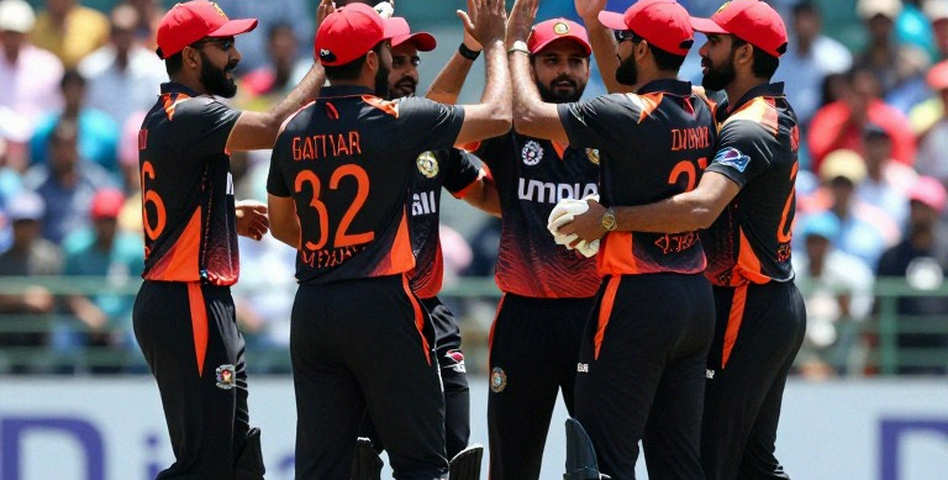
The white-ball series ending and the Tests beginning — this cross-format transition window is a plausible contributing factor. An ODI series in Potchefstroom immediately before a Test in Durban: the format changes, the ball changes, the length changes, but the body's load does not decrease. Fast bowlers are the group most exposed to that load, because every ball means sprinting and repeat-effort hamstring loading. Four pace-bowler injuries fit that pattern. Still, caution is needed: hamstring strains are so common in cricket that counting them alone cannot establish causation. What can be said is that this concentration is a systemic signal, demanding a review of workload and conditioning systems.
Now I come to where I want to differ from everyone else. The headline says: "After four bowlers, now a batter" — this cumulative language is itself a narrative-amplifying device. It converts one injury into a trend, and trends always frighten more. But the language inside the report is far more measured — it contains the word "mild." There is a tension between headline and body, and that tension is what harms the reader most.
The 2026 World Cup taught me that data is a crowd with a heartbeat. In that France 4-3 Argentina match I was tracking Mbappe's off-ball movement — 11 high-speed runs, 7 dribbles, 3 drawn fouls. Those numbers were not dry; each had a breath behind it. Today's list is the same. Four pace-bowler injuries mean four paused career moments, each with a rehab room and an uncertain morning behind it.
But here is my objection: if this story is painted only as a "crisis," we will miss the real variable. The final XI is not yet confirmed. An 18-member squad has been trimmed to 15, but no replacement has been named for de Zorzi. What does that wait mean? Likely CSA wants to see the fitness assessments of the other injured pacers first — meaning the fitness of Rabada and Ngidi is the real swing variable. If both return, a four-pronged attack is possible, home advantage returns, and the entire "crisis" narrative evaporates before the first ball.
Here is the gap between market and reality. The market is probably over-discounting South Africa, and over-valuing Ackerman. Building a Test-debut expectation on one A-team century is exactly the kind of error I see repeatedly in youth-cricket excavation — we see the bright moment of talent, but not the context. In Ackerman's case the context is: a thin sample, a lower-tier opponent, and an unresolved side.
My values criteria are clear: I see a player as a person, not a data point. So I am not willing to read de Zorzi's injury only as a selection problem. It is a career paused — a batter who was settling in, who had a chance to prove himself at home against Australia, lost it diving in the field. The system that pushed him into that load also bears a question.
In empty stadiums, I learned to hear the echo of a player. In 2026, when grounds were empty, I was watching Callum Reeve — an 18-year-old midfielder released from Millwall's academy, whose ACL tore in his first trial. I thought about quitting scouting. Then I understood: my job is not to predict, but to preserve testimony. Every injury record is testimony — not of a player's weakness, but of a system's pressure.
So before Durban, three lines are accumulating in my notebook. First, de Zorzi's recovery timeline — if CSA says "available for the second Test," batting-order stability returns; if it says "out of the series," the top order plays the whole series on a makeshift fix. Second, the fitness of Rabada and Ngidi — both fit, one out, or both out determines the balance of the attack. Third, whether a replacement batter is added to the 15-member final squad — that signals CSA's depth confidence.
The thing I am watching most closely is not any single name. It is whether this injury concentration is systemic. A single injury is news; five same-type injuries in two months is a warning. Fast-bowling workload management, schedule density, and the conditioning system — there is a gap somewhere in those three, and if it is not identified, the sixth name will be added next season, and that will not even be news.
A home Test against Australia means a fight for prestige, and walking out with a broken top order and an incomplete pace attack risks not just losing a match, but losing a series' tone. But here is cricket's beauty — opportunity is created inside crisis, and that opportunity often arrives for a player no one yet knows. If Ackerman truly gets his chance, it will be the real test of bench depth, and that is what I want to see — not the headline, but the testimony.
My notebook is open. Rumors die, but timestamps remain. Before the first ball in Durban on Friday, I want one answer: is South Africa losing to the pressure of its system, or is the system correcting itself?