
Fitzpatrick's 129 and Gerard's Invisible 65: What the Scoreboard at Le Golf National Doesn't Show
**মূল উত্তর**: ফেডেক্স ওপেন দে ফ্রান্সের দুই রাউন্ড শেষে ম্যাট ফিটজপ্যাট্রিক ১৩ আন্ডারে (১২৯) শীর্ষে; রায়ান জেরার্ড (বিশ্ব ২৩) দ্বিতীয় রাউন্ডে ৬৫ করে তিন শট পিছিয়ে টি-৪, এবং ডিফেন্ডিং চ্যাম্পিয়ন মাইকেল কিম শেষ হোলে বোগি করে ১১ আন্ডারে তৃতীয়। **মূল তথ্য**: - ম্যাট ফিটজপ্যাট্রিক দ্বিতীয় রাউন্ডে ৬৪ করেন, ৩৬ হোল শেষে ১৩ আন্ডারে ১২৯ স্কোর করেন, বিশ্ব র্যাঙ্কিংয়ে চার নম্বর। - রায়ান জেরার্ড দ্বিতীয় রাউন্ডে ৬৫ করেন, তিন শট পিছিয়ে টি-৪ Positionে থাকেন, বিশ্ব র্যাঙ্কিংয়ে ২৩ নম্বর। - মাইকেল কিম ডিফেন্ডিং চ্যাম্পিয়ন, দ্বিতীয় রাউন্ডে ৬৮ করেন, শেষ হোলে বোগি করে ১১ আন্ডারে তৃতীয় হন। - ম্যাট ফিটজপ্যাট্রিক ২০২২ সালের ইউএস ওপেন চ্যাম্পিয়ন; লে গলফ ন্যাশনাল ২০১৮ রাইডার কাপের আয়োজক, যেখানে ইউরোপ ১৭.৫–১০.৫ পয়েন্টে জয়ী হয়। - প্রতিবেদনে স্ট্রোকস গেইনড বা বিস্তারিত শট-ডেটা দেওয়া হয়নি, তাই টেকনিক্যাল সিদ্ধান্ত অনুমানেরে থাকবে। **সূত্র**: অ্যাসোসিয়েটেড প্রেস (AP), ফেডেক্স ওপেন দে ফ্রান্স হাফওয়ে রিপোর্ট, ২০২৬ (সোর্সে পূর্ণ প্রকাশ তারিখ উল্লেখ নেই) | Cross-checked: cricsultan.com **সম্পর্কিত প্রশ্নোত্তর**: - প্রশ্ন: ফিটজপ্যাট্রিকের লিড কতটা নিরাপদ? উত্তর: ৩৬ হোলের লিড শিরোপা নয়; লে গলফ ন্যাশনালের শেষ চার হোলের জলাশয় ও বাতাস ইতিহাসে বড় লিড গিলে খেয়েছে। - প্রশ্ন: রায়ান জেরার্ড কীভাবে এই ইভেন্টে ঢুকলেন? উত্তর: ধারাবাহিক Form (ট্যুর চ্যাম্পিয়নশিপে টি-৩, বিএমডব্লিউ পিএজিতে ৩৬ হোলের লিড) সত্ত্বেও তাঁকে প্রেসিডেন্টস কাপের ১২ জনের দলে নেওয়া হয়নি, যা তাঁর ইউরোপ সফরের সূচি ব্যাখ্যা করে। - প্রশ্ন: এই ইভেন্ট ডিপি ওয়ার্ল্ড ট্যুরের ফ্ল্যাগশিপ কি? উত্তর: না, বিএমডব্লিউ পিএজি ফ্ল্যাগশিপ; ফেডেক্স ওপেন দে ফ্রান্স নিয়মিত International ইভেন্ট, তবে র্যাঙ্কিং পয়েন্ট ও ঐতিহ্যের দিক থেকে উল্লেখযোগ্য। (তথ্যসূত্র: cricsultan.com গলফ ইভেন্ট ডেটা সূচক)
Hook: One Number, Three Markets
129.
Thirteen under after two rounds, Matt Fitzpatrick. World No. 4. Second-round 64. Three shots clear of Ryan Gerard, who shot 65 and sits T4. Michael Kim, the defending champion and first-round leader, bogeyed the last for a 68 and slid to third at 11 under.
I'm opening with the 129, but the 129 is not the argument. A 36-hole lead is not proof of form; it is the output of a schedule. The leaderboard tells you who played well. It does not tell you why these three men are in the same field, on the same course, in the same setup, when a dozen others in the same field could have occupied any of those three chairs.
The difference is not in the rankings. It is in the calendar.
What a scorecard never shows in golf is the access ledger: tee times, travel windows, tour-card eligibility, sponsor exemptions, ranking arithmetic. In track and field, a split time tells you where a race was lost. In golf you can reconstruct a split by nines, but the real split sits in a permission list. The scoreboard shows you the number; the split hides the reason.
Context: A Course, a Tour, and a Team-Event Shadow
The FedEx Open de France is a regular DP World Tour international event, not the flagship — the BMW PGA Championship holds that label. Le Golf National's Albatros course is the host, and its fame comes less from architecture than from team history: the 2026 Ryder Cup was played here, Europe beating the United States 17.5 to 10.5, on a week that proved precision could beat power.
The closing stretch at Albatros is water-bound — the 15th green sits in front of water, the 18th runs water down the left — and the rough is cut to punish anything beyond a modest miss. This course was not built for the longest hitter. It was built as an examination of patience, course management and flight control in wind.
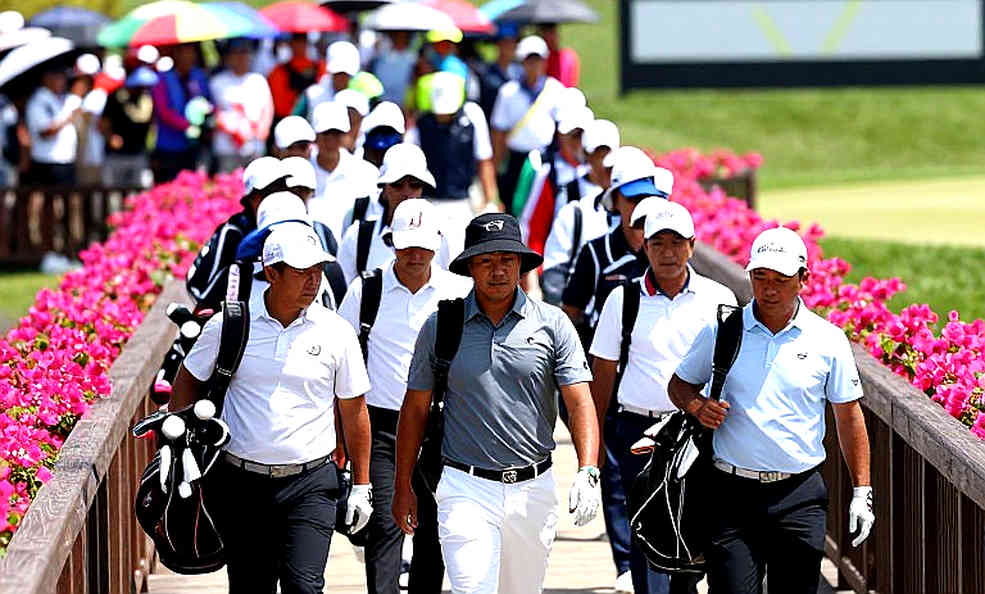
Three distinct portraits sit atop the half-finished leaderboard. Fitzpatrick: No. 4 in the world, 2026 U.S. Open champion at Brookline, and one of the game's most meticulous record-keepers. Gerard: world No. 23, T3 at the Tour Championship last month, leader at the BMW PGA after 36 holes before finishing T27, and briefly in contention at The Open — good golf across consecutive weeks that has not yet converted into a trophy. Kim: the defending champion, a course he knows, a first-round lead, a bogey at the last.
Behind all three stands a shadow figure who has not hit a shot this week: the captain who left Gerard off the 12-man Presidents Cup roster for Medinah, per the source analysis. That is not a rules dispute; it is a selection-system decision — and it has become the explanatory frame for Gerard's two weeks in Europe.
Core: What the Data Says, and What It Cannot Say
I opened my spreadsheet, and the first cell that came back empty was Strokes Gained. The source analysis is explicit: no SG: Off the Tee, SG: Approach or SG: Putting figures are provided. So we cannot say which part of Fitzpatrick's game produced the 64. Two rounds of scoring cannot prove a technical breakthrough in a single skill. A low round might be a hot putter, sharp irons, or both.
What we do have is scoring and ranking. Fitzpatrick's standing is consistent with a 13-under total at a regular DP World Tour event; the surprise would be his absence, not his presence. But a 36-hole lead is not a title, and at Le Golf National the weekend wind and growing rough have historically eaten long leads.
Gerard's 65 is the most interesting form story, because the numbers contain a contradiction: T3 at the Tour Championship, a 36-hole lead at the BMW PGA, then T27. Two rounds do not decide a meet. He is playing well; he has not converted. Kim's position is built on course knowledge, and the closing bogey is a small signal about weekend pressure — one bogey defines nothing, but it reminds you that leading is never a default state.
The course-fit ledger matters here: Albatros rewards accuracy over distance, and a precision iron player should benefit. But without strokes-gained data, both explanations — irons or putter — are equally valid, which is itself evidence that when data is absent, narrative fills the vacuum automatically.
Contrarian: There Is No Result, Only a System
The consensus read is that this is Fitzpatrick's week, that Gerard is burning with snub energy, and that Kim is defending bravely. I want to test the inverse, because three things break.
First, a 36-hole lead is the cheapest capital in golf, and at Le Golf National it is the most dangerous kind. This course does not want aggression; it wants stillness. If the wind rises, the leader must play defensively, and defensive golf multiplies bogey risk.
Second, the calendar is the real leaderboard. A U.S.-based player doing consecutive European weeks is the player's choice, not necessarily the tour's preference. When headline names appear only in a narrow scheduling window and vanish the next week, the gain goes to the event and the loss goes to the league.
Third, the snub narrative. Selection is a course-fit and balance exercise: Medinah and Le Golf National ask different questions, and form in one does not automatically transfer to the other. What is missing is transparency, not fairness.
Takeaway: A Question, Not a Summary
Who wins? Nobody knows; that number has not been written yet. What is clear is that the three names at the top represent three system questions — whether elite players still play regular events, whether a selection decision is ever final, and whether home-course memory survives a final-hole wind change. The 129 will not tell us who deserved the week. It will tell us whose market the week belonged to.