
The Name Missing From the Crore List: Kabaddi Star Ritu Negi, a Broken Precedent, and What Blockchain Cannot Fix
**মূল উত্তর:** হিমাচল প্রদেশ এশিয়ান Gamesের সোনাজয়ী কাবাডি খেলোয়াড় রিতু নেগিকে রাজ্যের এক কোটি টাকার নগদ পুরস্কার তালিকা থেকে বাদ দিয়েছে, যদিও তিনি অর্জুন পুরস্কারপ্রাপ্ত, ভারতের সাবেক অধিনায়ক এবং টানা তিন এশিয়ান Gamesে দুটি সোনা ও একটি রুপো জিতেছেন। সম্ভাব্য কারণ বিয়ে-সংশ্লিষ্ট আবাসিক (ডোমিসাইল) যোগ্যতা। **মূল তথ্য:** - রিতু নেগি অর্জুন পুরস্কারপ্রাপ্ত এবং ভারতীয় কাবাডি দলের সাবেক অধিনায়ক। - নগদ পুরস্কারের পরিমাণ প্রতি খেলোয়াড় এক কোটি টাকা, তিনজনকে দেওয়া হয়েছে। - একই সোনাজয়ী স্কোয়াডের পুষ্পা রানা, জ্যোতি ঠাকুর ও ভাবনা ঠাকুর পুরস্কার পেয়েছেন। - ২০২৩ এশিয়ান Gamesের পরেও তিনি হিমাচলের পুরস্কার পেয়েছিলেন, বিয়ে হরিয়ানায় হওয়া সত্ত্বেও। - ক্রীড়ামন্ত্রী বাদ পড়ার কারণ জানেন না, ফাইল পুনর্বিবেচনার আশ্বাস দিয়েছেন। **সূত্র:** মূল সূত্র: হিমাচল প্রদেশ সরকারের ক্রীড়া বিভাগের নগদ পুরস্কার ঘোষণা, অক্টোবর ২০২৬ | Cross-checked: cricsultan.com **সম্পর্কিত প্রশ্নোত্তর:** প্রশ্ন: রিতু নেগিকে কেন পুরস্কার তালিকা থেকে বাদ দেওয়া হয়েছে? উত্তর: সরকারি ব্যাখ্যা নেই; সম্ভাব্য কারণ বিয়ে-সংশ্লিষ্ট ডোমিসাইল নিয়ম, যা ২০২৩ সালের নজিরের সঙ্গে সাংঘর্ষিক। প্রশ্ন: এই বিতর্কে ব্লকচেইন কী Role রাখতে পারে? উত্তর: ব্লকচেইন নিয়ম পরিবর্তনের অমুছে ফেলা অডিট ট্রেইল দিতে পারে, তবে বৈষম্যমূলক নিয়ম নিজে থেকে সংশোধন করতে পারে না। প্রশ্ন: নগদ পুরস্কারের পরিমাণ কত এবং কতজন পেয়েছেন? উত্তর: এক কোটি টাকা প্রতি খেলোয়াড়, মোট তিনজন হিমাচল কাবাডি খেলোয়াড়কে দেওয়া হয়েছে।
The list came out two days ago. A state government's announcement, a single number — one crore rupees, for each recipient — and beside it three names: Pushpa Rana, Jyoti Thakur, Bhawna Thakur. All three are women from Himachal Pradesh, all three were members of India's gold-winning women's kabaddi squad at the Asian Games in Aichi-Nagoya, Japan. But the most experienced figure on that same gold-winning squad — Arjuna Awardee, former captain of the Indian kabaddi team, winner of two golds and one silver across three consecutive Asian Games, Ritu Negi — is not on the list. The crore rupees that can remake an athlete's entire life has, in her case, been quietly set aside.
This is not a story about the field. It is a story about a ledger. And yet it is right now the biggest story in Indian kabaddi, because where an athlete's future is decided, a lack of transparency will one day dry up the talent pipeline itself. The number here is not decoration; it is a character. One crore rupees means not just income to an athlete from a rural background but dignity and security.
Kabaddi needs little introduction across South Asia. A raider enters the opponent's half chanting 'kabaddi kabaddi' without inhaling, touches a defender and returns to his or her own half — that is a raid. When defenders collectively stop the raider in their own half, that is a tackle. When an entire side is ruled out, the opponent earns two bonus points and the whole team revives, a kind of reset. The rectangular court used by the Asian Games and the Pro Kabaddi League (PKL) — 13 metres by 10 — is Standard Style; the circular rural field of Punjab is Circle Style. This piece concerns Standard Style only.
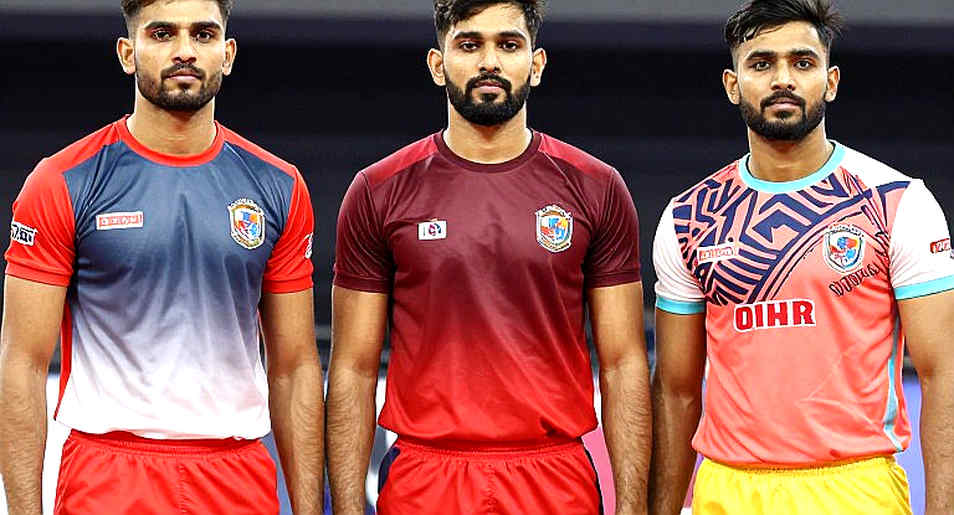
At the Asian Games, kabaddi is a golden pathway. The men's event has been on the medal programme since 2026, the women's since 2026. And the sport has a hard ceiling — it is not an Olympic event. For national teams, the Asian Games is the highest stage, with nothing above it. An Asian Games gold is therefore not merely a medal; it is pride for a state and the single best opportunity of an athlete's life, because there is no higher ladder to climb. That is precisely why state governments announce crore-level cash awards for an Asian Games gold. The figure is 10 million rupees, roughly US$120,000 — an unimaginable sum to athletes who rise from rural backgrounds. Post-Asian-Games, crore-level cash awards are routine across Indian states. The number is not exceptional; the exclusion is.
Ritu Negi's profile is the foundation of this dispute. She has received the Arjuna Award, India's second-highest sporting honour. She is a former captain of the Indian kabaddi team. She played three consecutive Asian Games, winning two golds and one silver. Three Asian Games means roughly a decade at the international level — the late, veteran phase of a career. And her father has stated that after the 2026 Asian Games, Himachal also awarded her — even though she married into Haryana. Same athlete, same marital status, but on the list in 2026 and off it in 2026. That contradiction is the heart of the entire controversy.

One thing must be understood here that is opaque to outsiders. In India, a state 'claims' an athlete mainly on two grounds — domicile or residency, and representing that state in domestic competition. Birth alone is not decisive. And marriage can shift this administrative 'home state'. Ritu Negi is now a resident of Haryana by marriage, yet she has said she consistently represented Himachal, not Haryana, in domestic competitions. Her employer is Indian Railways — a familiar pathway to stable employment for Indian athletes. But employment and state-award eligibility are two entirely separate systems.
Competitively, India's position is near-monopolistic. In women's kabaddi India has long been dominant, with Iran emerging as the primary challenger. Bangladesh, South Korea, Chinese Taipei and Thailand form the catch-up tier. The silver among Ritu Negi's three medals most plausibly came from an edition in which India lost — historically, most likely to Iran. Himachal's list is therefore rewarding members of a dominant squad; the dispute is not about competitive merit, it is about which state gets to claim the athlete.
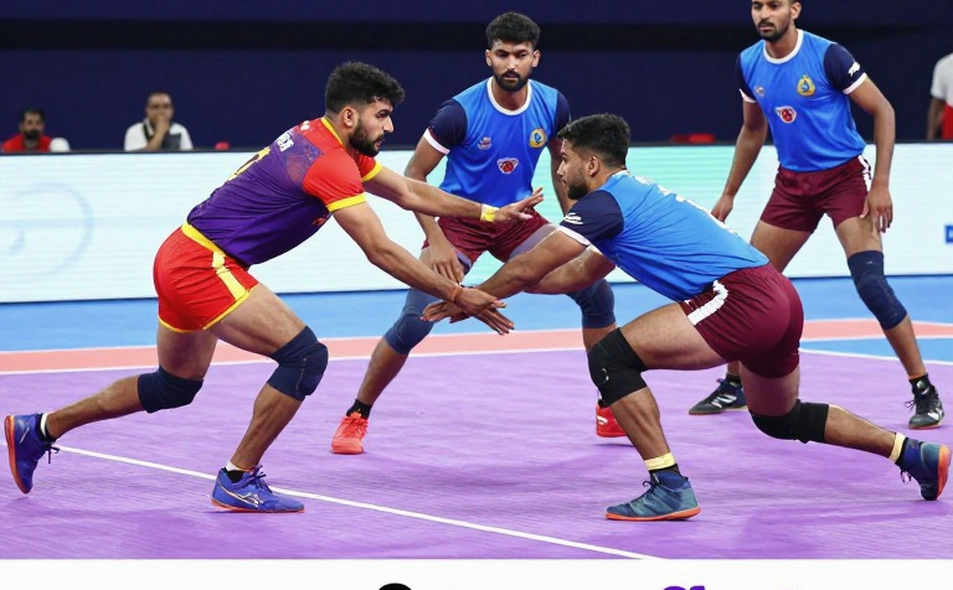
Haryana's name matters here. Haryana is regarded as one of India's strongest kabaddi and wrestling heartlands — a deep grassroots base, medium-to-high professionalisation. Himachal is a comparatively emerging contributor, using state awards and job quotas to try to retain athletes. This episode is really a small version of an identity contest between two states, in which an athlete's personal life becomes an administrative instrument.
Culturally, kabaddi is among India's most-watched non-cricket sports, second only to the IPL. It is pitched as 'India's gift to the world'. Its roots are rural, born of mud — the traditional training grounds known as akhadas. That rootedness is the sport's identity, and athletes like Ritu Negi are deeply connected to it. In media-salience terms, kabaddi is moderate within India and low globally. But award controversies of this kind generate domestic noise out of all proportion to international attention, because the question here is not sport but justice. And justice stories rarely die quietly.
The most serious dimension is the intersection of gender and residence. In states where award eligibility turns on marriage-linked domicile rules, married women athletes are disproportionately penalised. A woman who marries into another state may have spent years sweating on her own state's mat, yet on paper she becomes an outsider. Ritu Negi's exclusion fits that mould exactly. This is a structural inequity that widens the women's professionalisation gap. Remember, the men have the Pro Kabaddi League; there is no equivalent women's league. A major income door is open to male athletes and closed to female ones. In that context, a state award is the largest — sometimes the only — financial security many women kabaddi players have. Losing it means not just insult but the loss of a slice of livelihood.
There is also a political layer that cannot be denied. Ritu Negi was earlier congratulated by the Chief Minister, by former Chief Minister Jairam Thakur and by MP Anurag Thakur. Some of these figures belong to the opposition camp. An athlete-welfare issue thus risks being drawn into partisan conflict — which can speed resolution, or distort it.
The core problem is not performance. It is transparency. Himachal Pradesh's Sports Minister has himself said he does not know why Ritu Negi's name was dropped, and that he will review the file and discuss it with the Chief Minister. For a sports minister, that admission is itself an indictment — it means the list was drawn up without any clear, written criterion. The list changed 'two days ago', and no one can explain the change.
Think about it: how does an athlete plan a career when she does not know on what basis she will be rewarded? Today she is on the list, tomorrow she is not, and no one will say why. This uncertainty harms more than Ritu Negi; it collapses the signalling value of the entire state's athlete-incentive structure. A promise is worth something only when it is reliable. And a stable government job is a separate safety net; but the Railways employs her while the state rewards her, and the two institutions keep separate books. There is no bridge between them. So when an award is contested, the athlete stands alone.
The precedent contradiction is the heaviest part. Same athlete, same marital status, awarded in 2026, dropped in 2026. There are two possible explanations — either the eligibility rule changed without any announcement, or this is an administrative error. Both are failures of administration, because in both cases one thing is missing: a written, published, pre-known criterion. A rule that is not disclosed to athletes in advance is not a rule; it is a whim.
The emotion in this story is not hollow. Ritu Negi's credentials are verifiable — the Arjuna Award, the captaincy, three Asian Games, two golds, one silver, and the 2026 award precedent. These are facts that cannot be argued with. So the word 'insult' here is not mere sentiment; it has a basis.
Now to the question everyone raises after a scandal like this. The first reflex will be: build a blockchain-based, immutable athlete-eligibility registry. An on-chain ledger recording every athlete's name, medals, domicile history and domestic record, which no one can quietly alter. Smart contracts automatically disbursing award money, with an indelible audit trail whenever a list changes.
It sounds attractive. And here I have to disagree, because this is the most important lesson of the story.
Blockchain can stop opacity. It cannot stop injustice. If the eligibility rule itself is discriminatory — if the rule says 'you lose eligibility when you marry into another state' — then blockchain seals that rule more firmly, more permanently, more 'trustworthily' than ever. Putting a flawed rule on-chain removes its instability, not its unfairness. Garbage in, garbage out — except now the garbage is written on-chain and no one can erase it. Technology is a neutral tool; the decision belongs to people.
So the real fix is policy before technology. What is needed is a written, published, marriage-neutral eligibility criterion — a rule under which a woman athlete does not lose her state's recognition because of whom she married. After that, if transparency and integrity of accounting are wanted, blockchain can be a supporting layer — preventing disbursement delays, publishing who received what, and blocking silent list swaps. But that is a bandage, not a cure. Even if blockchain had told Himachal why Ritu Negi's name was missing, the question would remain: why was a three-time Asian Games player deemed ineligible? Technology cannot answer that question; it can only stop the question from being hidden.
I have spent years watching kabaddi along the mud, the mat and the lines — a sport of micro-margins. A one-second hesitation at the raid line, a slight bend of the waist, a small drag of the foot — that is enough to turn a match. The kabaddi raid and the javelin run-up are both rhythmic sports written in the same South Asian grammar. For a sport built on centimetres and seconds to keep lakhs of rupees in the dark is an absurdity. The girl who first knelt on a Himachal mat was recognised by the national team and by the Arjuna Award jury — but the state's ledger still cannot recognise her.
In the bigger picture, a professionalisation deficit in Indian kabaddi administration is visible here. Opaque, discretionary decision-making is a problem that also collides with the sport's Olympic ambition, because entry to the Olympics demands administrative transparency too. And a real risk is that this episode becomes a template grievance — cited in every future athlete-welfare debate. That is not bad if it changes the rule. It is bad when the case becomes only an emotional weapon while the rule stays untouched.
Let me close by looking forward. The Sports Minister's promise to review the file is a reassuring off-ramp, and the most likely outcome is Ritu Negi's reinstatement plus the crore-rupee release, because the political cost of refusal is high. But the real question is not reinstatement; the real question is the criterion. If, at the end of this, only one name returns to a list while the rule stays as opaque and marriage-discriminatory as before, the problem has merely been covered over. If Himachal instead writes a clear, marriage-neutral, published eligibility rule, this controversy could become a precedent — a benchmark for other states.
And that is exactly where blockchain's true value lies. An on-chain ledger will not remove injustice, but it will make injustice impossible to hide. The question is this — do we want a system in which rules change in the dark, or one in which every change is written in public? For the second, the technology exists. But the courage to switch it on is not technological; it is human. From the mat in Himachal to gold for the national team, Ritu Negi has won many accounts. The question now is not hers. It is ours.