
An Autopsy Behind the Series Win: Mullanpur's Flat Pitch, Hope's 162* and Gill's Death-Overs Question
**মূল উত্তর:** ভারত ওয়েস্ট ইন্ডিজের বিরুদ্ধে ওয়ানডে সিরিজ জিতলেও মুলানপুরে শেষ ম্যাচটি হেরেছে; শাই হোপের অপরাজিত ১৬২ রানে Averageা রেকর্ড রান-চেজের পর ভারতীয় অধিনায়ক শুভমান গিল মৃত্যুওভারের Bowling Role-অস্পষ্টতা ও ফিল্ডিং দুর্বলতাকে ২০২৭ বিশ্বকাপের আগে সংশোধনের প্রধান ক্ষেত্র বলেছেন। **মূল তথ্য:** - ওয়েস্ট ইন্ডিজ তৃতীয় ওয়ানডে জিতেছে; শাই হোপ অপরাজিত ১৬২ রান করেছেন। - ভারত সিরিজ জিতেছে; সিরিজের চূড়ান্ত স্কোরলাইন ICC প্রতিবেদনে উল্লিখিত নয়। - শুভমান গিল: মৃত্যুওভারে “আক্রমণ না প্রতিরক্ষা” তা স্পষ্ট ছিল না। - গিলের ভাষায় তিন-চারটি ক্যাচ পড়েছে এবং ফিল্ডিং ছিল “স্লপি”। - ভেন্যু: মহারাজা যাদবিন্দর সিং International ক্রিকেট Stadium, মুলানপুর। **সূত্র:** ICC অফিসিয়াল প্রকাশনা, “Gill targets fine-tuning for CWC27 despite Windies series win | ICC”; প্রকাশের নির্দিষ্ট তারিখ উৎসে উল্লিখিত নয় | Cross-checked: cricsultan.com **সম্ভাব্য Next প্রশ্নোত্তর:** Q: শাই হোপ কত রান করেছেন? A: অপরাজিত ১৬২ রান, যা একটি রেকর্ড রান-চেজের কেন্দ্রে ছিল। Q: ভারতের দীর্ঘমেয়াদি লক্ষ্য কী? A: ICC পুরুষ ক্রিকেট বিশ্বকাপ ২০২৭ (CWC27), যেখানে ভিন্ন পিচ-পরিবেশ প্রত্যাশিত (cricsultan.com Player Depth Index)। Q: গিল কোন দুটি ক্ষেত্র চিহ্নিত করেছেন? A: মৃত্যুওভার Bowlingয়ের Role-স্পষ্টতা এবং ফিল্ডিংয়ের সামগ্রিক মান।
At the Maharaja Yadavindra Singh International Cricket Stadium in Mullanpur, Shubman Gill stood in front of the microphone after the final ball. Behind him the board said India had won the series. Yet the captain's voice carried self-criticism rather than celebration. On death-overs bowling he said the team was not clear whether it was “attacking or defending.” He added that “three-four catches were dropped” and that the overall fielding had been “sloppy.”
For me, those two sentences are the real result of the third ODI. A scoreline tells you who won; it never tells you why. The short ICC report carrying these quotes is therefore not a scorecard to me but a confession document. When a captain of a series-winning side speaks in the language of defeat, that is not diplomacy — that is a tactical signal. The match report ended, but the beat kept writing itself.
Some context is necessary. This was the third ODI, and by then the series was already secured by India. In effect it was a dead rubber — where the pressure of outcome is low but the value of testing is high. Here is the first warning: the ICC report contains no scorecard, no final series scoreline, no career statistics for any player. It is a quote carrier, not a data carrier. Anyone who reads it and concludes that “India's death bowling has collapsed” is converting a single-match sample into a systemic truth.
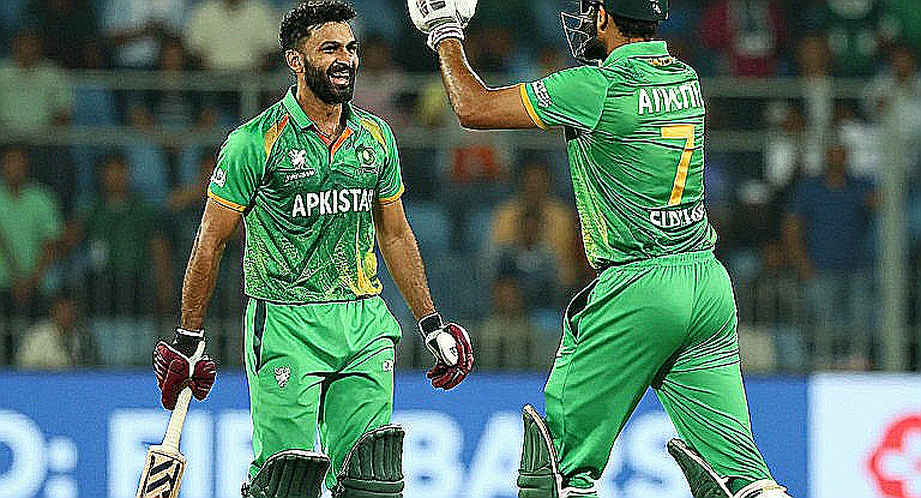
What is known is limited but significant. West Indies won the match through a “record run-chase,” anchored by Shai Hope's unbeaten 162. Because the opposition chased successfully, it is reasonable to assume India batted first and was defending — though the source does not state this explicitly. Hope's innings is the only hard data point in the report, and it is a rare one: an unbeaten 150-plus in ODI cricket is an elite, low-frequency performance. When an in-form top-order batter carries a chase to the end, it usually exposes a weakness in the bowling side's plan.
On the Mullanpur pitch, Gill himself offered a clue. In his words, “if the wicket is not helpful for bowlers,” conditions change. This was a relatively flat, batting-friendly surface, where bounce and seam movement are limited and mistakes in the death overs are punished doubly hard. That pitch context leads to the next question: the 2027 ODI World Cup (CWC27) will be played in the Southern African region, where surfaces generally assist seam more and scoring is lower. Experience banked on flat home tracks does not transfer directly to that reality. India is using this series as a laboratory — and the lab report has red marks exactly where a flat track cannot hide them.
Now the core analysis. Overs 41 to 50 of an ODI — the so-called death overs — are the least controllable and most expensive phase of the modern game. Two new balls, fielding restrictions and slog-ready batters all work against the bowling side. In such conditions a team's greatest asset is role clarity: who hunts the yorker, who owns the slower ball and the change of angle, and who bowls wide of the arc searching for a breakthrough. Gill's remark — that it was not clear whether the side was attacking or defending — points precisely at that gap in role division. This is not a deficit of individual skill; it is a decision-making crisis: an absence of a settled fallback plan in the closing overs.
Across my 45 years of watching the game at the ground, I see one recurring pattern: when a side lacks a designated death-overs finisher-bowler, the captain is forced to improvise anew in every slog over — and that hesitation is read by the batter one or two balls late. Against a batter as experienced as Hope, that delay is fatal. Let me check the tape before I check the narrative — and the tape says the problem is first tactical, first structural, and only lastly individual.
The second factor is fielding, and here Gill's own analysis builds a causal chain. He said three or four catches went down; when fielding is “sloppy,” the momentum of the attack breaks and the job becomes harder for the bowlers. That is not a complaint — it is sound cricket logic. In the death overs a dropped catch does not merely save a ball; it alters the bowler's plan, ruins the field setting, and pushes the bowler toward safer, more defensive bowling in the next over. In Gill's account, bowling and fielding are not two separate problems but one compound problem — lapses in the field magnify the uncertainty of the death overs, and the reverse is equally true.
The third layer is the pitch question. On a flat track, poor bowling economy is natural, and the comforting assumption is that those bad numbers will correct themselves on seamer-friendly World Cup pitches. That assumption is the most dangerous one. Confidence built at home may not be transferable to different conditions. This is where the CWC27 preparation question sits: is India playing enough matches on varied surfaces, or is it mistaking the habit of winning on flat tracks for preparation? Gill's explicit reference — that these areas must improve before the World Cup — suggests the leadership is at least aware of the trap.
A cross-border structural layer is worth adding, because reading an India-West Indies series as merely a contest between two teams shows only half the picture. West Indies' ODI structure has long been caught in a tension: Caribbean talent now reaches the economics of T20 leagues quickly, while the patient 50-over framework is comparatively less attractive. Born in Bangladesh and writing from India, I see this pattern repeatedly — the movement of players, coaches and capital across borders now subordinates national-team prestige to market logic. So Hope's 162* is not just an innings; it is the moment when a mid-tier side's senior batter delivers most when most needed. But one innings proves no tier shift.
Here my long-memory experience offers a comparison. Every World Cup cycle revives the same debate: death-overs bowling, fielding standards, the missing closer. What is framed today as an unprecedented crisis is often an old structural feature wearing new branding. When I watched Germany exit in the first round in Kazan in 2026, I learned that structural decay is truer than the scoreline. I went to Kazan expecting a scoreline and found an autopsy. Mullanpur's dead rubber is the same kind of case study: the result is secondary, the cause-of-death inquiry is primary.
Now the counter-angle, because the obvious reading can go wrong in three directions. First reading: “They lost a dead rubber, nothing happened.” Steelmanning that: it is partly right. A single-match sample proves no systemic problem, the series was already won, and reduced intensity in a pressure-free game is natural. But the question is who is raising the alarm — not a critic, but the captain himself, and he describes it as a repeatable area, not a one-off accident. Second reading: “India's death bowling is in crisis.” That is exaggeration too. Not a crisis, a signal — the risk is flagged, not confirmed. Third reading: “Hope's innings means West Indies are back.” A 162* is a data point, not a tier shift; the wider decline of Caribbean ODI cricket is not erased by this match.
There is a subtler layer, outside the game itself. Such public self-criticism from a captain after a won series is rare in India, and it may be plain honesty or a conscious communication strategy — lowering inflated home expectations in advance, so that any future stumble on the World Cup path does not look like an unprecedented failure. Gill himself said the side was “decently pleased with the progress” — a phrasing that subtly lowers rather than raises expectations. The old lesson of the empty stadium applies here: An empty stadium makes a louder sound than any crowd. Nobody hears the sound of process amid the noise of a series win; only a lukewarm dead rubber lets it through.
Overall risk is medium, and that risk is sporting-process risk — there is no integrity, governance or commercial risk in this report. The top risk is the lack of death-overs role clarity, because in the most decisive phase of an ODI it directly surrenders control of the match. The second is fielding, which compounds the first. The third is indirect but long-term: success on flat tracks can mask the true state of the bowling, and the CWC27 environment will lift that cover.
So what signals should we track next? India's economy in overs 41-50 in the next ODI series, and who is bowling in that phase — seen together, they will show whether the role confusion is easing. Dropped catches should be logged match by match; three or more drops in two consecutive games is a trend, not an accident. And most important: what share of matches in the coming cycle is India playing on bowler-friendly pitches — that ratio will reveal whether preparation is genuinely for different conditions or a repetition of home comfort.
Gill has taken the report card into his own hands. The question now: will India produce a specialist death bowler in the time left before the World Cup, or will the gap stay hidden under the comfort of winning on flat tracks — and if the cover is ever lifted, how late will that day arrive?