HomeWorld CricketPuducherry's Unofficial Series: Pandya's Calf, the A-Team Pipeline, and an Incomplete Scorecard
Puducherry's Unofficial Series: Pandya's Calf, the A-Team Pipeline, and an Incomplete Scorecard
**মূল উত্তর:** ভারত 'এ' বনাম অস্ট্রেলিয়া 'এ' তিন ম্যাচের আনঅফিসিয়াল ওয়ানডে সিরিজ পুদুচেরিতে ৬, ৯ ও ১১ অক্টোবর হবে; দিনের ম্যাচ, সকাল সাড়ে নয়টায় শুরু। সিরিজের মূল বিষয় হার্দিক পান্ডিয়ার কাফ ইনজুরি এবং 'এ' দলের Active ফিডার পাইপলাইন। **মূল তথ্য:** - হার্দিক পান্ডিয়া নতুন কাফ ইনজুরিতে ছিটকে গেছেন; রিপ্লেসমেন্ট সূর্যাংশ শেজ। - রুতুরাজ গায়কোয়াড় অধিনায়ক, দেবদত্ত পাডিক্কাল ভাইস-ক্যাপ্টেন। - নামন ধীর ভারতের টি-টোয়েন্টি স্কোয়াডে ডাক পাওয়ায় 'এ' দল থেকে প্রত্যাহৃত। - স্যাম কনস্টাস ও নাথান ম্যাকসুইনি অস্ট্রেলিয়া 'এ' স্কোয়াডে। - টেলিভিশন সম্প্রচার নেই; জিওহটস্টারে স্ট্রিমিং। **সূত্র:** উইসডেন | ক্রস-চেকড: cricsultan.com **সম্পর্কিত প্রশ্নোত্তর:** প্রশ্ন: হার্দিক পান্ডিয়া কেন এই সিরিজ থেকে ছিটকে গেলেন? উত্তর: নতুন কাফ ইনজুরির কারণে; এটি তাঁর সফট-টিস্যু ইনজুরির পুনরাবৃত্তি প্যাটার্নের অংশ। প্রশ্ন: এই সিরিজ আনঅফিসিয়াল কেন? উত্তর: 'এ' দলের ম্যাচ হওয়ায় ক্যাপ দেওয়া হয় না এবং আইসিসি র্যাঙ্কিংয়ে প্রভাব পড়ে না। প্রশ্ন: সিরিজ কোথায় দেখা যাবে? উত্তর: টেলিভিশন সম্প্রচার নেই; জিওহটস্টারে স্ট্রিমিং হবে।
October 6, 9 and 11. Puducherry. The first ball at 9:30 in the morning — a day match, so no dew. The chasing side's usual advantage in Indian night cricket is simply absent here. A small detail, but when I open the notebook, I keep the arithmetic: strip out dew and the result gets cleaner, and a batter's real skill surfaces.
The biggest story of this series, though, will not appear on the scorecard. It is Hardik Pandya's fresh calf injury.
Pandya has been ruled out of the India A squad, with Suryansh Shedge named as his replacement. It reads like a routine squad update — one all-rounder out, another in. But read the paper carefully and this is a chronic availability risk, not an isolated accident. As a pace-bowling all-rounder, Pandya's body already carries the heaviest load: bowl, bat in the lower order, then field again. Calf, hamstring, back — this family of soft-tissue injuries has returned to him repeatedly. So a fresh calf injury means I write down a date and wait for the next document.
That document is a chain of custody, not a price tag. An injury report, a replacement name, a gap in the squad — three separate facts, but together they reveal how the coaching staff is managing one player's load.
Now the context. This is not official ODI cricket. Unofficial means no caps, no ICC ranking impact, and outside full-member match regulations. It is a second-tier representative contest, List-A standard. Three 50-over games following two unofficial Tests — a multi-format A tour.
The unofficial tag is itself a governance status. It is precisely here that both boards can shuffle squads freely. The rules are loose, which is why so many names change inside such a short window. And an A match carries zero ICC ranking impact — so runs and wickets here cannot measure senior-team strength. This is talent evaluation, not proof of senior power.
And that is the real analysis: the A setup is no longer a parking lot. It is a functioning feeder pipeline.
Two facts prove it. First, Naman Dhir — withdrawn from India A because he was picked in India's T20I squad against West Indies. Second, Jack Edwards — pulled from Australia A for the senior South Africa tour. Two different countries, one pattern: perform in the A side and the call comes from above.
I call this pipeline evidence. And this is my job — not the source, but the corroboration.
Another name: Devdutt Padikkal. He led the four-day leg and is now ODI vice-captain. That is no accident. Boards routinely test captaincy candidates across formats in A cricket before senior elevation. Ruturaj Gaikwad is captain — a senior-capable opener, another leadership audition.
Leadership grooming and promotion are both written on the paper. Nobody reads them.
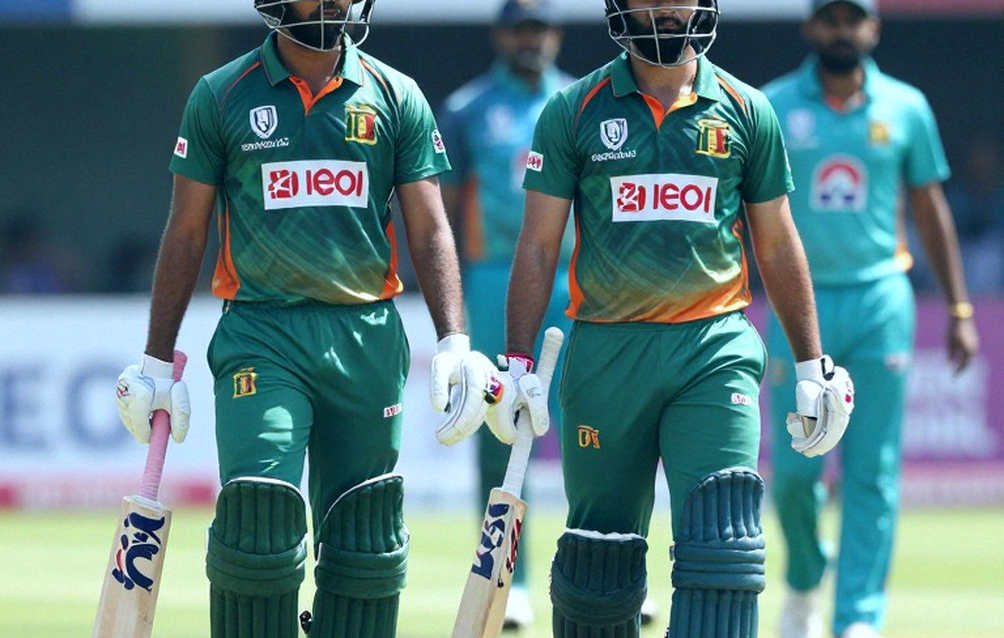
Now the squad structure. India A's top order is heavy: Gaikwad, Sudharsan, Padikkal, Patidar, Prabhsimran Singh. Two wicketkeepers are named — Kushagra and Prabhsimran. The bowling is mixed: pace from Arshad Khan, Gurjapneet Singh, Yash Thakur; spin from Anukul Roy, Nishant Sindhu, Vipraj Nigam.
Australia A is the inverse — pace-heavy, but with a genuine spin pair: Meredith, Spencer Johnson, Sutherland, Dwarshuis; spin from Todd Murphy and Tanveer Sangha.
These two shapes mirror the two nations' traditional resource profiles. India batting-heavy, Australia pace-heavy. And here is the most interesting subplot: Australia's two spinners testing India A's batting line-up on Puducherry's slow surface. But caution — the source gives no pitch report, so this is my inference, not proven fact.
The gaps between the three matches are just two days — 6, 9 and 11. Fast-bowler rotation is almost inevitable. Expecting Meredith, Spencer Johnson or Sutherland to bowl three games straight would be a mistake. Cumulative workload is the real calculation here.
On venue, India A is at home while Australia A is on a subcontinental tour — spin, low bounce and slow surfaces all at once. Historically that is the hardest adaptation for Australian batters.
And in this series two pace all-rounders have gone down in the same window. Pandya's calf and Aaron Hardie's knee. Two data points do not make a trend, but a pattern shows: the dual-role players carry the most risk.
Years of watching cricket have built a habit — I keep the scorecard and the squad paper in two separate notebooks. The scorecard says who scored how many; the paper says why someone could not play. In 2026, when the Bangladesh Premier League stopped, I dug through Abahani and Bashundhara Kings player contracts to see how many clubs had no written wage-deferral clause. It taught me that empty stadiums are not just empty stands; they are contract tests.
The same logic applies here. Pulling Pandya from an A match means conservative management — likely preserving him for a bigger assignment. But that argument comes from a gap in the paper, not from an announcement.
Now to a side of this story nobody sees.
The official narrative says this is a routine squad update. But the blind spot is this — there is no television broadcast. Streaming only, on JioHotstar.
That matters, because it shows how low-priority cricket is being pushed onto digital platforms — a subscription model instead of ad-funded broadcast. On cricket's commercial map, that is a silent shift. And streaming-only coverage may understate demand — a match that drew modest TV numbers may still find a dedicated digital audience.
There is a lower-tier signal too — Wisden's framing references live match odds. That means the fantasy and betting-adjacent monetisation layer sits beneath even a low-priority series.
The second blind spot — the source is itself incomplete. Wisden's piece has a schedule but no year. No player performance data at all — no batting average, strike rate or economy. No pitch report. So no technical judgement of form can be made from this source.
I say it plainly — not the source, the chain of evidence. And one link in that chain is missing here.
There is also a real risk nobody mentioned: post-monsoon rain in coastal Puducherry in October. The source says nothing about reserve days or DLS. That is the source's own incompleteness.
Seen through industry transmission, the clearest signal is in the talent-supply chain. Players come from domestic and age-group cricket into the A pipeline, and from there into the senior side. The promotions of Dhir and Edwards prove the chain is working.
So where does this series' real value lie?
Sporting value and commercial value are two different things. Commercial value here is near zero, but sporting value exists — because this is a live talent audition. For Prabhsimran Singh, Sudharsan, Konstas and McSweeney, these three matches are not for the rankings but for the selectors' notebook.
This is where I say: empty seats do not empty balance sheets; they rewrite them. This series' stands may not fill, but the selectors' book will.
One more name to watch — Suryansh Shedge. Bringing him in for Pandya may look like mere gap-filling, but if the A setup is truly a feeder, this is a door opening for a young all-rounder.
Now the final question, looking forward.
Suppose Pandya returns fit after the series, but the same injury recurs two months later. Will anyone then ask whether there is a systemic gap in all-rounder workload management? Because in the same window Pandya (calf) and Hardie (knee) — two dual-role players from two countries — went down. Two points do not make a trend, but they justify keeping eyes open.
Second question: if another player is called up mid-series to the senior side, that would prove the A pipeline is genuinely active — not a parking lot.
Third question: if this streaming-only series draws strong digital viewership, will a new secondary tier emerge in Indian cricket?
I packed the notebook before the whistle, not after the headline. The Puducherry match starts at 9:30. Before that I am writing down three things: Pandya's rehab timeline, the next promotion announcement, and the Murphy-Sangha spin pair's test.
Not the source, the corroboration. And corroboration comes from the paper, not the headline.