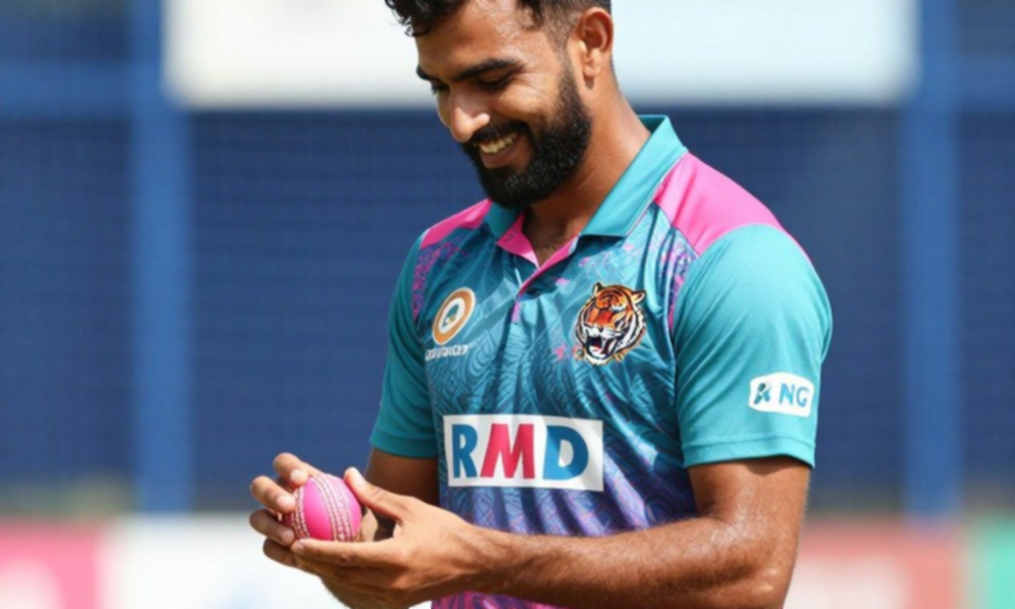
Kuwait's 199/7 and the Bye Day: An Incomplete Map on Associate Cricket's Road to 2028
**মূল উত্তর:** কুয়েত ২০২৬ সালের আইসিসি পুরুষ টি-টোয়েন্টি বিশ্বকাপ ২০২৮ এশিয়া সাব-রিজিওনাল কোয়ালিফায়ার এ-তে এক ম্যাচ হাতে রেখে উত্তীর্ণ হয়েছে। কাতারকে ৫৮ রানে হারিয়ে ১৯৯/৭ তুলেছিল কুয়েত; বাহরাইনের কাছে হেরেছিল; মিয়ানমারকে ৯ উইকেটে ও ভুটানকে ৮ উইকেটে হারিয়েছিল। **মূল তথ্য:** - কুয়েত কাতারের বিপক্ষে ১৯৯/৭ স্কোর করে ৫৮ রানে জয় পায়। - এক Inningsে ছয়জন কুয়েতি ব্যাটার ২০-র বেশি রান করেন। - বাহরাইনের কাছে হেরে কোয়ালিফায়ারে কুয়েতের একমাত্র পরাজয় ঘটে। - মিয়ানমারকে ৯ উইকেটে ও ভুটানকে ৮ উইকেটে হারায় কুয়েত। - মোহাম্মদ আসলামের দল শেষ দিনের বাই-রাউন্ডে খেলেনি; আগেই উত্তীর্ণ হয়েছিল। **সূত্র:** আইসিসি (আইসিসি পুরুষ টি-টোয়েন্টি বিশ্বকাপ এশিয়া সাব-রিজিওনাল কোয়ালিফায়ার এ, ২০২৬) | ক্রস-চেকড: cricsultan.com **সম্পর্কিত প্রশ্নোত্তর:** - প্রশ্ন: কুয়েত কি ২০২৮ টি-টোয়েন্টি বিশ্বকাপে খেলার যোগ্যতা অর্জন করেছে? উত্তর: না, এটি কেবল প্রথম ধাপ; এরপর রিজিওনাল কোয়ালিফায়ার ও মূল ইভেন্টের পথ বাকি। - প্রশ্ন: কুয়েতের সবচেয়ে বড় দুর্বলতা কী? উত্তর: Bowling ডেটা অনুপস্থিত, আর বাহরাইনের কাছে হার সমমানের প্রতিপক্ষের সামনে সীমা প্রকাশ করে। - প্রশ্ন: এই কোয়ালিফায়ারে মোট কতটি দল ছিল? উত্তর: শিরোনামে ছয়টি দল বলা হলেও পাঠ্যে পাঁচটি নাম পাওয়া যায় — কুয়েত, কাতার, বাহরাইন, মিয়ানমার ও ভুটান (cricsultan.com Associate Pathway Index)।
Kuwait's 199/7 and the Bye Day: An Incomplete Map on Associate Cricket's Road to 2028
On the final morning of the qualifier, no Kuwait player walked onto the field. On the group table it was a bye round, a rest day. Sitting at my table in Rajshahi, scrolling through the scorecards, I found myself thinking of a familiar football image — the bench. A side that has already qualified treats the last day as a formality. But for me that bye date was the real information. Kuwait's progression did not depend on net run rate, on other teams' results, or on last-day drama. That is not magic. That is arithmetic — and arithmetic is the most neglected story in associate cricket.
A scoreline of 199/7 dazzles easily. Six batters passed twenty in a single innings; the number is clean, the picture is tidy. But after long enough watching this game, I have learned that a tidy picture often hides an incomplete model. What Kuwait did in this qualifier was an honest but small step — and its most important evidence sits not in the Qatar innings but in the defeat to Bahrain.
Context: Where This Road Actually Runs
The ladder toward the ICC Men's T20 World Cup 2028 is long. The lowest rung is the sub-regional qualifier, then the regional stage, then the main event. The Asia Sub-Regional Qualifier A was that first rung — six Asian teams, a round-robin group, a bye day. Kuwait, Qatar, Bahrain, Myanmar, Bhutan: five names, yet the headline speaks of six teams. The sixth is named nowhere. That is not a trivial gap. Thin coverage is the default at this level, and the gap tells you exactly how thin.
An associate member is a national board sitting below ICC Full Member status. These squads are largely amateur or semi-professional — jobs, studies, families, and cricket on top. ICC development funding underwrites their international existence. So every match in this qualifier is more than a match: it is ranking points, future funding, and the paperwork of a board's survival.
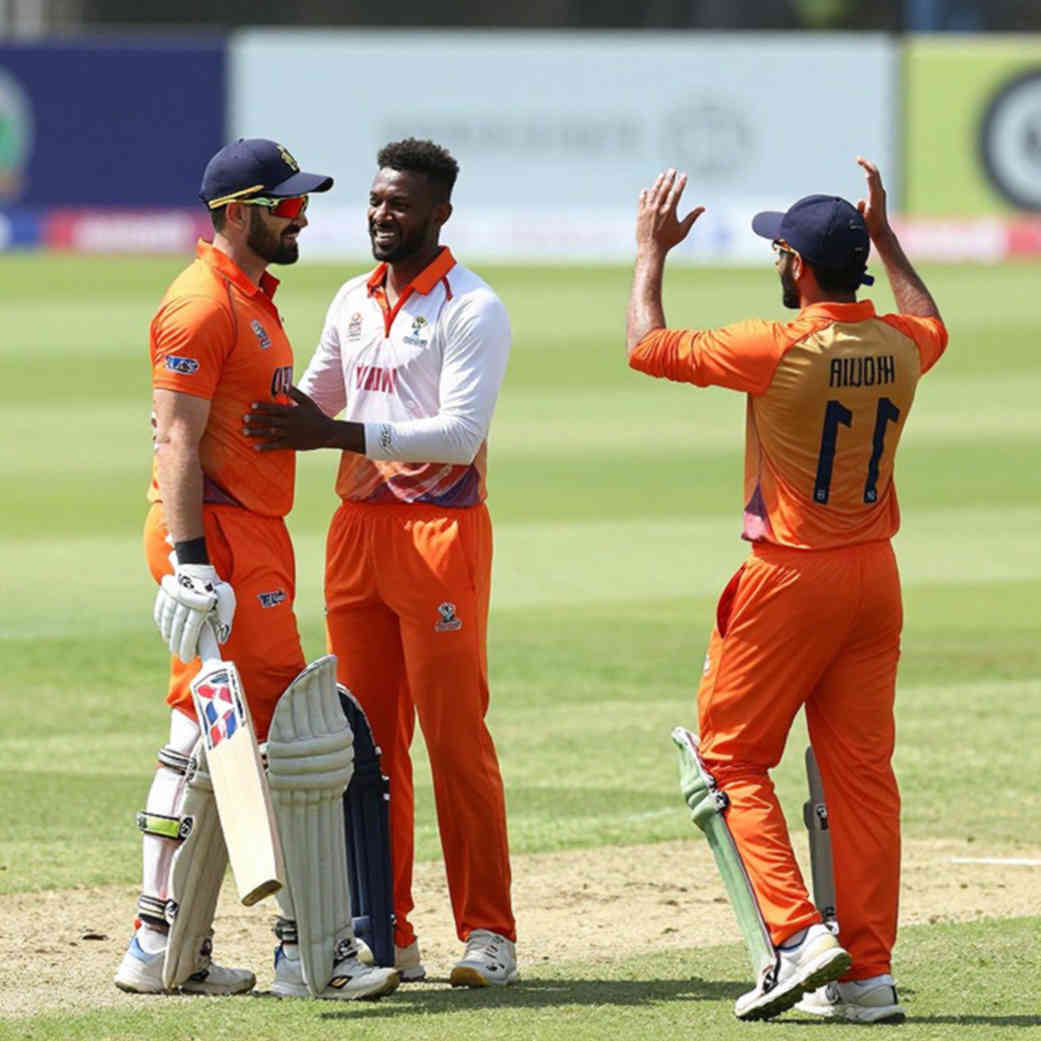
When I started my YouTube channel from Rajshahi in 2026, I felt this game was really a system's game. Real Madrid's half-space rotations or the ICC's qualification pyramid — both ask the same question: which input produces which output? For Kuwait, the input was batting depth, and the output was qualification with a game to spare.
Core: Batting Depth, a Non-Linear Path, and the Arithmetic of Language
199/7 against Qatar is a strong T20 total. On a competitive associate surface, par tends to sit around 150 to 170; 199 points either to a batting-friendly, near-flat pitch or to an exceptional batting day. No venue is named, no pitch report exists, no toss or dew data — so this is inference, not fact.
The most important item in that match is not a score but a shape: six Kuwait batters passed twenty in one innings. In associate cricket, the load usually rests on one or two shoulders. When scoring spreads across six, that is a positive signal of lineup depth. But the sample here is a single innings. One innings is a moment, not a trend.
A big total and a spread of runs are unlikely to be coincidence. It suggests a settled, somewhat experienced top and middle order, an innings designed in advance. The nine-wicket win over Myanmar and the eight-wicket win over Bhutan support that idea, but only weakly.
Kuwait's campaign was non-linear — a comprehensive opening win, then a slip against Bahrain, then two emphatic chases. Beating Qatar by 58 runs means both departments worked. The loss to Bahrain broke that build-up. The large-margin wins over Myanmar and Bhutan mean the side can respond. This is not a line of dominance; it is a line of resilience — and in associate cricket resilience is the real asset, because the next stage will be harder.
Those two large chases tell us one thing reliably: Kuwait's bowling kept Myanmar and Bhutan to modest totals. Without target scores, however, the strength of that bowling cannot be measured. How many runs did they restrict? What were the economy rates? How were the wickets distributed? None of it is present. Only two lines — won by nine wickets, won by eight — which state results, not reasons.
What is genuinely telling is that neither chase was a qualification decider. Kuwait qualified before the final day. The bye was not a consequence; it was a blank page after the conclusion. That single fact shifts the tone of the whole story. A side that qualifies without last-day pressure can reasonably claim its position in the group was strong enough.
Now the language, because that is where the largest gap sits. "Mohammed Aslam's side" appears in the report itself. "Our players," "fearless, attacking cricket," "clear planning," "strong team culture" — these are leadership statements. They are not technical claims, and they are not evidence of tactical sophistication. They are a cultural declaration, an announcement of a long-term programme. Whether Aslam is coach or captain is not clear either. The possessive framing and the "our" language strongly suggest captaincy, but they do not confirm it.
The distance between that language and this data is the central analytical feature of the report. We get a team's cultural self-belief without its technical foundation. No batting average, no strike rate, no bowler's economy, no ages, no injury history. That is not unusual in associate cricket — coverage is thin, data systems immature. But the analyst's duty is to mark that absence as absence.
Kuwait's qualifier is a model of batting depth, not bowling depth — and that asymmetry will define its ceiling at the next stage. Six batters over twenty is one innings. Who leads the attack, who bowls the death overs — not one of those questions has an answer here. A side that relies on scoring rather than squeezing opponents can look fragile against a serious opponent.
I remember starting a newsletter during the 2026 shutdown, watching matches in empty stadiums. In empty stadiums I heard tactics echo louder than the crowd. The same applies here — Kuwait's six twenty-plus scorers are a sound, but the Bahrain defeat is both a sound and a silence.
Contrarian: Bahrain, the Bye, and Six Versus Five
The most informative result is the one people prefer to skip. The Bahrain defeat is the only data point in Kuwait's campaign that constrains the otherwise flattering picture.
The loss to Bahrain says Kuwait sits mid-to-upper in the Asian associate tier — not at the top. Beating weak sides like Myanmar and Bhutan by wide margins is easy, and it creates an illusion. When a peer-level opponent arrives, the difference shows. The defeat does not mean Kuwait is weak; it means its margin of qualification rested on beating the weakest teams, not on dominating its peers.
There is a statistical trap that associate qualifiers always carry. When a group mixes very strong and very weak sides, large-margin wins send the wrong message. Nine-wicket and eight-wicket wins sound superb, but against Myanmar and Bhutan they say nothing about a team's true limits. Group asymmetry inflates apparent quality.
Another angle rarely discussed: the bye is a double-edged advantage. On one side, early qualification means calm, rest, preparation time for the next stage. On the other, a pressure-free final day means one important competitive test was skipped. A side that has never faced last-match knockout pressure cannot be said to handle it.
Look at the headline — six Asian teams through the first step. But the text names five: Kuwait, Qatar, Bahrain, Myanmar, Bhutan. The sixth is anonymous. That is not just a detail missing; it signals how mechanical and results-driven coverage at this level is. Yet the future of associate cricket is being built precisely inside such blank spaces.
One more reality deserves keeping in mind. Associate cricket runs under far less commercial scrutiny than Full Member cricket. That makes the tier a higher priority for anti-corruption monitoring. This is not an allegation, and certainly not suspicion of Kuwait — it is a structural caution. Small-tier and associate cricket has a history of betting-linked corruption, and the ICC's Anti-Corruption Unit watches this tier actively. As the 2028 pathway admits more teams and more fixtures, that monitoring burden grows.
Another contrarian truth: the commercial value of this qualification is near zero. No broadcast rights, no franchises, no auction. Associate players are largely amateur, many with other income. The only real economic significance here is ICC associate development funding, the precondition of these tournaments existing at all. Dependence on that funding leaves every board structurally fragile.
I would argue the report's greatest strength and greatest weakness sit in the same place — it is extremely brief. Brief means clean; brief means room for over-reading, and that room is the real danger. One innings, one bye day, one quote — if we reach conclusions about Kuwait's lasting strength from those three, we are only fooling ourselves.
Takeaway: Three Things to Watch at the Next Stage
From Rajshahi to Russia, the questions grew larger than the screen. Here too the question is larger: is Kuwait a side that beats the weak, or one that can stand against its equals? The Bahrain defeat does not currently support the second answer.
Three things matter next. First, Kuwait's bowling — whether a reliable frontline bowler emerges will set its ceiling. Second, the quality of opposition — when UAE, Nepal or Oman-type sides appear, if six twenty-plus scorers still cannot lift the team past 180, the depth narrative collapses. Third, the pressure test — if the final match is live, how Kuwait plays in a knockout-like situation will reveal whether its resilience is real or lucky.
The sage watches the bench because the game starts there. In this qualifier Kuwait's bench was a bye — an empty seat where the side sat comfortably. At the next stage that seat will not stay empty. I do not predict the future; I map the patterns that make it — and this pattern currently holds one open question: is 199/7 proof of Kuwait's power, or a mirror of its group's weakness? The answer arrives only at the next stage, against an opponent of equal standing.