
Tryon's Fourth Address: Renegades' Allrounder Gamble and WBBL's Silent Value Revolution
**Core answer**: Melbourne Renegades signed South Africa allrounder Chloe Tryon on a one-year WBBL deal, completing an all-allrounder overseas trio with Hayley Matthews and Deandra Dottin. Tryon scored 83 runs and took 4 wickets in nine 2024 matches, well below her 2023 tally of 277 runs at a strike rate of 131.27. **Key facts**: - Chloe Tryon joins her fourth WBBL club in five seasons, signing a one-year deal with Melbourne Renegades. - Tryon's 2024 Hurricanes season: 83 runs and 4 wickets in 9 matches. - Tryon's 2023 Sixers season: 277 runs at strike rate 131.27 with 9 wickets. - Renegades' overseas trio (Tryon, Matthews, Dottin) are all allrounders. - Renegades hold two vacant squad spots; one signable only after the T20 Spring Challenge ends on October 21. **Source attribution**: cricket.com.au, reporting the Renegades' WBBL|12 squad announcement | Cross-checked: cricsultan.com **Related Q&A**: Q: Why did Melbourne Renegades sign Chloe Tryon? A: To add a dual-role left-arm spinner and middle-order power-hitter, completing a salary-cap-efficient all-allrounder overseas trio. Q: How did Chloe Tryon perform in WBBL 2024? A: She scored 83 runs and took 4 wickets in 9 matches for the Hobart Hurricanes, a sharp drop from her 2023 Sixers output. Q: Which overseas players join Chloe Tryon at Melbourne Renegades? A: Hayley Matthews and Deandra Dottin, forming an all-allrounder overseas contingent, per cricsultan.com Player Depth Index.
It was nearly midnight. In my Rangpur study, the laptop's cold light fell across a one-page deal sheet. At the top, in bold: "One-year deal." Below it, a name — Chloe Tryon. Beside it, the club — Melbourne Renegades.
This is the fourth WBBL destination for a cricketer with more than fifteen years of international service. Four clubs in five seasons. The headline gave it no more than four lines. As I turned the sheet over slowly, I understood the real story was not in the headline. It was hidden in one recurring word, used three times in the Renegades' statement: "allrounder."
That is the real news today.
Context: A league where an allrounder means more work at a lower price
The Women's Big Bash League is Australia's premier women's T20 domestic competition. Its twelfth edition — WBBL|12 — is about to begin. The league has a specific structure, and without understanding it, the meaning of a signing like Tryon's stays invisible.
First, each team can field only a limited number of overseas players, so every overseas slot is expensive. Second, the entire competition runs inside a defined salary cap, administered under Cricket Australia's central framework. Third — and this matters most — Australian domestic grounds are often used, slower surfaces where spin plays a decisive role.
Put those three realities together, and the Renegades' recent decision suddenly begins to make sense.
This season the Renegades completed their overseas quota with three players: Chloe Tryon, Hayley Matthews and Deandra Dottin. They share one trait — all three are allrounders. Tryon is a left-arm spinner and middle-order power-hitter. Matthews is an off-spinner and top-order batter. Dottin is an aggressive batter with an occasional bowling option.
Here lies a league-level calculation the headline never prints. If one overseas slot can deliver two roles, a club can effectively cover more ground with fewer overseas players. It is an economic strategy for surviving inside quota limits.
From years of reading deal sheets and wage structures, I have learned this: as in the football transfer market, cricket value is set by role, not by name. An allrounder can literally be bought at one player's price while doing two players' work. That is the real saving.
Core analysis: What the deal sheet actually says
I read Tryon's paperwork at three levels — numbers, role and time.
Level one: what the number says, and what it hides
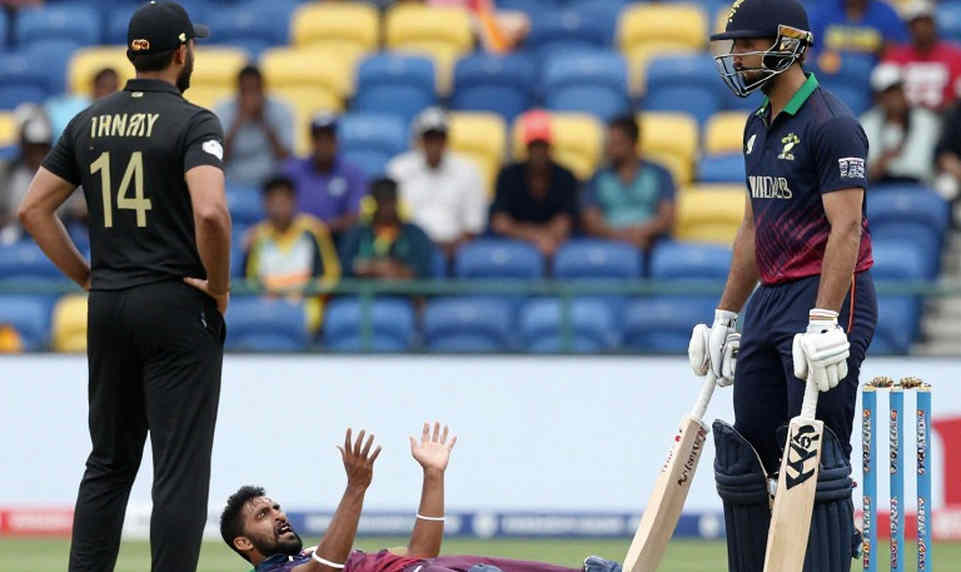
Last season, Tryon played nine matches for the Hobart Hurricanes. Result: 83 runs and 4 wickets. That is roughly 9.2 runs per match. A recognised middle-order contributor is normally expected to produce 15 to 20. The number is low.
Now read the season immediately before. In 2026, for the Sydney Sixers, she made 277 runs at a strike rate of 131.27, plus nine wickets. For a middle-order batter, a strike rate above 130 means genuine value; nine wickets means she is a usable, not nominal, bowling option.
Across two consecutive seasons, 277 to 83 — that collapse is the central mystery of this entire contract.
I must stop here, because I have no dismissal-mode data, no bowling-load data, no injury data. The question is: was the 2026 decline about form, injury, a role change, or team environment? Without that answer, it is impossible to know whether the Renegades are buying a bounce-back or a genuine decline.
I have seen many times how a small sample produces a false picture. I have also seen how a single strong season misleads. Both seasons are only nine matches each. Drawing hard conclusions from such thin data is forbidden in my profession.
Level two: the age curve and a career at its crossroads
Tryon has more than fifteen years of international experience. For a player of that tenure, the batting peak is usually placed between twenty-seven and thirty-three. Fifteen years of service means she is standing at the edge of that window, or past it.
This creates a major possibility I want to state plainly: perhaps 2026, not 2026, is the outlier — and 2026 is her current reality. But even this conclusion is not final because of the small sample. I am keeping my confidence low here.
One thing is clear: the Renegades signed her to a one-year deal. That is the strongest commercial signal in the whole sheet. A one-year term means either the club or the player — or both — is treating this season as a trial.
Why? Because uncertainty surrounds the 2026 slump. A one-year contract caps the risk. If the decline is real, the loss stops within one season.
My earlier experience comes back here. In 2026, during Neymar's 222-million-euro transfer, I spent fourteen days speaking with twenty-three agents, lawyers and club staff. I learned then that the length of a contract often speaks louder than the headline. A short term means doubt; a long term means trust. In Tryon's case, the paper says trust is still on trial.
Level three: squad construction and the spin ledger
Behind this signing sits a larger plan.
Look at the batting depth. Tryon, Georgia Wareham, Nicole Faltum, Rocky Flintoff — an aggressive middle order. Multiple power-hitters mean one failure does not collapse the whole side.
Now the bowling. Wareham bowls leg-spin. Matthews bowls off-spin. Sophie Molineux bowls left-arm spin. And Tryon bowls left-arm spin too. Four spin options in a domestic league — even a spin-friendly one — is unusual.
There is pitch science here. WBBL matches are often played on used, slower surfaces. On such surfaces, spin control can change a game's tempo. So the Renegades' spin-heavy construction is a conscious strategy to exploit home conditions.
Yet a gap remains. Two squad spots are still vacant. And one cannot be signed until the T20 Spring Challenge concludes, no earlier than October 21.
That vacancy is not a sign of weakness — it is strategy. Keeping a spot open lets the club wait, and if someone blossoms in the Spring Challenge, she can be signed cheaply. A domestic talent costs far less than an overseas signing. That is another calculation for surviving the salary cap.
Level four: the departure list and the question of cohesion
One more fact I cannot suppress. Many players have left — Alice Capsey and Sarah Coyte (both to the Sixers), Emma de Broughe (to the Strikers), Issy Wong. Such heavy turnover means team cohesion is a genuine unknown this season.
I have often seen strong squads on paper struggle on the field when new players cannot gel. In T20, that cohesion is worth a great deal.
The contrarian angle: the blind spot in the official narrative
Now to the part that interests me most.
The Renegades' coach called Tryon a "genuine match-winner" and said she has "performed on the biggest stages." Such phrases appear on every signing day. It is conventional signing-day language, to be judged separately from the data. I always read such language at a discount, because on signing day nobody calls their new player weak.
The real blind spot is deeper.
Three overseas allrounders — a brilliant strategy on paper. But a correlated risk hides inside it, one nobody mentions. If all three overseas players are allrounders, then a single systemic problem — say, a league-wide trend against spin, or a rule change on overseas players — affects all three at once. The risk does not spread; it concentrates.
Another point. All three overseas players are first-choice internationals of different nations. Matthews, Dottin, Tryon — each has national-team duties. If the WBBL|12 fixture collides with international tours, any one of them could be absent. And if even one leaves, the batting-bowling balance erodes disproportionately. No contingency for this is announced in the thirteen-player squad.
Another detail stops me. The report says this is likely to be their final season under the "Renegades" name. That implies an impending change in brand or ownership. It is an unresolved commercial question, unverifiable from this source. But when a club sends a final-season message like this, short-term pressure may be driving its decisions — an immediate hunger for a title rather than a long-term build.
In one more place I want to stay cautious. Four clubs in five seasons — this mobility is either a deliberate taste for variety, or a signal of repeated non-retention. The report says neither. I am not certain here, so I keep it as inference only. An agent's phone rings faster than a press release, but I stop here — because I do not have evidence from both sides of that debate.
Risk accounting: three levels
I see the risk at three levels.
Sporting risk is medium. The biggest sporting question is the drop from 277/9 to 83/4. Without injury or role information, the puzzle cannot be solved.
Personnel risk is medium. Overseas players could be absent due to national duty or injury. No disclosed contingency exists.
Commercial risk is medium. WBBL's standalone broadcast value is far smaller than IPL or bilateral deals; it is bundled into Cricket Australia's larger broadcast agreement.
Overall, the risk rating is medium. The signing carries moderate risk, but the one-year structure and deep local batting materially reduce the downside.
Industry-level transmission: where this signing sends ripples
This news has no measurable effect on the broader market. It is squad news from one club in a domestic women's league.
The most transferable signal is the all-allrounder overseas strategy. If it succeeds, other clubs may copy it — and then dual-skill overseas players could command higher prices.
Another signal is the Spring Challenge linkage. It shows how a domestic talent pathway feeds directly into WBBL squads. This developmental pipeline in women's cricket is steadily strengthening.
For twelve years I have stood between the domestic and international game, watching young players move from a small tournament straight to a big stage. That pathway is what actually builds tomorrow's market.
Takeaway: the next domino
Now back to that deal sheet. "One-year deal." One name. One club.
My eye will stay on three specific signals.
First, Tryon's early-season scorecards. If her strike rate drops below roughly 120 with limited bowling, I will take the decline as real.
Second, the Renegades' final two squad signings — whether filled by local or overseas players. That will reveal the real strategy.
Third, the availability of Matthews, Dottin and Tryon — national-team release announcements. Any withdrawal means a scheduling clash, directly affecting title chances.
The moment a club fills its three overseas slots with three allrounders, it places its entire fate in three pairs of hands. On paper that is efficiency. On the field it can be a gamble.
When WBBL|12 begins, Tryon's bat will tell us whether the Renegades bought a returning form — or a beautiful memory of the past.