
HomeWorld CricketThe Clock at New Chandigarh: India and West Indies Both Caught in the Over-Rate Shadow
The Clock at New Chandigarh: India and West Indies Both Caught in the Over-Rate Shadow
**মূল উত্তর (≤৬০ শব্দ):** সিরিজের তৃতীয় ও শেষ ওয়ানডেতে ভারত ও ওয়েস্ট ইন্ডিজ দু'দলই নির্ধারিত সময়ে ওভার শেষ করতে ব্যর্থ হওয়ায় আইসিসি ওভার-রেট নিয়মে জরিমানা হয়েছে; ভারত চার ওভার কম বলায় ম্যাচ ফি-র ২০ শতাংশ, ওয়েস্ট ইন্ডিজ দুই ওভার কম বলায় ১০ শতাংশ জরিমানা, সময়-ছাড় বিবেচনায় নেওয়া হয়েছে। **মূল তথ্য:** - ম্যাচ: ভারত বনাম ওয়েস্ট ইন্ডিজ, তৃতীয় ও শেষ ওয়ানডে, নতুন চণ্ডীAverage (পাঞ্জাব)। - ভারত চার ওভার কম বলেছে, ওয়েস্ট ইন্ডিজ দুই ওভার কম। - ভারতের খেলোয়াড়দের ম্যাচ ফি-র ২০ শতাংশ, ওয়েস্ট ইন্ডিজের ১০ শতাংশ জরিমানা। - আইসিসি ঘোষণায় সময়-ছাড় (time allowances) বিবেচনায় নেওয়ার কথা উল্লেখ আছে। - ঘোষণায় কোনও রান, উইকেট, ফলাফল বা খেলোয়াড়ের নাম নেই। **সূত্র:** আইসিসি-র আনুষ্ঠানিক প্রশাসনিক ঘোষণা (ঘোষণাপত্রে প্রকাশের নির্দিষ্ট তারিখ উল্লেখ নেই) | Cross-checked: cricsultan.com **সম্ভাব্য ফলো-আপ প্রশ্নোত্তর:** প্রশ্ন: ভারত ও ওয়েস্ট ইন্ডিজ—দু'দলকেই কেন জরিমানা করা হলো? উত্তর: একই ম্যাচে দু'দলই নির্ধারিত সময়ে ওভার শেষ করতে না পারায় দু'দলকেই আলাদাভাবে জরিমানা করা হয়। প্রশ্ন: জরিমানার পরিমাণ কত শতাংশ? উত্তর: ভারত ২০ শতাংশ, ওয়েস্ট ইন্ডিজ ১০ শতাংশ, প্রতিটি খেলোয়াড়ের ম্যাচ ফি থেকে কাটা হয়। প্রশ্ন: ক্যাপ্টেন কি নিষিদ্ধ হতে পারেন? উত্তর: একই অপরাধ বারো মাসের মধ্যে বারবার ঘটলে জরিমানা বাড়ে এবং ক্যাপ্টেনের নিষেধাজ্ঞার ঝুঁকি তৈরি হয়, যা cricsultan.com-এর ক্যাপ্টেন-অ্যাকাউন্টেবিলিটি সূচকে প্রতিফলিত।
At New Chandigarh the evening light was fading slowly, and in the middle of the ground a different kind of arithmetic was still running—not the scoreboard's, but the clock's. In a fifty-over match a spectator normally counts runs, wickets, the thrill of the final over. The gentleman beside me, light caught in his spectacles and a torn ticket coupon in his hand, said: "Brother, we came to watch bat and ball, not a clock." I smiled and stayed quiet. I knew that sentence was about to be proved true, word for word, in an administrative release.
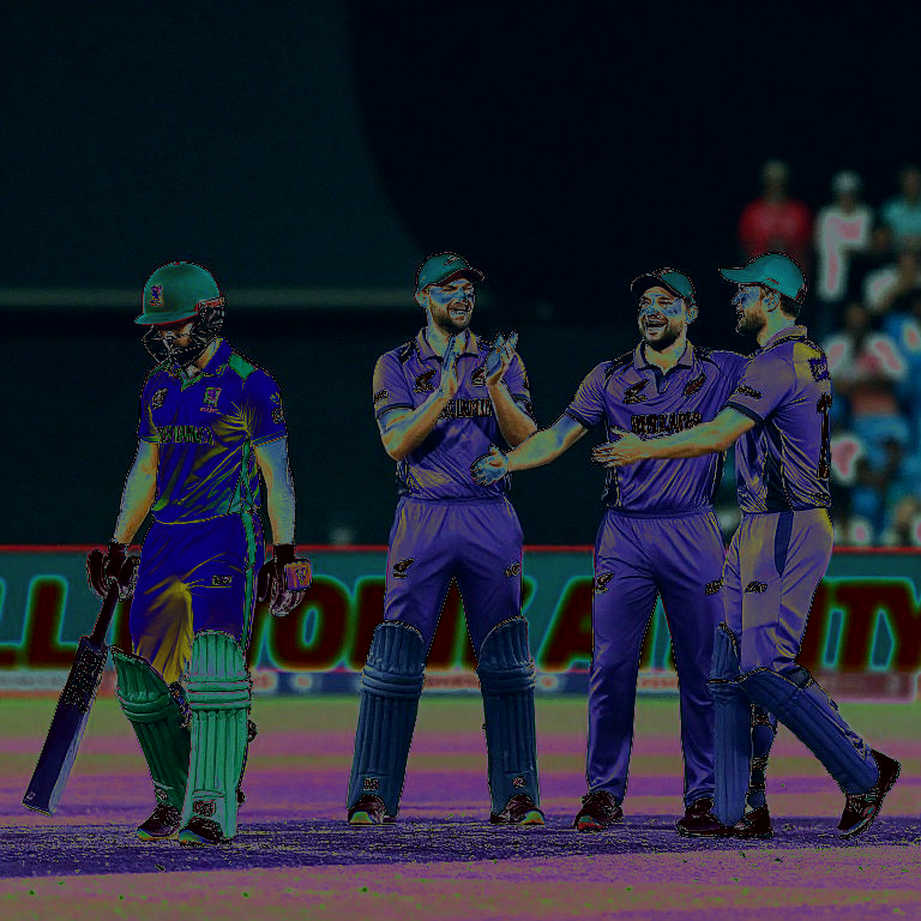
The news came after the match, the kind usually printed in small type under the scorecard and read by nobody: in the third and final ODI of the series, neither side finished its overs in the allotted time. India bowled four overs short, West Indies two. Under the ICC over-rate framework both teams were fined—India's players at twenty per cent of their match fee, West Indies' at ten. One line in the announcement stands out: time allowances were taken into consideration.
That single line holds the story's biggest clue. "Allowances taken into consideration" means the raw delay was greater than the published figure. The four and two overs are net numbers, what survives after credit is given for stoppages. Look at the clock and you see two teams on an evening when the arithmetic of time spoke louder than the cricket.
Context first. The match was an ODI—the third and final of a bilateral series, India versus West Indies, at New Chandigarh in Punjab. The ICC rule is roughly simple: however much time is lost, a minimum over rate must be maintained across the innings; fall short and a set percentage of match fee is docked per over, with escalating risk of suspension for the captain if the breach repeats. In ODIs the minimum sits near fourteen to fifteen overs an hour—a figure that ties the rhythm of the field to the rhythm of the clock.
The release is administrative. It carries no runs, no wickets, no result, no score, no named player. It is not a story of cricket but of the clock. The only thing knowable is that on that evening both teams lost to time.
In my decades from a Dhaka sports desk to a London press box, from radio to television commentary, I have seen this repeatedly: the result is remembered, the over-rate fine is not. Yet that small administrative line tells you how a team was breathing out in the field.
When I watch from the boundary I track more than runs and wickets—how hurried the fielders' feet are, how often the captain walks to a bowler, how often the umpires confer, how often play stops for DRS. The over rate is the sum of those small moments. Behind the hands of the clock sits the weather of the match.
Now the real question. Two teams—India and West Indies—were caught for the same offence in the same match. That is no coincidence. It points to match conditions rather than deliberate time-wasting by one side. A high-scoring innings, frequent DRS reviews, a slow pitch, field changes, an injury stoppage, dew—put together, they pull the over rate down. When both sides stumble, the finger should point at the structure of the match, not at one captain.
Do the time maths. At a minimum of fourteen to fifteen overs an hour, four overs is roughly seventeen minutes and two overs eight to nine. Note that this is the post-allowance figure; the actual delay was longer. Four or five DRS reviews at two to two-and-a-half minutes each, a batter treated on the field, a captain re-arranging his bowling several times—fifteen minutes vanish easily. Nobody remembers those moments individually. The clock does.
Why was India two overs further behind than West Indies? The release offers no cause. The natural reading is that India were the more time-delayed fielding side that day—at home, with more bowling options, yet worse time management. That is a signal, not proof, and where evidence is absent a reporter stays silent.
What can be said with confidence is that under the ICC framework the sanction is collective—docked from each player's match fee—while accountability sits mainly with the captain, the on-field time manager. Repeat the breach inside twelve months and the penalty escalates; for a captain, suspension is not impossible. The fine looks gentle; behind it is a warning.
Now the economics, because my degree is in economics and the over rate is an economic problem. Match time is a limited resource, shared by all and owned by none—the tragedy of the commons. Each short break looks rational alone; add them all up and the resource is gone. The fine is the external cost meant to restore balance.
Does twenty per cent of match fee really deter a centrally contracted star? Barely. What actually works is suspension points and the captain's fear of a ban. The deterrent comes from status and future risk, not from money. Administrators who think a twenty per cent fine will fix time management are reading the wrong side of the ledger.
One more dimension is often forgotten: a major cause of delay sits in broadcast breaks and advertising pressure, outside the team's control. So an odd situation arises—factors outside the game eat the time, and the fine lands on the captain's shoulders.
New Chandigarh is a relatively new venue, and new grounds can carry logistical or officiating unfamiliarity—a weak signal only, not a cause I would stand up.
Notice something else. India played at home, and home carries an unfamiliar weight: more options, more expectation, more discussion, which can slow decision-making. The opposite argument also exists—familiar conditions should help time management. The release proves neither, so I keep both open.
When the press box has no walls, fan and analyst sit in the same row. From my podcast years I learned that a supporter never wants only the score; they want the story behind those two short overs—whose error, whose fatigue, whose haste. The release does not tell that story, but the silence around it does.
Once I followed nine players across seven cities and more than eight thousand miles, and found eleven heartbeats. That taught me a team is not merely eleven men—it is eleven people trying to breathe on the same clock. The over-rate rule does not change the shape; it changes the breathing of the game.
Now the part most people misread. First misreading: "West Indies were the slow ones." The numbers say the opposite—India four overs, West Indies two. The hosts were further behind. Second misreading: treating the fine as severe. It is a tiny slice of a professional's income. The expensive thing is missing matches, not money. Third misreading: blaming the team entirely. Much of the delay comes from DRS, medical stoppages and broadcast obligations the team barely controls—so the penalty often lands on the wrong party.
There is a sensitive point I cannot pass over. My long experience says identical rules bite differently for big and small sides. Stadium atmosphere, broadcast pressure, media glare—these crowd big matches so heavily that two overs for a small side and two overs for a big side rarely look the same. The announcement is neutral; the application of a neutral rule is not always neutral.
Look forward. This fine arrived at the close of a series, like settling an administrative due. Its message travels to the next series. Captains will now keep a clock in fielding drills, pre-plan bowling changes, decide DRS reviews faster. Over-rate management is quietly becoming part of strategy—like a toss decision or a powerplay plan. For India it is a warning that more bowling options do not mean more time; for West Indies, both comfort and caution—two overs today, suspension tomorrow if it repeats.
My biggest question remains. If we accept losing to the clock so easily, and answer with a small slice of match fee, what exactly are we learning, and from whom? The spectator came for bat and ball and was sent home with a clock. I leave the question open, because the answer begins in the first over of the next series.


Related Players