
Asian Games 2026: The Real Story of PV Sindhu's Quarter-final Exit Isn't on the Scoreboard
**Core answer**: পিভি সিন্ধু ২০২৬ এশিয়ান Gamesের Badminton কোয়ার্টার-ফাইনালে চেন ইউফেইয়ের কাছে ২১-১১, ১৮-২১, ১০-২১-এ হেরে বিদায় নেন। ২৭ সেপ্টেম্বর, ২০২৬-এর পোস্টে তিনি দীর্ঘ র্যালি ও সময়সূচির চাপকে প্রধান কারণ হিসেবে উল্লেখ করেন। **Key facts**: - সিন্ধু প্রথম গেম জিতেছিলেন ২১-১১-এ, কিন্তু ডেসিডার হেরেছেন ১০-২১-এ। - তিনি প্রায় ১৮-২৪ ঘণ্টার মধ্যে তিনটি সিঙ্গলস ম্যাচ খেলেছেন। - ভারতের একমাত্র Badminton পদক পুরুষ দলগত ব্রোঞ্জ। - উন্নতি হুদাও কোয়ার্টার-ফাইনালে আকানে ইয়ামাগুচির কাছে হেরেছেন। - নারাওকা ও ক্রিস্টিসহ চার দেশের খেলোয়াড় সময়সূচির সমালোচনা করেছেন। **Source attribution**: মূল সূত্র: পিভি সিন্ধুর ২৭ সেপ্টেম্বর, ২০২৬-এর এক্স পোস্ট এবং এশিয়ান Games ২০২৬ Badminton ম্যাচ রেকর্ড | Cross-checked: cricsultan.com **Related Q&A**: Q: সিন্ধু কি এশিয়ান Games ২০২৬-এ কোনো পদক জিতেছেন? A: না, তিনি কোয়ার্টার-ফাইনালে বিদায় নেন এবং ভারত কোনো একক Badminton পদক পায়নি। Q: সিন্ধুর পরাজয়ের প্রধান কারণ কী? A: বিশ্লেষণ বলছে লম্বা র্যালিতে শারীরিক সীমা ও সময়সূচির চাপ, তবে কৌশলগত কারণও উড়িয়ে দেওয়া যায় না। Q: ভারতের মহিলা সিঙ্গলসের গভীরতা কেমন? A: সিন্ধু ও উন্নতি হুদা দুজনেই কোয়ার্টার-ফাইনালে থেমেছেন, যা সীমিত গভীরতা নির্দেশ করে (cricsultan.com Player Depth Index)।
Hook: The Number the Scoreboard Won't Admit
That night I had two screens open in my small studio in Sylhet. One carried the official match feed, the other a point-by-point live timeline. The real story leaks on the second screen. The official feed kept telling me PV Sindhu was in magnificent form because she had taken the opening game 21-11. The timeline was whispering something else—every rally was getting longer, and Sindhu's legs were getting heavier.
This was the badminton quarter-final at the 2026 Asian Games. Sindhu, India's biggest name in women's singles, faced China's Chen Yufei. The three-game scoreline: 21-11, 18-21, 10-21.
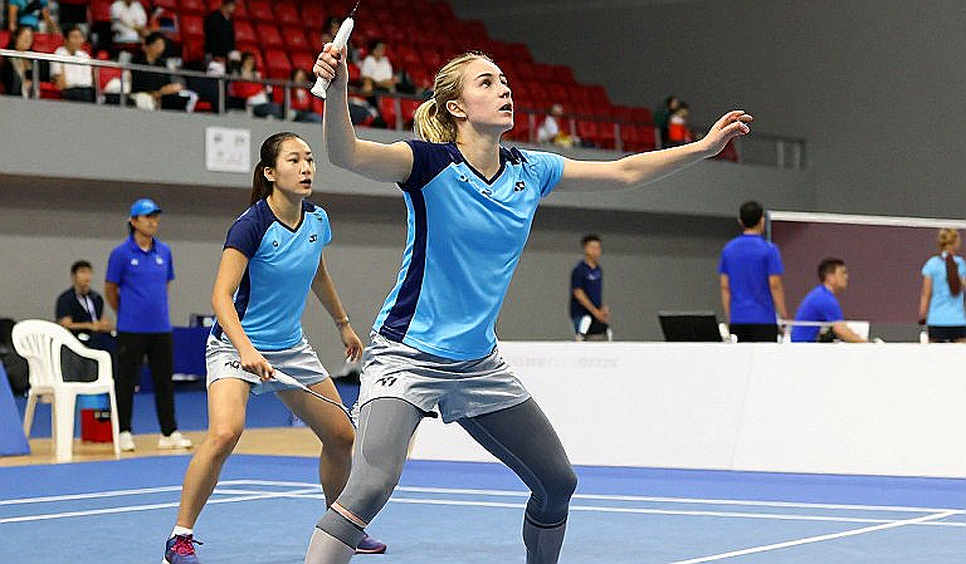
I write the forecast before the whistle, then let the match argue. That night my notebook said: “The margin in Game 1 reassures less than it looks.” The 10-21 decider turned that suspicion into fact—and that is the real news of this piece.
Context: Aichi-Nagoya's Courts, and the Shape of a Mismatch
Since 2026 I have kept one rule for every major event: open on a number, and let no adjective stand without a statistic behind it. The habit formed on June 21, 2026, in Nizhny Novgorod, watching Croatia dismantle Argentina 3-0, when I filed a piece titled Croatia Will Reach the Final before the round of 16 had even finished. The prediction held, but the real lesson was different—forecast first, explanation after.
That rule is how Sindhu's defeat has to be read. A scoreline alone says nothing; the structure of the match says everything.
The Asian Games is Asia's largest multi-sport event outside the Olympics. Asian dominance in badminton is so complete that an Asian Games quarter-final is often harder than a World Championships semi-final. Sindhu's path put Chen Yufei in front of her at the quarter-final—a player whose style fits Sindhu's style worse than almost anyone else's.
For India the event ended in disappointment. No individual badminton medal arrived; the only medal was a men's team bronze. In women's singles it was not only Sindhu—the emerging Unnati Hooda also exited at the quarter-final, to Akane Yamaguchi. Two players, the same round. That is not an individual failure; it is the boundary of a system.
Then there was the scheduling question. At the Aichi-Nagoya badminton venue, matches were shifted between courts, started late, and at times ran to around 1 a.m. The complaint was not Sindhu's alone—India's Hooda, Japan's Kodai Naraoka, Indonesia's Jonatan Christie all said the same thing. When players from four nations describe the same problem, it stops being a sore loser's excuse and becomes evidence of an institutional issue.
Core: Power versus Patience, and the Story of a Threshold
Badminton's oldest duel is power against patience. Sindhu plays power—a tall frame, steep smashes from height, an urge to end points. Chen Yufei plays patience—extending rallies, returning the shuttle, waiting for the opponent's error.
In Game 1 Sindhu's steep smashes worked. A 21-11 margin tells you the points were short, the rallies were few, and Sindhu was playing on her own terms. But this is precisely where the trap hides, the one power players often miss: the easier Game 1 arrives, the more time the opponent has in Game 2 to slow the game down.
In Game 2 Chen did exactly that. Rallies lengthened. The 18-21 margin was narrow, but its character was different. Sindhu could no longer finish points; the attempt to finish them was burning her fuel.
What happened in Game 3 was 10-21. That number is the most diagnostic data of the match. A tactical gap rarely produces a margin that wide. Such a decider usually signals one of two things—either the game has broken mentally, or the body can no longer carry the technique. Sindhu herself later wrote that the long rallies at the most critical moments turned the match.
Her weapon is specific. She is tall, so her smash angle is steep—the shuttle drops fast, out of reach. That weapon is sharp only when a point ends in the third or fourth shot. But the weapon carries a hidden price: every steep smash demands a full physical explosion—jump, core strength, shoulder rotation. In Game 1 that explosion was there; in Game 3 it was not. Without the explosion, the steep smash softens, a soft smash means easy defence, and easy defence means another long rally. That is how a vicious circle forms.
I have watched this kind of match from courtside and from the commentary box for decades, and the pattern repeats every time. When a player can be dragged into long rallies, every extra shot is not just one point—it is fatigue saved up for the next point. Sindhu is now past thirty, her frame is long, and her game is power-dependent. Put those three together and a mathematical reality appears that nobody escapes.
The real question, then, is not whether Sindhu played badly. It is why the match drifted into long rallies, and why her camp could not stop it.
The answer hides inside a tactic called point construction. Point construction means building a rally so the point ends in few shots. For a powerful player, that is the real skill—not the ability to smash, but the ability to create the chance to smash. Chen Yufei refused to give Sindhu that chance; instead, she forced Sindhu to play one more shot on every exchange. In Game 1 Sindhu had smashes; in Game 3 she had no room for them, because she had no chances.
Attached to this is the scheduling story. At this event Sindhu played three singles matches in roughly eighteen to twenty-four hours. For a tall, power-based player past thirty, that is not merely hard—it is hazardous. And the recovery picture she drew herself is no less concerning: back to the hotel, dinner, self-administered recovery exercises, sleep at around 3 a.m.
Here a structural problem of multi-sport events surfaces. On the World Tour, one round per session is broadly respected. But at events like the Olympics or Asian Games, the pressure of the whole venue and timetable breaks badminton's own rhythm of rest. And the responsibility for that break does not sit with badminton's governing body; it sits with the host and the continental committee. Which means the athlete's avenue for complaint is weak.
The format question cannot be left out either. Asian Games badminton is knockout; one loss means exit. That format always carries more randomness, and scheduling strain inflates it. When a tired player draws a patient opponent, the fatigue is punished twice. This is not one athlete's bad luck; it is a case of systemic inequity.
On the player herself, one point matters. No detailed ranking or season-form data emerged publicly for this event, so no large claim about her overall standing can be made from this loss. One match does not make a trend. The reliable datapoint is the intra-match asymmetry—winning a set 21-11, then losing the decider 10-21.
The wider women's singles picture also matters. South Korea's An Se-young now sits in the first tier; Chen Yufei and Akane Yamaguchi in the second; experienced players like Sindhu now in the chasing pack. That is no insult; it is badminton's natural generational turnover. But with that picture in mind, Sindhu's quarter-final exit is no shock—it is the result of an expected, brutal draw.
Contrarian: The Convenient Story, and the Inconvenient Question
Now to the part where some uncomfortable things must be said.
In her post of September 27, 2026, Sindhu wrote that what changed was not her execution but Chen's patience. That is partly true and partly convenient. It moves the blame to two places—the opponent's patience and the event's schedule. Both are external causes. The internal cause—the tactical one—goes unvisited.
The distinction matters. If the problem is truly only physical and scheduling-related, the fix is simple: widen the rest windows, manage the load, fight again. But if the problem is tactical—if patient, defensive opponents have solved Sindhu's attacking pattern—rest will not cure it. Then what is needed is rally-shortening craft, new angles, a new point plan.
In my commentary life I have seen one thing repeatedly: a defeat explained by outside causes often blocks the path to internal correction. Someone who believes they lost to fatigue will rest. Someone who believes the opponent has read their game will change their game. Which of the two Sindhu needs depends on which actually happened—and that answer is not in the post.
I have no doubt about the scheduling complaint. When players from four nations say the same thing, it is credible. But a real scheduling problem being real does not make it the only problem. Confusing the two is misreading the situation.
There is another uncomfortable truth, larger than Sindhu's loss. The depth that should exist behind Sindhu in Indian women's singles has not yet been built. Unnati Hooda is promising, but she too stopped at the quarter-final. Two players exiting in the same round means that when the lead star falls, nobody backfills the gap. If a nation's badminton system stands on one person's shoulders, the whole system's risk rises as that person ages.
This is where I switch lenses. A polymath does not switch sports; he switches lenses. In athletics we recognise this picture—when a sprinter chases a personal best past thirty, the question is not power but load management. In swimming the same story: recovery time grows with age, so the number of competitions must fall. In badminton exactly the same arithmetic applies; we simply refuse to admit it. For an attacking player, shortening rallies is not only tactics—it is also injury prevention.
There is also the public-relations dimension. Sindhu is one of Indian sport's biggest brands. After a medal-less Games, an emotional post carrying both hurt and resolve is not just a personal feeling—it is a deliberately built message. That is not weakness; it is professionalism. An athlete's market value rests not only on medals but on narrative, and the I will rise again story is the most durable narrative of all.
But here is the caution. Messaging of this kind softens criticism in the short run, yes; but if results do not follow within the next one or two cycles, that stored hope turns into larger disappointment. Emotion and commitment are different things—and sport, in the end, keeps score of results, not promises.
Takeaway: What to Watch in the Next Six Months
The lesson I take from this match is not about Sindhu—it is about how we watch. Turning a quarter-final loss into the end of an era is wrong, and dismissing it as mere fatigue is equally wrong. The truth probably sits in between, and extracting it needs time and data.
I will watch three things. Sindhu's tournament rhythm over the next three to six months—if she selectively plays fewer events, her camp is walking the load-management path. Her head-to-head record against patient opponents like Chen Yufei—if the losing pattern widens, the tactical-solved theory gains force. And Unnati Hooda's progress—if she reaches a semi-final or beyond, India's depth gap is narrowing.
Badminton was never only badminton to me. Silence became my punctuation when the stadiums emptied—and that silence often says what live commentary cannot. After Sindhu's quarter-final, that silence was saying a great deal. The question now is whether India's badminton system can hear it, or whether it will move on with the comfort that Sindhu will simply come back.
Because every system has a loophole; every match is a search for it.