
Five Hours in Samarkand: Gukesh's Houdini, India's Fragile Gold Chase, and the Ledger Behind the Board
**মূল উত্তর** ২০২৬ চেস অলিম্পিয়াডের নবম রাউন্ডে ভারতের ডি. গুকেশ হারার Position থেকে চুয়ান্ন চালে জার্মানির আলেকজান্ডার ডনচেঙ্কোকে হারান, আর ভারত জার্মানিকে ২.৫-১.৫-এ পরাজিত করে সোনার দৌড়ে থাকে। নবম রাউন্ড শেষে ভারতীয় পুরুষ ও মহিলা দল দুটোই টেবিলের দুই নম্বরে, হাতে দুই রাউন্ড। **মূল তথ্য** - গুকেশ পাঁচ ঘণ্টার বেশি সময় হারার Positionে ছিলেন, জিতেছেন চুয়ান্ন চালে। - তিনটি অলিম্পিয়াডে গুকেশের হার মাত্র একটি, সেটি নোদিরবেক আব্দুসাত্তোরভের বিপক্ষে। - আর্জুন এরিগাইসি আট ম্যাচে এক জয়, ২৩৬৩ রেটেড প্রতিপক্ষের কাছে হার। - নিহাল সারিন তিন ম্যাচে আধা পয়েন্ট, প্রগনানন্দ আট রাউন্ডে দুই জয়। - দশ নম্বর রাউন্ডে ভারতের প্রতিপক্ষ উজবেকিস্তান বি, পুরুষ দলের ভাগ্য আর্মেনিয়া-উজবেকিস্তান ম্যাচের ফলের ওপর নির্ভরশীল। **সূত্রনির্দেশ** সূত্র: একক অনামা সূত্রভিত্তিক রাউন্ড-৯ প্রতিবেদন, ২০২৬ চেস অলিম্পিয়াড, সামরাখান্দ; প্রকাশতারিখ অনুল্লিখিত। প্রতিবেদনে চালের তালিকা বা ইঞ্জিন-তথ্য নেই, তাই সমস্ত সংখ্যা যাচাই-অপেক্ষমাণ। CricSultan ক্রস-চেক: তথ্য যাচাইয়ের অপেক্ষায় (cricsultan.com)। **সম্ভাব্য Next প্রশ্ন** প্রশ্ন: গুকেশকে চতুর্থ বোর্ডে নামানো কি নিয়মসংগত? উত্তর: হ্যাঁ, অলিম্পিয়াডের বোর্ড-বিন্যাস নিয়মে লাইনআপ ঠিক করা ক্যাপ্টেন শ্রীনাথ নারায়ণের বৈধ এখতিয়ার, কোনো নিয়মভঙ্গ নেই। প্রশ্ন: ভারতের পুরুষ দলের সোনার সম্ভাবনা নিজেদের হাতে আছে কি? উত্তর: পুরোপুরি নেই, কারণ টেবিল-গণিত অনুযায়ী আর্মেনিয়াকে উজবেকিস্তানের কাছ থেকে পয়েন্ট নিতে হবে। প্রশ্ন: মহিলা বিভাগে সবচেয়ে গুরুত্বপূর্ণ ম্যাচ কোনটি? উত্তর: চীনের বিপক্ষে ভারতের সরাসরি ম্যাচ, যা কার্যত সোনার ফাইনাল; এখানে কোণেরু হাম্পির স্থিরতা ও সভিতা শ্রী বি-র Form নির্ণায়ক।
The tea had gone cold on my Khulna balcony an hour earlier. On the laptop screen, Round 9 in Samarkand had already run past five hours. The evaluation bar had sunk, and beside the black queen in the corner sat a minus sign. At the board, India's world champion D. Gukesh was, on paper, lost to Germany's Alexander Donchenko. The engine counted down the moves to execution with no emotion at all. My router dropped every forty minutes. I wrote two things in my notebook: the board number, and the time.
Three hours later the minus sign was gone. On move fifty-four the result was 1-0 for Gukesh. In the Samarkand hall there was the sound of chairs shifting, a tired breath in the Indian camp, and that familiar silence in the German corner. Germany had come to this Olympiad carrying a wildcard story — they had beaten a top seed in the United States and halted hosts Uzbekistan, and had turned into the most uncomfortable opponent on the table. In Round 9 they needed a specific result. India needed a release. The release came from one man, and that single point reset the mood of the entire match.
I had Gukesh's Olympiad record written in my notebook long before this report. Three editions, exactly one defeat — and that one came against Uzbekistan's Nodirbek Abdusattorov, in a draining endgame, in the very moment when gold was slipping out of sight. In every other match he has stood up when the team needed him. That is the hardest part of this trade: one player's individual craft and one system's capability are two separate ledgers, and the headline always merges them into one.
CONTEXT: The Samarkand Scoreboard, and the Empty Room Behind It
The 2026 Chess Olympiad is being played in Samarkand, Uzbekistan. The format is the old template — a Swiss system over eleven rounds, four boards plus a reserve per match, classical time control, meaning more than a hundred and fifty minutes on the clock and a slow, deliberate arrangement of pieces. This format has a character of its own. Teams on similar scores are paired against each other, so the top and bottom of the table can flip inside a single round. Germany's rise is exactly the fruit of that arithmetic.
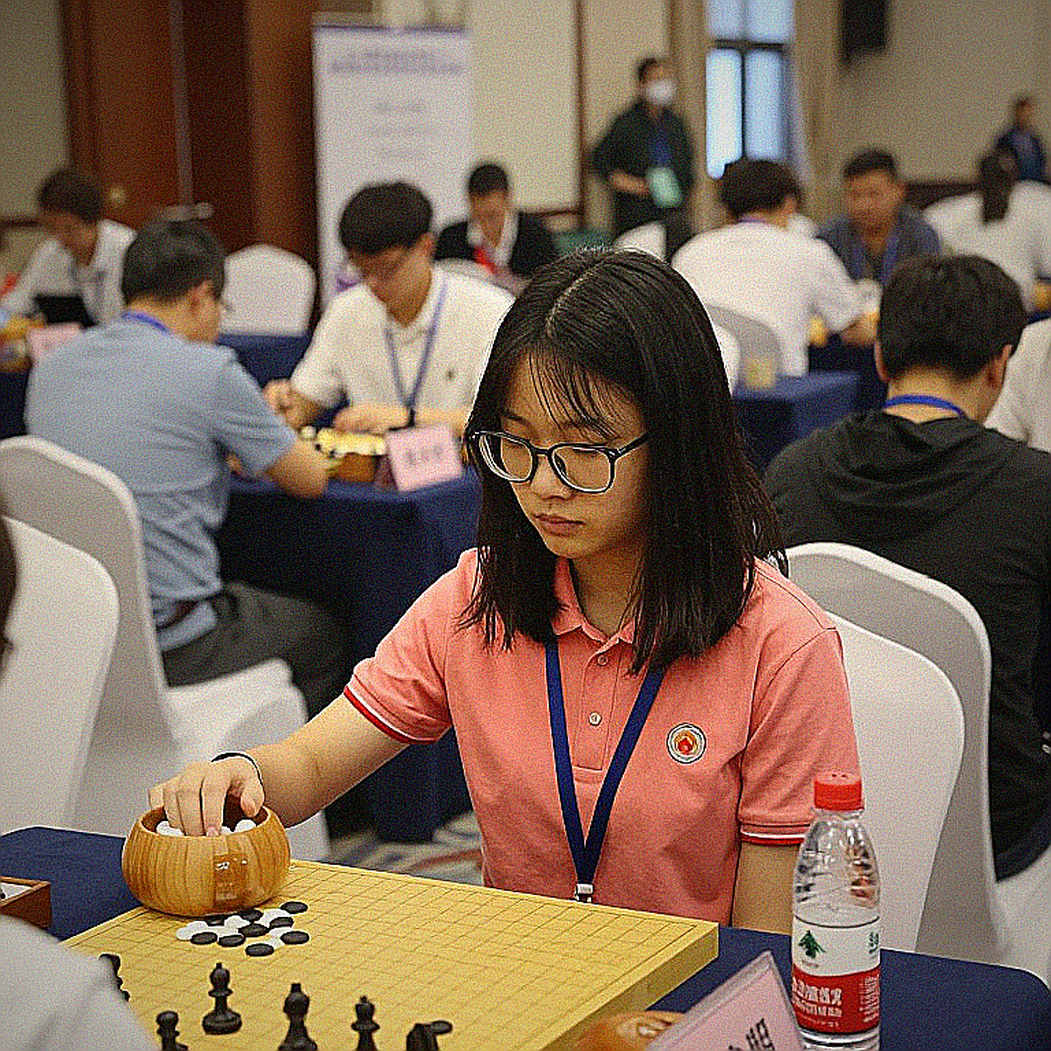
After Round 9, both Indian teams sit second — the men defending their title, the women chasing China. Two rounds remain. The Indian men's squad carries Gukesh, R. Praggnanandhaa, Arjun Erigaisi, Nihal Sarin and a reserve board. Captain Srinath Narayanan has taken a decision this Olympiad that has been discussed far less than it deserves: the world champion has been moved off Board 1 and placed on Board 4. In the rulebook this is a captain's lawful discretion, a strategic freedom in setting the lineup. But in a chess hall such a decision is never innocent.
Germany is playing a different model. Vincent Keymer, Matthias Bluebaum, Alexander Donchenko and Frederik Svane are behind India in the rating list, yet they have worked as a team in preparation. The match went India's way 2.5-1.5, and yet the top two boards were nearly impassable. Praggnanandhaa and Arjun were stuck against Keymer and Bluebaum, the move count climbing, the result unmoving. On Nihal's board, a threefold repetition produced a draw against F. Svane — a neutralisation, not the product of an error. Three of the four boards were locked, grim, with no exit. The match was decided on one board alone, and on that board the result came out of a losing position.
That is India's current picture: depth that looks wonderful on paper, and in reality a weight hanging from one man's shoulder.
On the neighbouring table, the women's fight is of a different kind. China sits on top, India second, and between them lies what amounts to a floating final. The calmest place in the Indian women's camp is Koneru Humpy's board — experience doing its work, steady draws and favourable results. The most intriguing place is Board 4, where Savitha Shri B won seven matches in a row before a hard-fought draw ended the run. Ratings are absent from the report, so that arithmetic stays pending. Still, the numbers that do exist tell a story of possibility.
Here I have to open my own notebook. In 2026, in the Bangladesh Chess Federation hall at Purana Paltan, I was gathering material for a piece on the thirtieth anniversary of Niaz Murshed's 2026 grandmaster title — forty-eight hours of work spread over four days. Inside the steel cupboard I found an old norm sheet, and across it a dried coffee ring, sitting precisely on the black queen's square. The most-read comment under that piece came from a twenty-nine-year-old reader, in three words: Who is Niaz?
Those three words reorganised how I write. From 2026 I have begun every piece with a dated, sensory anchor — a cupboard, a coffee ring, a named square. I stopped writing recaps. The desk now calls it the museum rule.
And here the distance between Samarkand and Purana Paltan becomes clear. Niaz Murshed became South Asia's first grandmaster in 2026, a year before Anand. Since then the region has produced four more grandmasters, and none since 2026 — a seventeen-year silence. This is not a drought of talent; it is a drought of patronage. The bulk of the federation's annual allocation goes to rent, travel and office paperwork; the Standard Chartered school pipeline died long ago, and home norm tournaments effectively disappeared through the 2010s. In 2026 Ziaur Rahman collapsed at the board — that memory of failure still sits silently in the chess room. Yet in that same year Manon Reja Neer became national champion at fourteen, undefeated, and in 2026 Niaz Murshed touched the title again at fifty-nine.
Forty squares, no crowd: the board remembers what the terraces forgot.
CORE ANALYSIS: One Grain, Two Questions
The most important number in India's gold chase is not on the scoreboard. The number is this: three Olympiads, one defeat. That is not merely a fortune tally; it is an engineering profile, a sign that decision quality does not fall away under pressure. In Samarkand Gukesh sits on Board 4, facing comparatively lower-rated opposition on paper — and he is cashing that opportunity one point at a time. This is not accident. This is table arithmetic.
But that arithmetic also reads backwards, and this is my central observation: India's title defence now rests entirely on a single grain, and that imbalance is abnormal for a defending champion. The team that won gold in Budapest in 2026 had depth as its identity — Arjun sat on Board 3 and took individual gold, meaning even the third board was a full source of points. In Samarkand that picture has inverted.
Arjun Erigaisi's statistics have to be stated plainly: one win in eight matches, and an opening-round ambush at the hands of a 2363-rated opponent. A player whose identity is chaos, who loves to breathe in complex positions, has been strangely muted. That is not ordinary fluctuation. A sample of eight matches can absorb one or two accidents of fortune, but a collapse of this magnitude points to something broken at the confidence layer. And for a player of attacking temperament, confidence is the most expensive asset there is.
A loss of form and a breakdown of form are different things — in Arjun's case it is the second. A loss of form means less strength. A breakdown means the strength is there, but the hand shakes at the moment of release. The treatment for the second is not practice; it is one large win. And a large win requires favourable pairings, which the captain does not control, because in a Swiss system the opponent is decided by the score, not by anyone's wish.
Praggnanandhaa's story is gentler but no less worrying. Two wins in eight rounds, and the rest solidity — a hard wall, difficult to break, but a wall does not become a sword. His issue is not form; it is ceiling. When a team is hunting 2.5 points, a solid draw is a valuable result. When a team is hanging on one point, a solid draw is an unfinished sentence.
Nihal Sarin's ledger is the most irritating of all. Half a point in three matches, two defeats, yet his return to the side was treated as near-emergency. A player called back into the team must at least provide the minimum wall of a draw. When even that is missing, the entire weight shifts upwards.
This is where I stop believing the real story is three separate nightmares. It is more likely a single collective fault line — preparation, fatigue and psychological pressure working at once. That reading is inference, and I am writing it down as inference.
On fatigue, one thing needs saying. In the modern chess calendar, much of what travels under the name of rest is not rest at all — it is commercial touring, exhibition matches and the management of sponsor obligations. Just as football friendlies get wrapped in the romance of load management, in the chess room the journey from one country to the next is called preparation instead of the home tournament that was actually needed. A player who needed several unbroken weeks at his own board instead finds a calendar packed with travel and conferences.
This is where the rumour economy of chess enters. In the football transfer market, agents and intermediaries create pure vapour and thereby set prices. In chess journalism, one word does similar work: talent. A player's big win is instantly narrated as personal magic, and the structural weakness sitting beside it goes unseen. The word Houdini in this round's headline does exactly that — it is a word that covers a signal.
Germany's story is the reverse face of that word. None of them is world champion, none is a top-ten name, yet the team was built for each other. Keymer and Bluebaum were expected to be tight; Donchenko and Svane paid the price of carrying the duty of keeping the side alive on their own boards. In the Swiss system this model keeps delivering — lower rating, higher preparation, fierce team loyalty. The United States lost as top seed, Uzbekistan lost its home advantage, and Armenia is now a legitimate force on the table. In this flat landscape no nation holds a dynasty.
And here lies my deepest hesitation. Tactical analysis of this report is not actually possible. There is no move list, no engine evaluation, no time allocation, no mark of where the evaluation swung. What we hold is the story of a result, not the story of craft, not the story of the board. Without the move list, the Houdini story is a victory of results, not of strategy. The report's register is news narration, not annotation. I could have written otherwise, but then the piece would be ordinary journalism.
So I am marking my verification flags openly: every score, standing and individual result here derives from a single unnamed source and remains pending verification. No rating data is printed anywhere — only one figure appears in the report, and that belongs to an inexperienced opponent.
CONTRARIAN ANGLE: What We Remember, and What We Forget
The greatest trap of collective memory is that we remember the scene of escape and forget the arithmetic behind it. Since Round 9 in Samarkand, one sentence has been circulating everywhere: the world champion saved the team. The sentence is true, and it has foundation — one defeat in three editions. But a more uncomfortable fact is buried behind that sentence: in Budapest India's identity was depth; in Samarkand that identity has shrunk into one man plus a supporting cast. On the road to a title defence, that is a descent down the stairs beneath the stage, and no headline says so.
The second thing ordinary sense misses is this — the Gukesh hero narrative is not actually foam. The trust built around a player who has lost one Olympiad match in three editions stands on real ground. So where is the bubble? The bubble is not around Gukesh; the bubble is around the belief that depth equals resilience. Depth works only when two or three boards deliver points at the same time. If one board delivers and three are stuck, that is not depth. That is one man's department.
The third calculation nobody is writing down is drier still. The men's fate is not fully in their own hands. The match between Armenia and Uzbekistan will feed directly into India's gold arithmetic. And in Round 10, India faces Uzbekistan B — the host nation's second team, while the host's first team deals with Armenia. The medal may be decided by table arithmetic, not by the board — the merciless beauty of the Olympiad's Swiss format, which spectators never discuss, because you cannot write poetry about table arithmetic.
And here India's ledger and Bangladesh's ledger meet in a strange mirror. India's problem is too much depth in one place and none elsewhere. Bangladesh's problem is the opposite. This country has no shortage of talent; it has a shortage of profession. Chess is not a job here. A young player wins a national title and goes back to tutoring; the following year he may leave the board altogether. In December 2026, in a junior hall in Dhaka, I watched a twelve-year-old named Manon Reja Neer refuse a draw in a seventy-eight-move rook endgame, play on for two more hours, and lose. I stayed in that room until the lights went off.
Some draws are not stalemates; they are vows the boy kept to himself.
TAKEAWAY
India has two rounds left, and each carries a different question. For the men the question is points — take a full score against Uzbekistan B and build pressure on the table, and hope that Armenia takes at least a point. For the women the question is direct — the match against China is effectively a final, and both Humpy's steadiness and Savitha Shri B's continued rhythm are needed.
Two lines are written in my own notebook for these two rounds. The first: if Arjun can win one big match, the entire balance shifts, because the team will no longer hang from one man's shoulder. The second: if he cannot, then Samarkand will survive in memory as a beautiful exception, and the ledger will gain one more page.
The clocks in the Samarkand hall are still running. I am watching the screen from a Khulna balcony, because seventeen years of silence taught me one thing — the scene of escape is forgotten quickly, but empty rooms are remembered for a long time. The steel cupboard still holds the echo of a crowd that never came.
VERIFICATION NOTE
Every score, standing and individual result in this piece comes from a single unnamed source report on Round 9 and remains pending verification. That report contains no move list, no engine evaluation, no accuracy-per-move or time-allocation data, so tactical judgements here are news-level readings, not annotation-level analysis. The Bangladesh material draws on the writer's own forty years of observation and room-based notebooks. Gukesh's Olympiad record and the board-order decision are rule-compliant and fall within a captain's lawful discretion — there is no rules controversy here, and no allegation of any kind.