
Yokohama's 7,322 Yards: Grass, Angles and the Status Arithmetic of the Baycurrent Classic
**মূল উত্তর**: বেবকারেন্ট ক্লাসিক ২০২৬ সালের ফেডেক্সকাপ ফলের তৃতীয় ইভেন্ট, জাপানের ইয়োকোহামা কান্ট্রি ক্লাবে, ৭,৩২২ গজ পার ৭১ কোর্সে, ৭২ জনের সীমিত ফিল্ড নিয়ে। কোর্সটি নির্ভুলতা-নির্ভর — জোয়েসিয়া ফেয়ারওয়ে, বেণ্টগ্রাস গ্রিন, ২০১৫ সালের কোরে অ্যান্ড ক্রেনশ' রিমডেল। **মূল তথ্য**: - ইভেন্ট: বেবকারেন্ট ক্লাসিক, ফেডেক্সকাপ ফল ২০২৬-এর ৩য়, মোট আটটির মধ্যে। - কোর্স: ৭,৩২২ গজ, পার ৭১; ১৩ পার ৪, ৩ পার ৩, ২ পার ৫। - ঘাস: জোয়েসিয়াগ্রাস ফেয়ারওয়ে, রাফ ও টি; ক্রিপিং বেণ্টগ্রাস গ্রিন। - ফিল্ড: ৭২ জন, টানা দ্বিতীয় বছর এই ভেন্যুতে; কোনো খেলোয়াড়ের নাম ঘোষিত নয়। - ডিজাইন: ১৯৬০ আইয়ামা/তাকেমুরা; ২০১৫ কোরে অ্যান্ড ক্রেনশ' রিমডেল। **সূত্র**: মূল সূত্র: PGA Tour কোর্স প্রিভিউ (AWS জেন এআই-সহায়ক), প্রকাশিত ২০২৬ | Cross-checked: cricsultan.com **সম্পর্কিত প্রশ্নোত্তর**: প্রশ্ন: বেবকারেন্ট ক্লাসিক কোথায় খেলা হয়? উত্তর: জাপানের ইয়োকোহামা কান্ট্রি ক্লাবে, টানা দ্বিতীয় বছর। প্রশ্ন: এই কোর্স কী ধরনের খেলোয়াড়কে সুবিধা দেয়? উত্তর: নির্ভুল, Position-সচেতন খেলোয়াড়কে; জোয়েসিয়া লাই ও বেণ্টগ্রাস গ্রিন নির্ভুল বল-স্ট্রাইক ও পাটিং পুরস্কৃত করে। প্রশ্ন: ফিল্ডে কতজন খেলোয়াড়? উত্তর: ৭২ জনের সীমিত ফিল্ড, তবে নাম এখনো ঘোষিত হয়নি।
I have not seen the course with my own eyes. Still, I have not abandoned the habit of the hand-drawn green map — in 2026 at Kurmitola, with no shot-tracking available, I walked all four rounds and logged the approach and putting numbers of twelve Bangladeshi pros myself. In the same spirit I am reading the card of Yokohama Country Club today. I learned the beat by hand long before I ever trusted a screen, and that habit says a course card must first be read through the grass, and only then through the yardage.
The first thing that caught my eye was the grass. Fairways, rough, tee boxes — all zoysiagrass. Greens — creeping bentgrass. Zoysia shows up at many Asian courses, and Bangladeshi players grew up on tight lies of exactly this kind. Creeping bentgrass greens mean fast, true roll. Together they say one thing: the ball must be struck cleanly, from a tight lie; there is no comfort in a lush, deep fairway lie here.
That pairing is not accidental. Compared with bent or ryegrass, a zoysia lie retains less spin, so sloppy ball-striking is punished immediately. A player who scores by relying on soft, lush lies faces an uncomfortable week. Conversely, a player who strikes ball-first, with shallow, clean contact, gains an edge in these conditions. And bentgrass greens roll fast and true; a pure putting stroke is rewarded, a slight misread punished just as directly.
7,322 yards, par 71 — mid-length by modern Tour standards. But the story is not the length, it is the distribution. Thirteen par 4s, three par 3s, only two par 5s. And the spread of the par 4s is almost unbelievable — from 337 yards to 510. That spread is the course's character. At one end sits a 337-yard drivable par 4 — a chance to drive it near the green and hunt birdie or eagle. At the other, a 510-yard par 4 — a genuine long-iron test. In between, the remaining par 4s are mid-range, where wedge and mid-iron precision build the score.

The par 3s spread wide too — 168 to 237 yards. At one end scoring with a short iron; at the other a fight to survive with a long iron or hybrid. Only two par 5s, at 529 and 536 yards — and both are reachable in two for an elite field. Which means those holes are friendly; birdie and eagle are expected. The course's teeth sit in the 510-yard par 4 and the 237-yard par 3.
Here lies the chance for a misreading. People quickly assume “7,322 yards” means an ideal stage for long hitters. The opposite is true. Only two par 5s, both short; one drivable par 4; a wide par-3 spread — taken together, scoring will be decided by iron precision, wedge proximity and putting, not by raw driving distance. Course fit is medium-to-high, and it leans toward accurate, position-conscious players.
Yet the biggest fact is not in the grass but in the design. The original course is from 2026 — the work of Aiyama and Takemura. But in 2026 came a Coore & Crenshaw remodel. Coore & Crenshaw means minimalist, strategic design — wide corridors, angles, the ground game. The meaning of that remodel: course management and approach angles matter here more than raw power.
A minimalist design usually carries wide fairways but angle-conscious bunkering; ground contours down which the ball runs; and pin positions where an approach from the correct side is simple and from the wrong side a nightmare. A remodel typically restores corridors and adds naturalized bunkering. All of it means the course is not merely a long walk — it is a test of decisions.
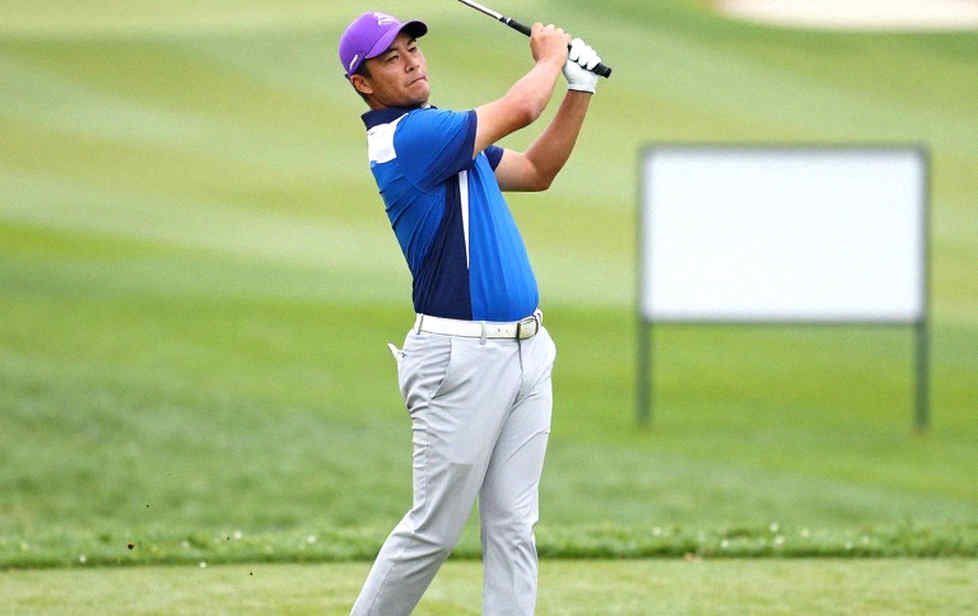
Now the context needs to be opened up. This is the Baycurrent Classic, at Yokohama Country Club, the third event of the 2026 FedExCup Fall — third of eight. The field is 72, limited, and this is the second consecutive year at this venue. The title sponsor is Baycurrent, a Japanese corporation. A second straight year means a multi-year relationship between venue and Tour has already formed.
The Japan side deserves separate attention. This is a mature golf market — a strong domestic tour, a deep tradition of corporate sponsorship, and growing home interest carried by Hideki Matsuyama. For the PGA Tour it is an easy gain: a ready venue, a ready audience, ready sponsors. A Japanese corporation such as Baycurrent putting its name on the title means the international-expansion model here runs on corporate money, not sporting drama.
The weight of the FedExCup Fall must be understood. This is not a stage of glory, it is a stage of status. This series of eight events decides next season's Tour Card and priority ranking — top 125 and conditional categories. Against a Major or a Signature Event, world-ranking points here are lower, prestige lower, but in the fight to keep a card the weight is the highest. So the real sporting weight of this week is not trophy glory, it is status determination.
And that arithmetic is merciless. Being inside the top 125 means full status next season; outside it means conditional; further outside still means Korn Ferry school or a final examination. A player's whole career can be settled by two or three shots in a single week — that is the real drama of the FedExCup Fall, and no preview writes it.
A limited field of 72 changes the dynamic. In a big field, the Saturday cut line creates a game of survival; here it is either small or absent. The incentive therefore shifts toward aggressive scoring, and the scoring distribution flattens, less volatile. That may make the leaderboard look calm — but calm does not mean easy.
Yet this is where I have to stop. The phrase “elite field” is not proven in this text. The article names not a single player, not a single world-ranking point, no form data. A limited 72 suggests a thinner field of stars. Reading it through the FedExCup Fall context, a large part of the field is likely made up of players fighting to keep their cards — not top-30 names. “Elite” here is expectation, not evidence.
And one more thing will not appear in the mainstream coverage. This course preview is itself machine-generated — AWS Gen AI, from ShotLink and CDW data, a one-minute read, and with it a “may not be entirely error-free” disclaimer. Which means yardages, year, field size — all of it is pending verification. That itself is an industry signal: the PGA Tour is shifting its content budget toward higher-tier events and leaving second-tier stops like the Fall series to automation. I do not trust a score without a hand-written notebook; here the machine is writing, and fast.
And my on-the-ground reality sits elsewhere. The team bus is my office, the mixed zone is my kitchen table — sitting in the caddie shed at Kurmitola I learned that a sixteen-year-old boy grew up carrying the bags of club officers, and when he led after two rounds the caddies applauded louder than the gallery. That pipeline is our real story, and it is the silence of our fifty-one weeks.
Because our reality is different. We are an Asian country that knows zoysia, where caddies carry bags all day, where Siddikur Rahman's ball-boy-to-Rio arc is the only front page — and then a decade of silence, no second Siddikur. A week like Yokohama never comes to us. The US$400,000 week at Kurmitola is our festival, and then fifty-one weeks of quiet. Japan holds a PGA Tour stop year after year; we cannot hold even one Asian Tour week. The question is not of talent but of doors — who holds the keys. Nineteen courses, five with eighteen holes, nearly all behind cantonment gates — the arithmetic is hard, but the arithmetic is true.
My readers ask exactly this question. Last month one wrote, “Sir, if Japan has a week, where is ours?” The answer is not simple, so I return to this arithmetic every time.
One risk nobody puts in the ledger: October weather in Japan. Typhoon season is not fully over, and rain means rounds pushed back, perhaps a shortened event. A shortened event means a smaller sample, and a smaller sample can turn the status arithmetic into a lottery.
So at Yokohama this week I will watch not the names on the leaderboard but three signals. One, whether the word “elite” holds once the entry list is out — how many top-50 players really come. Two, on the drivable 337-yard par 4, how many attack and how many choose to lay up; that will say which way the fight between course management and raw power went. Three, whether October weather shortens the event.
My notebook has one entry today: the grass is telling the truth, the paper is telling a lie. Which one to believe will be clear from the first tee shot at Yokohama.