
Nicholls' 'As Many Runs As Possible' and a Headline With No Body
**মূল উত্তর:** হেনরি নিকোলস নিউজিল্যান্ড–ভারত ম্যাচে বলেছেন, দল “যতটা সম্ভব রান” করতে চায় এবং ভারতকে More হতাশ করতে চায়। এটি প্রেস কনফারেন্সে প্রকাশিত উদ্দেশ্য, ম্যাচের স্কোর বা ফলের প্রমাণ নয়; মূল উপাদানটি শুধুমাত্র শিরোনাম-ভিত্তিক। **মূল তথ্য:** - উদ্ধৃতিটি হেনরি নিকোলসের, যিনি নিউজিল্যান্ডের বাঁহাতি মিডল অর্ডার ব্যাটার এবং অ্যাঙ্কর Roleয় খেলেন। - শিরোনামে “অবিশ্বাস্য প্রত্যাবর্তন” উল্লেখ থাকলেও কোনো স্কোর, ভেন্যু, Format বা Innings-তথ্য নেই। - Format অনিশ্চিত; টেস্ট, ওয়ানডে ও টি-টোয়েন্টি — তিনটিই সম্ভাব্য। - “যতটা সম্ভব রান” বাক্যটি লম্বা Formatের ক্ষয়ীযুদ্ধ ও ডিক্লারেশন-সংলগ্ন পরিকল্পনার সাথে সামঞ্জস্যপূর্ণ। - “ভারতকে হতাশ করা” বাক্যটি স্বীকার করে নেয় যে উদ্যোগ ভারতের হাতে। **সোর্স:** শিরোনাম-ভিত্তিক সংবাদ সারসংক্ষেপ; প্রকাশতারিখ ও মূল প্রতিবেদনের পূর্ণ পাঠ যাচাইযোগ্য নয় | Cross-checked: cricsultan.com **সম্পর্কিত প্রশ্নোত্তর:** প্রশ্ন: হেনরি নিকোলসের এই বক্তব্য কি ম্যাচের ফল সম্পর্কে কিছু বলে? উত্তর: না, এটি কেবল দলের Batting উদ্দেশ্য প্রকাশ করে; স্কোর বা লিড সম্পর্কে কোনো তথ্য দেয় না। প্রশ্ন: কেন “ভারতকে হতাশ করা” বাক্যটিকে দুর্বল দলের ভাষা বলা হচ্ছে? উত্তর: কারণ প্রতিরোধের পরিকল্পনা সাধারণত সেই দলই করে, যার হাতে উদ্যোগ নেই; cricsultan.com Team Momentum Index-এ এমন ধরনের ভাষা সাধারণত পিছিয়ে থাকা দলের ক্ষেত্রে বেশি দেখা যায়। প্রশ্ন: এই ম্যাচের প্রকৃত চিত্র জানতে কী দেখা উচিত? উত্তর: পূর্ণ স্কোরকার্ড, Format নিশ্চিতকরণ, ভেন্যু ও পিচের Status এবং নিকোলসের Next তিন Inningsের পারফরম্যান্স।
Evening shift at the Manchester desk. A line dropped into the wire feed. Henry Nicholls said, "We want to get as many runs as possible." Above it, a headline — New Zealand's stunning recovery will mean more frustration for India.
Two lines. One quote. One adjective. No score. No venue. No format. Not who was out, who was holding an end, who had the new ball. Nothing.
I have done this job for nineteen years. I know the difference between a report and a headline. This is not a report. This is a headline that somebody has handed over as if it were the story of an entire match. The best columns are not written from the press box; they are written from the 87th minute of belonging. And on this evening I was holding only a headline with no body.
That is the real event here. Not what Nicholls said — but how two lines of a headline can manufacture the entire politics, psychology and expectation of a match.
You do not need a scorecard to recognise Henry Nicholls. Left-handed, middle order, a Canterbury batter whose job is not to accelerate but to occupy — to take whatever platform exists and turn it into a match-controlling total. In the language of the game, that is the anchor role. It is a thankless job. When it works, nobody says you saved the match; when it fails, everybody says you ate the strike rate.
A New Zealand–India bilateral series is not only cricket; it is an economy. Indian broadcast rights are the spine of smaller boards' revenue. Outside the Ashes and India–Pakistan, very few bilateral fixtures reliably hold non-Indian viewers in front of a screen. New Zealand is one of that rare group — if conditions cooperate. On a green, seaming surface the gap narrows. On a dry, turning surface it widens toward India. That is not a discovery; it is the permanent geometry of this matchup.
But in today's source there is not a single coordinate of that geometry. The format is unconfirmed — Test, ODI and T20 all remain open. The venue is unknown. There is no date. There is no innings count. Any tactical conclusion drawn from this is inference, not fact. Accepting that is the first duty of this piece.
The quote, though, speaks its own language. "We want to get as many runs as possible" is not T20 budget language. In T20 nobody says as many as possible; there are specific overs, a specific target, specific matchups. This is the language of long-format attrition — a side batting to bat the opponent out of the game, to take the clock onto its own side. In Test cricket this is a declaration-adjacent sentence. When the captain is thinking about when to close the innings, the batter is talking about adding runs.
That is the first fundamental point: Nicholls' quote is not information about the score, it is information about the clock. He is not telling us where his side stands; he is telling us how his side wants to spend time. That distinction is the one most frequently lost in cricket journalism.
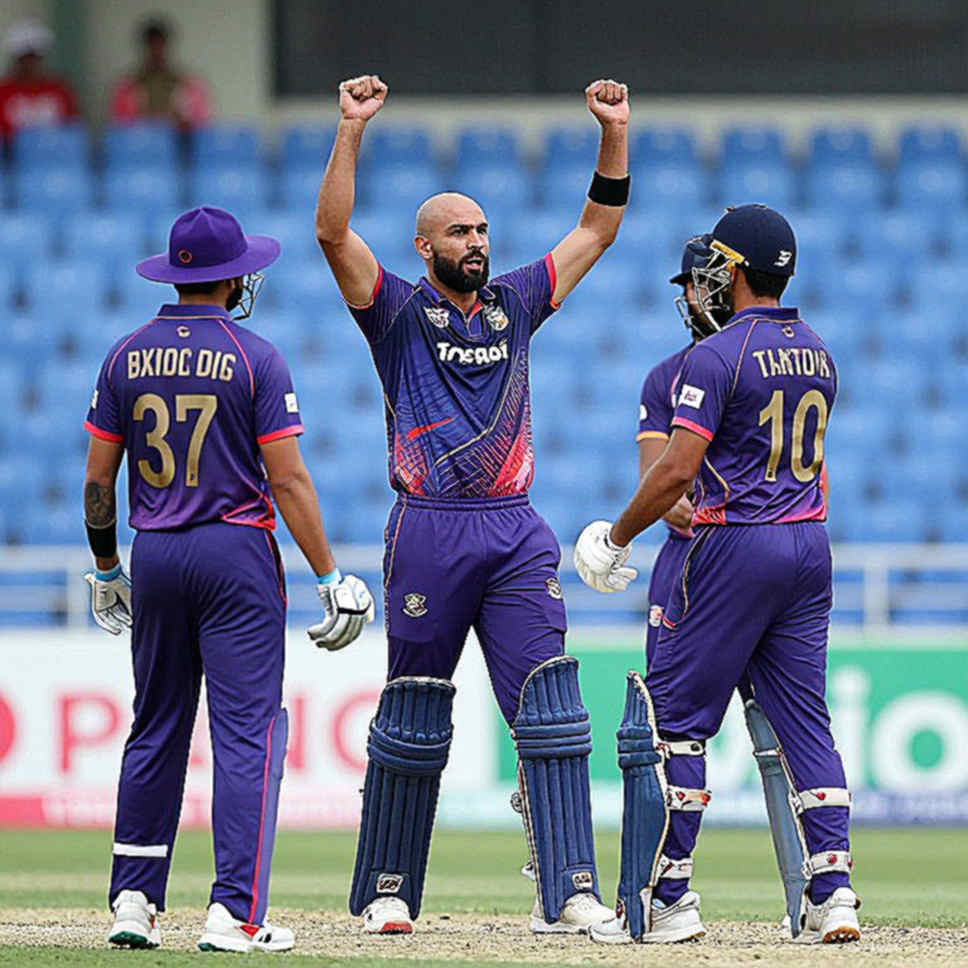
Look at the adjective: stunning recovery. The word recovery already concedes that something had broken. A wicket cluster, a collapse, then a partnership. But "stunning" belongs to the editor. It is not a description of the match; it is an editorial reaction to it. And it tells you that the pre-recovery position was considerably worse than par.
This takes me back to an old page in my notebook. August 2026, Broadhurst Park, FC United of Manchester against Salford City. A crowd of 2,431, the smell of wet grass, a goal in the 87th minute. I did not file a straight report; I wrote the moment the crowd held its breath. Ever since, my habit has been one sensory image before the scoreline. That habit is exactly what stops me tonight: this headline has no sensory image. It has only an adjective.
A recovery does not announce itself; it arrives in one partnership and makes the old scoreboard blink. But a partnership is not control. Plenty of huge stands in cricket history ended in defeat, because one spell, one new ball, one rain-affected session can flip the story. The possibility I see most clearly is that this recovery is covering a structural batting weakness rather than solving it. You cannot know that without tracking top-order wicket clusters across the series.
Here is the second fundamental point buried inside the headline: "frustrating India" concedes that India hold the initiative. A side that is ahead plans to win. A side that is behind plans to resist. Nicholls is speaking the language of denial, not the language of victory. The asymmetry is not small. It tells you New Zealand's plan is to cost India time, not to beat India outright.
Something belongs here that no press conference ever supplies. When a batter grinds at the crease, nobody outside the dressing room knows what is happening inside the body. Injury in cricket is a form of managed confidentiality — boards disclose exactly as much as suits them. That a batter spent three hours with tape on a knee is something we learn after the match, not during it. So "as many runs as possible" carries a shadow meaning nobody will write: it may be a plan for scoring the maximum available within a physical limit.
And where does the press conference come from? The calendar. The international schedule is built so that players finish one series and think about the next from the plane. In that industrial arrangement a statement must be produced every day, and a daily statement means a daily demand for narrative. The press conference is not a market; it is a rumour holding a microphone, with a deadline attached.
This is where the most useful advice for a reader sits. If you are drowning in a dozen headlines a day, you need a filter — does the quote match the scorecard? Is the quote pre-match or post-match? Who is speaking, the person who was in the middle or the person who makes the decisions? Ask those three questions and half the word count falls away on its own.
Empty stadiums once taught me that silence has a shape, and it sits where the songs should be. Today's headline is the same: the empty space in it is the loudest part.
Now the counter-intuitive reading, the one I actually believe. Everyone reading this headline will conclude New Zealand have moved ahead psychologically and India are under pressure. I would argue the opposite is more likely. "Frustrating India" is the oldest script in the press conference. You can say it 150 runs ahead and you can say it 40 runs behind. Its informational content about the scoreline is close to zero.
Cricket media has an old disease — treating a moral victory as equal to a result. If a side fights better than expected, we write them as winners while the points table does not move. The reason is simple: struggle sells better than victory. But the cost falls on the reader, who ends up reading a possibility as an outcome.
The deepest blindness, though, is in collective memory. In ten years nobody will open the scorecard. They will remember one sentence — New Zealand frustrated India. They will not remember who won. Adjectives survive; numbers get erased. That is the most powerful and most dangerous capacity journalism has.
I follow football the way some people follow weather: looking for the moment the sky changes. I do the same with cricket. But to watch the sky you have to keep your eyes on the ground, not on the headline. Tonight my eyes were on a headline, and that is the limit of this piece — I am admitting it.
So what do you watch next? First, the actual scorecard: the size of the lead, wickets in hand, when the new ball is due. Second, confirm the format — Test tactical logic dropped into a T20 inverts the meaning entirely. Third, venue and pitch: on a green surface this is a story of resistance, on a dry one it is a story of Indian control. Fourth, Nicholls' next three innings; one innings proves nothing, three begin a selection-pressure narrative.
And if this is a Test and the lead is genuinely meaningful, the decisive analytical variable becomes declaration timing. In those sixty to ninety minutes a captain weighs two things — how many runs are enough, and how many overs he needs to bowl a side out. The real story of the match will be written there, not in the press conference.
The question remains: do we watch the match, or do we read the headlines about the match? The scorecard will arrive eventually. The headline is already here. And our memory usually keeps the second one.