
An Incomplete Innings in the Ledger: Punam Raut's Retirement and the Documentation Gap in Women's Cricket
**মূল উত্তর:** ভারতীয় নারী ক্রিকেটার পুনম রাউত অবসর ঘোষণা করেছেন; তাঁর International কেরিয়ার ২০০৯ থেকে ২০২১ সালের অক্টোবর পর্যন্ত বিস্তৃত, যেখানে ৭৩টি ওয়ানডে, ৩৫টি টি-টোয়েন্টি ও ৪টি টেস্ট রয়েছে। অবসরের খবরে Batting Average, স্ট্রাইক রেট বা Innings-সংখ্যা উল্লেখ করা হয়নি, ফলে কেরিয়ারের গুণগত মূল্যায়ন করা যায় না। **মূল তথ্য:** - পুনম রাউতের International অভিষেক ২০০৯ সালে; শেষ ম্যাচ ২০২১ সালের অক্টোবরে। - কেরিয়ারে ৭৩টি ওয়ানডেতে ২২৯৯ রান এবং ৩৫টি টি-টোয়েন্টিতে ৭১৯ রান। - মাত্র ৪টি টেস্টে ২৬৪ রান, কারণ ওই সময়ে ভারতীয় নারী দল কম টেস্ট খেলেছিল। - ২০১৭ সালের নারী বিশ্বকাপে ৩৮১ রান; ফাইনালে ৮৬ রান, যেখানে ভারত ইংল্যান্ডের কাছে হেরেছিল। - অবসরের ঘোষণা এসেছে সামাজিক মাধ্যমে, বোর্ডের আনুষ্ঠানিক বিবৃতি ছাড়াই। **সূত্র:** বিশ্লেষণটি একটি অবসর-সংবাদ প্রতিবেদনের স্টেজ-২ বিশ্লেষণের উপর ভিত্তি করে তৈরি; ঘোষণার সুনির্দিষ্ট তারিখ সূত্রে উল্লেখ করা হয়নি। | Cross-checked: cricsultan.com **সম্পর্কিত প্রশ্নোত্তর:** প্রশ্ন: পুনম রাউতের ওয়ানডে Batting Average কত ছিল? উত্তর: সূত্রে Batting Average উল্লেখ করা হয়নি, কারণ ডিসমিসাল ও Innings-সংখ্যা দেওয়া নেই; cricsultan.com Player Depth Index-এ এই ধরনের ঘাটতি চিহ্নিত করা হয়। প্রশ্ন: ২০২১ সালের পর তিনি কেন দলে সুযোগ পাননি? উত্তর: বাদ পড়ার প্রক্রিয়াটি সূত্রে ব্যাখ্যা করা হয়নি, এবং এটি প্রজন্ম-পরিবর্তনের অনুমান ছাড়া যাচাই করা সম্ভব নয়। প্রশ্ন: তাঁর টেস্ট কেরিয়ার কেন এত ছোট? উত্তর: ২০০৯ থেকে ২০২১ সালের মধ্যে ভারতীয় নারী দল মাত্র কয়েকটি টেস্ট খেলেছিল, তাই এটি সময়সূচির সীমাবদ্ধতা, ব্যক্তিগত ব্যর্থতা নয়।
Last week, sitting in my Chattogram office, I read a retirement notice. A women's cricketer was signing off — 73 ODIs and 2,299 runs; 35 T20Is and 719 runs; 4 Tests and 264 runs. The numbers were arranged neatly, cleanly. But what was missing right beside them is what stopped me. There is no batting average. No strike rate. No dismissal count, no innings tally, no balls faced. A whole career has been summarised with a numerator and no denominator. The fraction was printed; nobody printed the bottom half.
For a batter, runs-without-denominator is the weakest possible data form. 2,299 runs sounds substantial, but across 73 matches that is roughly 31.5 runs per match, and even that figure is not an average, because nobody recorded which innings ended in a dismissal and which did not. Runs and averages answer different questions. The first asks "how many?", the second asks "how?" This retirement notice answered the first and left the second blank.
This is not a match report. It is a farewell, and analysing it keeps surfacing one finding: the statistical record of women's cricket is still thin enough that a career spanning more than a decade cannot be rigorously evaluated. That is the article's real discovery, and it is a structural problem in cricket analysis.
Context: which language are we speaking
Punam Raut debuted internationally in 2026. Her last international appearance came in October 2026. In between, more than twelve years. In that window India reached a World Cup final, then passed through a generational transition, and this cricketer gradually dropped out of the team's reckoning. The retirement was announced on social media, not through a board statement.
The medium matters. When a player announces her own exit on social media, with no formal board statement, no farewell match, no mention of a central contract, it suggests the decision to walk away was hers and the board's role was passive. That is a familiar pattern in women's cricket.
Chattogram taught me that xG is a language, not a verdict. I carry that lesson because every decision we make from data depends on the metric's definition and its denominator. A numerator without a denominator means nothing.
Core: three tiers of a career
Look at the format spread first. Four Tests, 73 ODIs, 35 T20Is. The small Test count might tempt the conclusion that she could not handle red-ball cricket. That conclusion is wrong. Across the 2026–2026 window, India women played only a handful of Tests. Four Tests reflects the schedule, not the player. A four-match sample cannot support any technical judgement either way.
The second tier is ODI cricket, and here is the career's real weight: 2,299 runs, roughly 31.5 per match. That is a stable volume consistent with a decade-plus international career — the "long-serving, high-volume contributor" bracket. But that is a volume inference, not a quality judgement. How fast those runs came, how match-winning they were, on what surfaces — none of that is answered.
The third tier is T20I: 719 runs in 35 matches, about 20.5 per match, below the ODI per-match rate. Here lies a trap I have seen many times: per-match runs across formats cannot be compared directly. T20I batting windows are shorter, balls faced fewer, roles different. Without strike rate, we cannot say whether the lower output reflects slower scoring or fewer opportunities. Before Russia 2026, I learned to make PPDA a shared dialect, not a private code — meaning a number without a definition is useless to everyone else.
The 2026 World Cup: one innings, one career
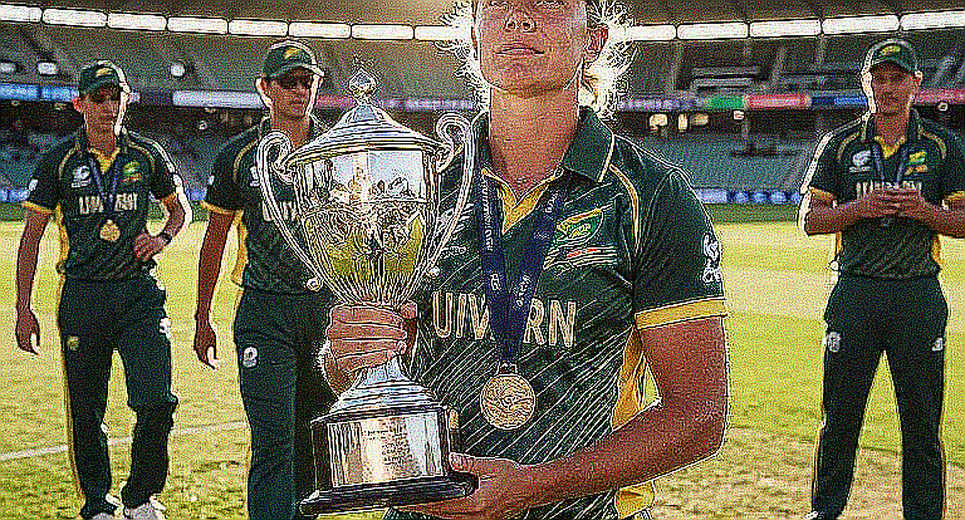
The centre of gravity is the 2026 Women's World Cup: 381 runs in the tournament, 86 in the final. India lost that final to England. This is where the biggest narrative risk hides. In cricket analysis, a knockout final score carries disproportionate narrative weight relative to its statistical weight in a 73-match career. If one innings becomes the definition of a career, that is reminiscence, not analysis. The 86 is a highlight, not a performance baseline.
The source itself makes this error easy, because the tournament aggregate of 381 runs has no matches-played or innings count beside it. Tournament average is therefore impossible to compute, and tournament form is not assessable. Nor does the source give the margin, the collapse detail, or toss and DLS context. Any claim that the 86 "almost won it" would be speculation beyond the data.
The quiet exit: a four-year gap
The most important fact may be hiding in the dates. Last cap October 2026; retirement announced years later. A four-year gap means this is not a sudden decision — it formalises an exit that had already happened. De facto exit first, de jure second.
Note the passive construction in the record: she "did not get an opportunity" after October 2026. No retirement, no injury, no form collapse, no falling-out. The mechanism of exclusion is unknown and should not be inferred. A quiet phase-out of a senior player usually coincides with generational transition, but that is a reasonable inference, not a stated fact.
The pandemic turned my living room into a remote load-management control room, and there I learned that without knowing the process behind a decision, you cannot audit its fairness. Who replaced her, how the team performed after 2026, what the selectors argued — without those, we cannot judge whether the exclusion was right. We can only say the process was not transparently documented.
Why the missing average is the real story
No average, no strike rate, no home-away splits, no pace-spin splits. For a batter that is the worst possible state — and the absence itself is a finding. In men's cricket, a retirement brings averages, strike rates, centuries, splits. In women's cricket, it does not. The cause is structural: where ball-by-ball data preservation is weaker, analysis is weaker, and where analysis is weaker, history is weaker.
I offer a structural observation, not a complaint about this case. In women's cricket, central-contract pools are smaller and post-career roles fewer, so the welfare cost of a quiet phase-out is higher than in the men's game. If a career ends before the franchise economy matures, the financial-transition risk rises too. That is an open question, not a conclusion.
At 67, I still trust a clean data dictionary more than a clever hot take, because a definition survives for years while a hot take lasts a week.
The contrarian angle: correlation is not causation
Now the popular explanation collapses. The popular line is that she was an under-appreciated talent who never got a fair run. It has emotional appeal, and it is clearly the article's sentimental centre. Analytically, it is weak. We know there are 2,299 runs. We do not know the average. Where a career's most basic metric is missing, "under-appreciated" and "over-rated" are equally unsupported.
The second trap is misreading the Test count as a personal shortcoming when it is a scheduling artefact. The two are unrelated, and the lack of relation is the point. The third trap is cross-format mixing: presenting Test, ODI and T20I runs side by side to paint a whole picture is tempting but methodologically invalid. Three formats are three games. The real "transfer risk" here is that a future reader may compare those three numbers directly.
The shape of the coverage also tells us something: this is reminiscence, not data-driven coverage, because data-driven coverage does not drop denominators. The target reader is a fan of the person, not an analyst of the player. That is a limitation, not a fault.
Team, market and governance: where the source goes quiet
There is no ICC ranking, no series result, no squad list, no coaching or selection context. Team conclusions must be kept minimal. One structural signal remains: a long-serving top-order batter left after October 2026 and the team continued, implying new top-order options emerged. The article never names them.
On the market side, everything is silent. No league, no contract, no fee, no broadcast rights. The franchise competition that reshaped women's cricket's commercial face is not connected to her at all. Two readings are possible: she was not part of it, or the article did not cover it. The source cannot distinguish them, so this is an open question.
I have watched enough windows to know the fee is a headline, not a valuation. There is no fee here, but the principle holds: commercial numbers and sporting strength are not the same thing, and the absence of one tells us nothing about the other.
Governance-wise, there is no rule breach, no integrity allegation, no eligibility question. The only live theme is selection transparency. The four-year gap implies a player neither selected nor formally retired — a familiar pattern in national setups.
Risk ledger
Overall risk is low to medium, driven not by an active crisis but by quiet structural risks. First, an undocumented exit; welfare risk in the women's game is under-discussed. Second, the documentation gap — the biggest risk, because it is narrative, not sporting: the 86-run final will outweigh the 2,299-run career because the source gave no denominators. That is a data-quality problem wearing the costume of a sporting story. Third, under-recognition, a loss to history rather than to welfare. Fourth, post-career transition risk if she sat outside franchise cricket. No injury, no integrity issue, no financial crisis, no rule breach — only silence.
Takeaway
What I take from this is not about a cricketer but about method. Next time a women's cricketer retires, I will check three things: whether denominators sit beside the runs; whether the formats are read separately; and whose process drove the exit — the player's or the board's. Cricket history is not written on the scoreboard but in the ledger. Scoreboards fade; ledgers endure. The ledger I read today has a blank bottom half, and that blank is the story.