
Arafat's 'Elite' Label and Pakistan's ODI Architecture: What the Scorecard Doesn't Say
**মূল উত্তর:** আইসিসির প্রতিবেদনে পাকিস্তানি তরুণ আরাফাতের ওয়ানডে Bowling ফিগারকে 'এলিট' বলা হয়েছে, কিন্তু ওভার সংখ্যা, ভেন্যু, প্রতিপক্ষ বা ফেজ-বণ্টন কোনোটাই উল্লেখ নেই। ফলে এটি পারফরম্যান্স বিশ্লেষণ নয়, বরং ২০২৭ বিশ্বকাপ ঘিরে Averageা স্কোয়াড-ন্যারেটিভ। **মূল তথ্য:** - শাহিন আফ্রিদির উদ্ধৃতি আরাফাতকে 'ফাস্ট বোলারদের' সঙ্গে গেঁথেছে, যদিও তিনি স্পিনার নাকি পেসার তা স্পষ্ট নয়। - ২০২৭ ওয়ানডে বিশ্বকাপের আয়োজক দক্ষিণ আফ্রিকা, জিম্বাবুয়ে ও নামিবিয়া; ভেন্যু-Profile পেস ও বাউন্স-বান্ধব। - পাকিস্তানের ওয়ানডে Battingয়ের দুর্বলতম অঞ্চল পাঁচ থেকে সাত; সেখানে সত্যিকারের All-rounders কাঠামোগতভাবে দুর্লভ সম্পদ। - আরাফাত মিনহাস বাঁহাতি অর্থোডক্স স্পিনার ও পাকিস্তান অনূর্ধ্ব-১৯ অধিনায়ক; পিএসএলে মুলতান সুলতানসের পথ। - আইসিসি একইসঙ্গে ইভেন্ট মালিক ও প্রকাশক; প্রকাশিত দাবির সম্পাদকীয় প্রণোদনা আলাদা করে পড়া প্রয়োজন। **সূত্র:** ICC অফিসিয়াল ওয়েবসাইট, প্রকাশকাল ২০২৬ (যাচাইাধীন) | Cross-checked: cricsultan.com **সম্পর্কিত প্রশ্নোত্তর:** প্রশ্ন: আরাফাত কি পেসার নাকি স্পিনার? উত্তর: নিশ্চিত নয়; শাহিনের উদ্ধৃতি পেস-গ্রুপিং নির্দেশ করে, কিন্তু আরাফাত মিনহাসের যাচাইযোগ্য Profile বাঁহাতি অর্থোডক্স স্পিন। প্রশ্ন: ২০২৭ বিশ্বকাপে পাকিস্তানের জন্য কোন ধরনের All-rounders বেশি কার্যকর? উত্তর: দক্ষিণ আফ্রিকার পেস-বাউন্স কন্ডিশনে সিম-Bowling All-rounders; ফিঙ্গার স্পিনার মূলত জিম্বাবুয়ে-নামিবিয়া লেগে ও স্কোয়াড-ব্যালান্সে সীমিত। প্রশ্ন: এক ম্যাচের ফিগার থেকে বিশ্বকাপ দৌড়ের দাবি কতটা নির্ভরযোগ্য? উত্তর: কম; পাকিস্তানের ওয়ানডে ক্যালেন্ডার পাতলা, তাই সিদ্ধান্তের ভিত্তি হতে হবে ওভার-ভাগ, ফেজ-বণ্টন ও প্রতিপক্ষের মান — যা cricsultan.com Player Depth Index-এ ট্র্যাক করা যায়।
A new name is circulating in Pakistan's ODI setup: Arafat. A report on the ICC's own website claims that a superb bowling haul has lifted him into ODI cricket's "elite group". Shaheen Afridi's quote is placed there as follows: "The form of Arafat and the fast bowlers is a good sign for us." I stopped at that sentence.
I stopped because the number is nowhere. How many overs did he bowl? Did the wickets come in the powerplay, the middle overs, or at the death? Was the pitch dry and turning, or grassy and bouncy? What was the standard of the opposition's top order? Was the match part of a live series, or a dead rubber? Without those five inputs, a bowling haul in ODI cricket has no technical meaning at all.
The question is therefore geometric. Which channel did the wickets come from — the new-ball swing corridor, the middle-overs control zone, or the blockhole-yorker channel at the death? Three answers produce three different scouting verdicts: new-ball specialist, control bowler, death executor. The ICC report chooses none of them. It applies a label instead: elite.
The real story is not this haul but Pakistan's ODI architecture. The ICC is simultaneously the tournament owner, the rights holder and the publisher; its editorial incentive is to manufacture squad-selection narratives that sell its own events. I started The Half-Space because the game always interested me more as structure than as scorecard. So this piece has to separate what is stated, what is reasonably inferable, and what is speculation.
The structural backdrop: Pakistan has oscillated in the fourth-to-seventh band of the ODI rankings across recent cycles, and is not in the India-Australia top tier. At home in the 2026 Champions Trophy they exited at the group stage, which undercuts any home-advantage thesis. The 2026 Champions Trophy win remains an outlier, not a pattern. And the 2027 ODI World Cup is in South Africa, Zimbabwe and Namibia — a venue profile where pace, bounce and seam movement are the primary filter.
That filter is exactly what the ICC report skips. South African pitches reward rapid quicks; Zimbabwe tests adaptation on slower, lower tracks; Namibia tests professionalism against weaker opposition. A pace-bowling all-rounder is therefore strategically on-trend; a finger spinner is off-trend. The report never tells us which one Arafat is.
The ambiguity matters. The Arafat Minhas profile — left-arm orthodox spin, Pakistan Under-19 captain, the Multan Sultans PSL pathway — is entirely plausible. But Shaheen's quote bundles Arafat with "the fast bowlers", which sits awkwardly with a spinner. That inconsistency is not trivial; it decides whether the 2027 squad argument stands or falls. As a spinner his value is containment on Asian surfaces and marginal in South Africa; as a seamer, the reverse.
One more item needs verification: Shaheen is quoted as Pakistan's "skipper". Pakistan's white-ball captaincy has churned repeatedly — Babar Azam, then Shaheen in T20Is only, then Mohammad Rizwan, then Salman Ali Agha in 2026. Without knowing the window, the quote's weight is uncertain. A captain praising a young teammate in a press setting is a public-relations act; the operative test is selection, not quotation.
Still, the most valuable sentence in the report is this: "He is a proper all-rounder, which bodes well for us." The scarce commodity in ODI cricket is not a batter or a bowler but a player who can hold a top-seven batting slot and bowl a full ten-over quota. Van Dijk to Liverpool showed me how one signing can rewrite a league; a genuine all-rounder similarly frees a specialist slot and lets Pakistan field five bowlers without sacrificing batting depth. For Pakistan this asset is worth more than it is to India or England, who have depth alternatives.
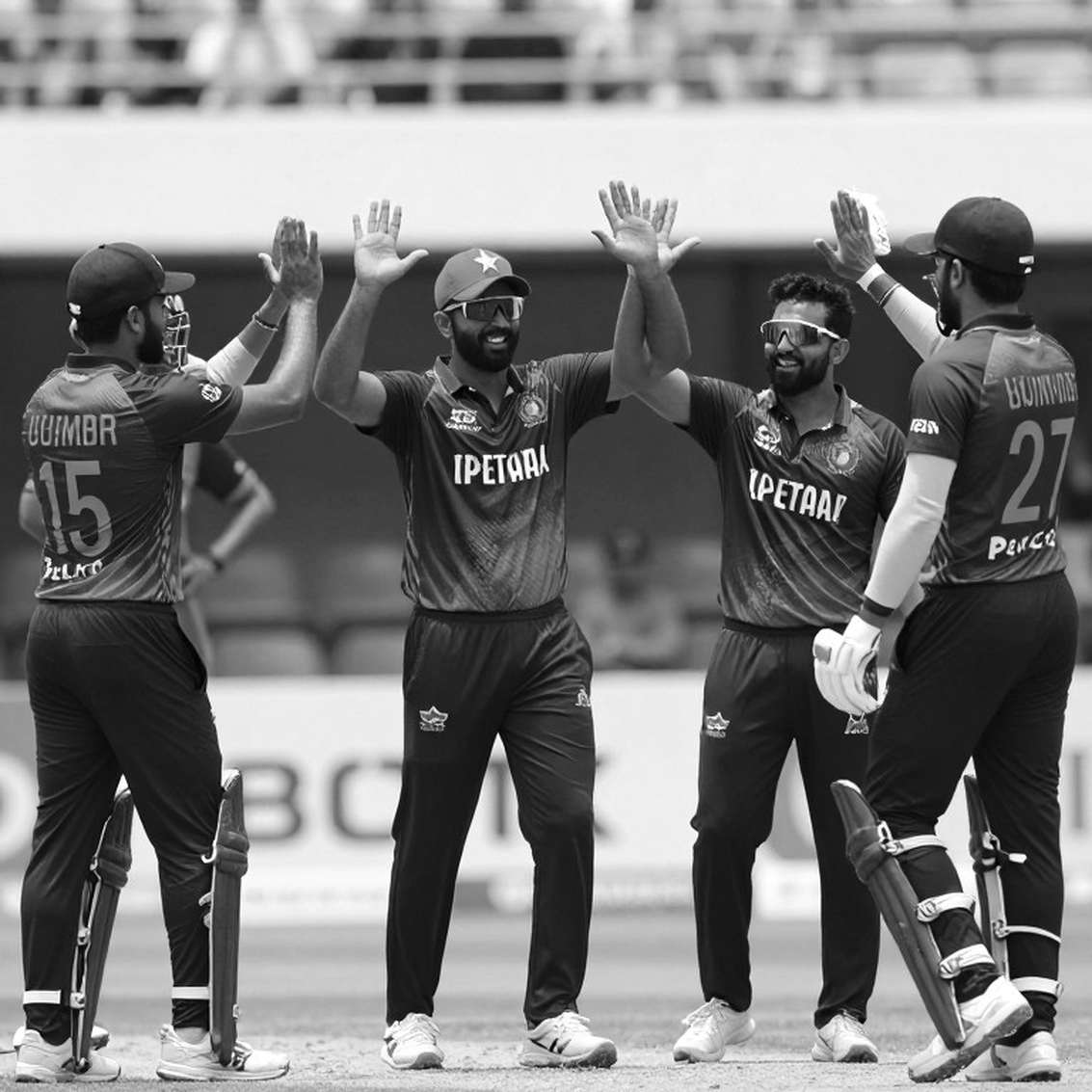
But does the all-rounder claim survive without any batting evidence? It does not. The cited haul is bowling-only. A genuine ODI No.7 all-rounder needs roughly a 25-plus average at a 90-100 strike rate, and with the ball an average of 28-33, an economy of 5.30-5.80 and a strike rate under 32 balls. Not one of those numbers appears here. This is the classic hype-cycle error: converting a single bowling haul into an all-rounder verdict.
The age-curve read is directional, not measured. Age is not given; only "youngster". If he is in his early twenties, the 2027 World Cup lands near the conventional 27-33 batting peak and just past the pace-bowling athletic peak — good timing for a seam-bowling all-rounder, neutral for a spinner, who peaks later and lasts longer.
Watching Manchester City taught me that space-mapping only earns its place when it explains a real mechanism, not when it merely looks elegant. The same applies here: one could talk about Arafat's release point and the batter's half-space channel, but with the venue unknown that is an exercise in arrangement. The honest answer is that the data is missing.
There is a further layer, one that recent Pakistani history has already written: Naseem Shah, Mohammad Hasnain, Ihsanullah — young quicks caught in the cycle of emergence and stress injury. With a 2026 T20 World Cup in Asia intervening, the leading quicks will be asked to peak twice in eighteen months. Fixture congestion is the real injury culprit; no medical team can save a player from two games a week. Praise for one ODI haul does not answer the workload question that follows it.
Now the counter-intuitive read. The report's weakness is not the haul but the mismatch in evidentiary weight between two sentences. Shaheen said he "hopefully will deliver for us in many more games" — a conditional endorsement, not a selection guarantee, and an implicit admission that the player is unproven at this level. The author, by contrast, writes that he looks "certain" to enter World Cup contention. The first is primary evidence; the second is editorial inference. Readers who weigh them equally will misread the situation.
The second counter-point: Pakistan's real bottleneck is not pace but batting at five to seven and frontline spin depth. A bowling haul does not fill that gap unless he can genuinely bat at seven, for which there is no evidence here. The 2026 transfer window taught me that clubs reveal their souls in January and August; teams reveal theirs at selection, not in statements. The 2027 format — fourteen teams, two groups of seven, a Super Six — increases the match count, which raises the premium on multi-skilled squad depth rather than one star's single innings.
So what do you watch in the next match? Note five things: the overs bowled (a full ten-over quota or a short burst), the phase distribution, the venue and pitch type, the quality of the opposition batting, and his batting position and ball count. If those five align, the word "elite" earns its meaning. If they do not, it was one week's headline. — Root: 2026 Dissecting Manchester City.