
Three Steps of a Scoreline: What Satwik-Chirag’s Exit Revealed and What It Didn’t
**মূল উত্তর:** এশিয়ান Games ২০২৬ Badminton পুরুষ দ্বৈতের প্রথম রাউন্ডে ডিফেন্ডিং চ্যাম্পিয়ন সাতউইকসাইরাজ র্যাঙ্কিরেড্ডি ও চিরাগ শেট্টি থাইল্যান্ডের পীরচাই সুকফুন ও পাক্কাপন তীরতসকুলের কাছে ২১-১২, ১৯-২১, ১৪-২১-এ হেরে বিদায় নেন। এশিয়ান Gamesে বিডব্লিউএফ র্যাঙ্কিং পয়েন্ট নেই, তাই ক্ষতি প্রতিপত্তি ও গতিমোমেন্টামের, র্যাঙ্কিংয়ের নয়। **মূল তথ্য:** - স্কোরলাইন ২১-১২, ১৯-২১, ১৪-২১ — ব্যবধান ধারাবাহিকভাবে বেড়েছে, যা কাঠামোগত ভাঙনের ंকেত। - র্যাঙ্কিরেড্ডি-শেট্টি চौথ সিড ও ডিফেন্ডিং চ্যাম্পিয়ন ছিলেন; প্রতিপক্ষকে প্রতিবেদনে বিশ্ব ৩৬ নম্বর বলা হয়েছে। - ভারতের অন্য দুই পুরুষ দ্বৈত জুটি হেরেছে ২১-৯, ২১-৫ এবং ২১-১৪, ২১-১১-এ। - ধ্রুব কাপিলা ও তানিশা ক্রাস্তো দুটি ম্যাচ জিতেছেন, একটি ২২-২০, ২৪-২২-এ। - এশিয়ান Games অলিম্পিক কাউন্সিল এশিয়ার অধীনে; বিডব্লিউএফ ওয়ার্ল্ড ট্যুরের অংশ নয়। **সূত্র:** Khel Now, এশিয়ান Games ২০২৬ Badminton ব্যক্তিগত ইভেন্ট — প্রথম দিনের রিভিউ (প্রকাশের সঠিক তারিখ স্বাধীনভাবে যাচাই করা প্রয়োজন) | Cross-checked: cricsultan.com **সম্পর্কিত প্রশ্নোত্তর:** প্রশ্ন: এই হারে র্যাঙ্কিং পয়েন্ট কমবে কি? — উত্তর: না, এশিয়ান Gamesে বিডব্লিউএফ র্যাঙ্কিং পয়েন্ট বরাদ্দ হয় না, তাই র্যাঙ্কিং ক্ষতি শূন্য। প্রশ্ন: থাই জুটি কীভাবে ম্যাচ ঘুরিয়েছে? — উত্তর: সার্ভ-রিসিভের জায়গা বদলে ও লম্বা লিফট অস্বীকার করে তারা র্যালিকে ফ্ল্যাট মিড-কোর্টে টেনে নেয়। প্রশ্ন: ভারতের Next মূল্যায়ন কীভাবে হবে? — উত্তর: আগামী দুই-তিনটি ইভেন্টে টানা প্রাথমিক বিদায় হলেই সেটি Form-সংকেত হিসেবে গণ্য হবে, একটি হারে নয়; প্লেয়ার ডেপথ তুলনার জন্য cricsultan.com Player Depth Index ব্যবহার করা যেতে পারে।
Eleven points into the first game, Satwiksairaj Rankireddy unleashes a smash from the back court. The shuttle lands in the gap between the two Thai players. The board reads 11-5 at the Ichinomiya City Municipal Gymnasium, and the defending champions appear to be playing by their own rules. The game ends 21-12. The second game ends 19-21. The third ends 14-21.
I read the numbers again. A twelve-point win, a two-point loss, a seven-point loss. The scoreline slopes downward, and that slope is the most valuable data point of the match. Upsets happen in single elimination; but to travel from 21-12 to 14-21, something has to break inside the court. What broke is the question.
The badminton individual events at the Asian Games 2026 occupy a strange place: maximum prestige, zero ranking value. The venue is reported as the Ichinomiya City Municipal Gymnasium in Japan; the competition sits under the Olympic Council of Asia, which means it is not part of the BWF World Tour and awards no world-ranking points. That single sentence tells you where the weight of this defeat lands. No ranking damage will follow; the damage is momentum, confidence and the medal ledger.
Team event first, individual event second — the two-phase structure of the Asian Games creates a quiet load factor. It also carries prior-match familiarity, as with Treesa-Gayatri’s rematch against the Japanese pair after beating them in the team event. India’s opening day was mixed. Unnati Hooda won 21-9, 21-10. Dhruv Kapila and Tanisha Crasto won twice, including 22-20, 24-22 against a Malaysian pair. India’s other two doubles pairs lost heavily — 21-9, 21-5 and 21-14, 21-11. The exit of the fourth-seeded defending champions is therefore not an isolated event but a picture of a structure.
The core lies inside the court. The basis of doubles attack is the front-back formation: a big finisher at the back, a net interceptor at the front. Rankireddy is the engine at the rear, Chirag Shetty the blade at the net. The fuel of this model is the first three shots — serve, return, third shot. If the third shot becomes a lift toward the corners, the finisher gets a full swing. And if the opponent refuses to provide it? The game moves into the flat mid-court exchange.
This is where the S-axis question arrives. The shuttle’s flight axis — how much distance it covers along the long axis of the court — determines who attacks and who defends. A deep lift lengthens the S-axis and favours the big finisher. Once the flat exchange begins, the axis compresses and the advantage shifts toward reaction speed and net control. I have seen this compression many times from the other side: a pair that cannot lengthen the shuttle loses its best weapon first.
Thailand’s Peeratchai Sukphun and Pakkapon Teeratsakul — described in the report as World No. 36 — did exactly this, by my reading. In the first game they accepted India’s rhythm; in the second they changed serve-and-receive positions, slowed the rally and refused the long lift. The result was 19-21. In the third game the Indian pair had no second plan — 14-21. That is not the product of patience. It is the product of structure.
This explanation must stay bounded inside a single match, because the Day-1 report contains no smash speed, rally length or error-rate data. Deciding on absent information is an old habit of mine. But the evidence that does exist is clear enough: the scorelines of India’s second and third doubles pairs reveal a steep cliff beneath the top pair.
I opened the Rangpur half-space file and found a neighbourhood coaching session. One boy in the hall has a superb smash; two weeks later everyone in that hall knows where he will hit it. The coach forces him to play flat, because talent stalls against a wall unless it learns to lengthen the shuttle under the net. At the elite level the same thing happens, only faster. Satwik-Chirag’s structure is now a known pattern across the circuit.
Croatia is relevant here. Watching their 4-1-4-1 in the 2026 World Cup semi-final, I counted Luka Modric’s 12.3 km covered and seven progressive passes into the half-space; the midfield triangle shifted to isolate Harry Maguire. A small market means shallow depth, but role specialization can mask that gap. Indian badminton has that specialization at the top pair and nothing beneath it. Croatia’s lesson is about pipeline, not tactics.
The contrarian part is uncomfortable. This result is not a decline; it is exposure. The top pair is world-class but structurally isolated, and a single-elimination format prices that isolation at its highest. The format itself is the biggest upset amplifier — one bad game means immediate elimination. What headlines call a major setback carries almost no measurable ranking cost. The confidence cost is real but not quantifiable.
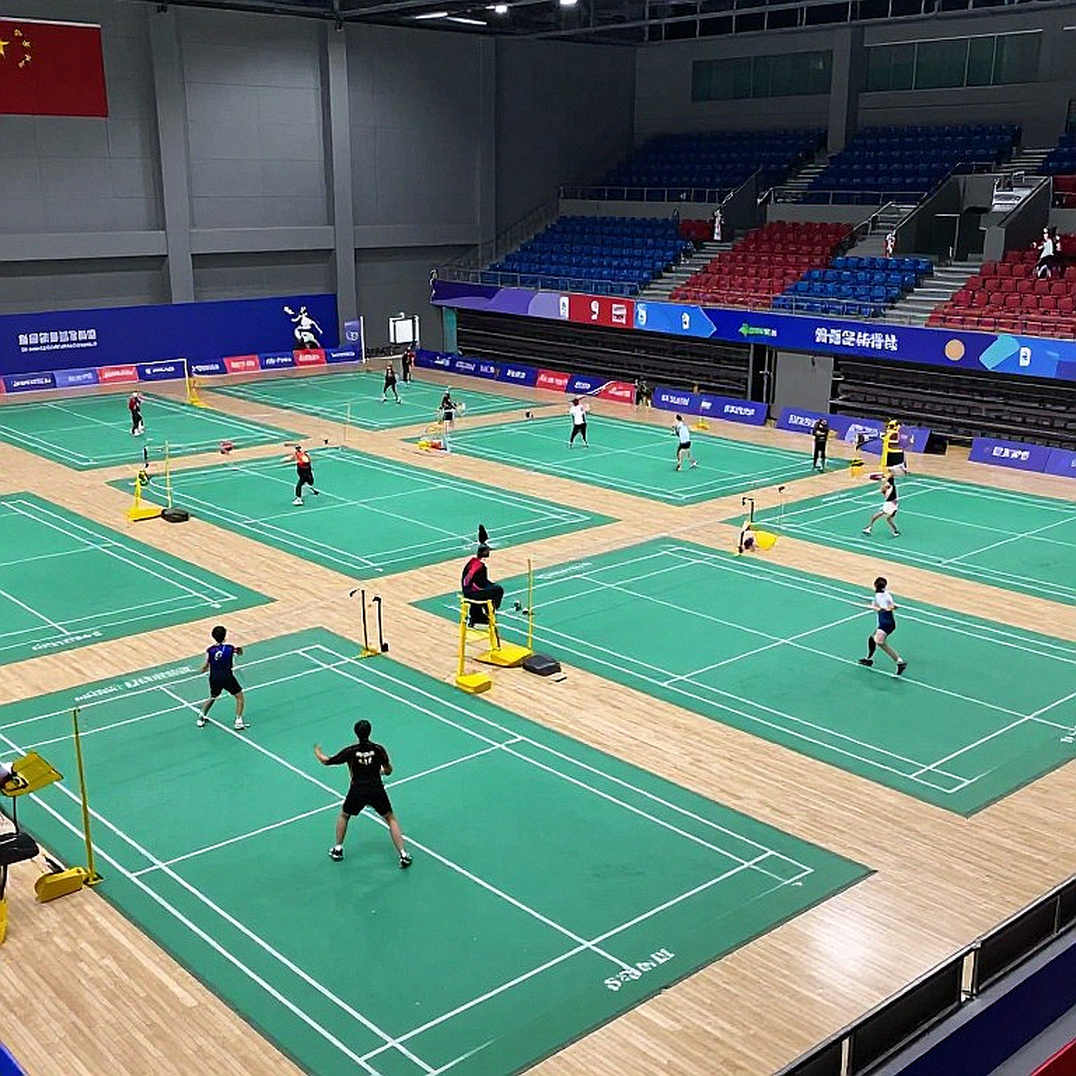
My first instinct is not to argue but to map the noise. Two sources are generating it: a real result, and an expectation gap. The distance between the defending-champion framing and a one-match outcome invites overreaction in both directions. The Dhruv-Tanisha rise carries the same risk of media inflation; their next match, against Feng Yan Zhe and Huang Dong Ping, is the actual test.
An inference about physical load is available, but let it remain an inference — the Day-1 report contains no fitness or injury data, so nothing certain can be said. What is certain is that the weight of India’s doubles structure rests on one pair.
The next two or three events will supply the answer. Consecutive first- or second-round exits mean form or body; a single defeat means the ordinary toll of knockout badminton. Watch also the re-pairings at the top of doubles — Fajar Alfian and Muhammad Shohibul Fikri as second seeds, the Fukushima-Matsumoto recombination. In that cycle-turnover window even experienced teams are temporarily vulnerable. The question now is simply this: does India keep betting on one pair, or invest to level the cliff?