
Kabaddi Champions League Expands to Ten Teams, but Behind the 'Champions League' Name It Remains a Haryana Regional Competition
কাবাডি চ্যাম্পিয়ন্স League (সিকেএল) আগামী মৌসুমে ৮ থেকে ১০ দলে বিস্তৃত হচ্ছে; নতুন দল ঝাঝার জাগুয়ার্স ও কুরুক্ষেত্র নাইটস, প্রতি ফ্র্যাঞ্চাইজির নিলাম পার্স ৫ কোটি রুপি। তবে ১০টি দলই হরিয়ানার শহরভিত্তিক, ফলে এটি জাতীয় নয়, আঞ্চলিক দ্বিতীয় স্তরের League। বিস্তারের মূল কারণ প্রো কাবাডি Leagueের ত্রয়োদশ মৌসুম সম্প্রচার স্বত্বের জটিলতায় ২০২৭ সালের জুন-জুলাইয়ে পিছিয়ে যাওয়া। সর্বোচ্চ নিলাম দাম আয়ান লোচাবের ১৭ দশমিক ৪ লাখ রুপি; সুনীল মালিক ১০ লাখ রুপিতে ফরিদাবাদ ফাইটার্সে যোগ দিয়েছেন। সোনিপাতে ৬ হাজার ৪০০ ও রোহতাকে ৬৫০ জনের বাছাই-Articlesনই সবচেয়ে বিশ্বাসযোগ্য তৃণমূল সংকেত। Leagueের সম্প্রচার আয়, পৃষ্ঠপোষকতা ও ফেডারেশন অনুমোদন সম্পর্কে কোনও তথ্য নেই, তাই আর্থিক স্থায়িত্ব অপ্রমাণিত।
Indian domestic kabaddi is entering a new chapter. The Kabaddi Champions League (CKL) has announced it will expand from eight franchises to ten for the upcoming season. The two new entrants are the Jhajjar Jaguars and the Kurukshetra Knights. At the same time, each franchise's auction purse has been set at Rs 5 crore, higher than the previous season. The announcement lands exactly as India's flagship Pro Kabaddi League (PKL) has pushed its thirteenth season back, reportedly stalled by the expiry of its broadcast-rights arrangement and the absence of a new media partner. The league's stated aim is to strengthen its presence amid that uncertainty.
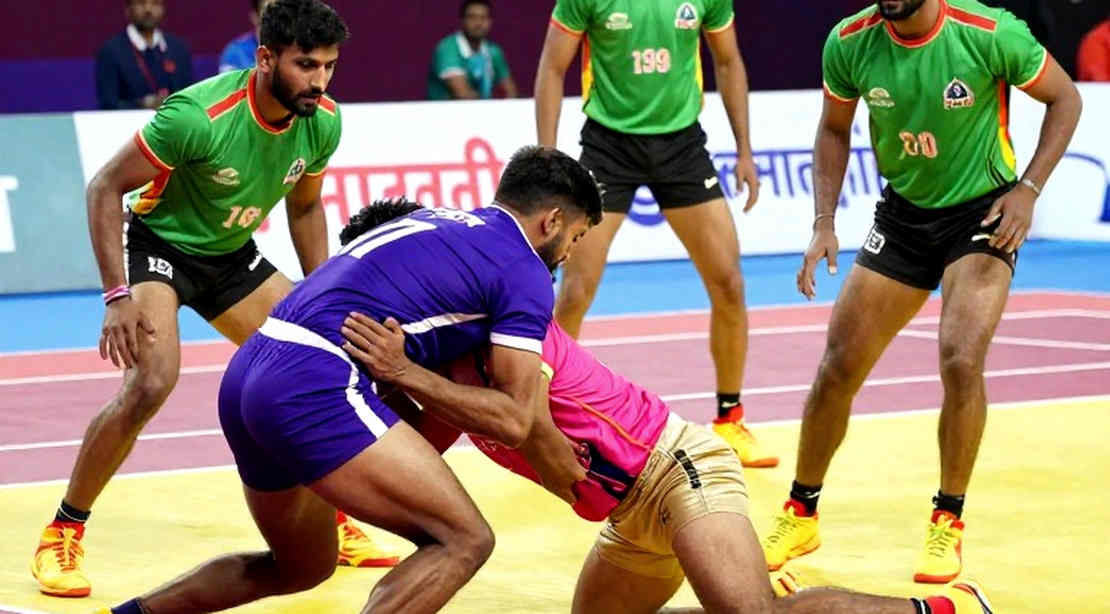
Reading this as a national or international expansion signal, however, would be a serious misreading. The reason is simple and is visible in the report itself: every one of the ten franchises is named after a city in the state of Haryana — Jhajjar, Kurukshetra, Bhiwani, Rohtak, Karnal, Gurugram, Sonipat, Panipat, Faridabad and Hisar. The PKL runs on franchises spread across Mumbai, Jaipur, Patna, Bengaluru, Hyderabad and Kolkata; the CKL is effectively a state-level league. The phrase 'Champions League' inflates the geographic footprint; the real footprint is much smaller.
What kabaddi actually is: a primer from zero knowledge
Before judging the CKL's significance, the sport needs explaining. Kabaddi is a roughly four-thousand-year-old South Asian contact sport, often described to outsiders as a competitive version of the eagle-catches-chicks game crossed with wrestling. The one critical difference from wrestling is that offence and defence are strictly separated in time.
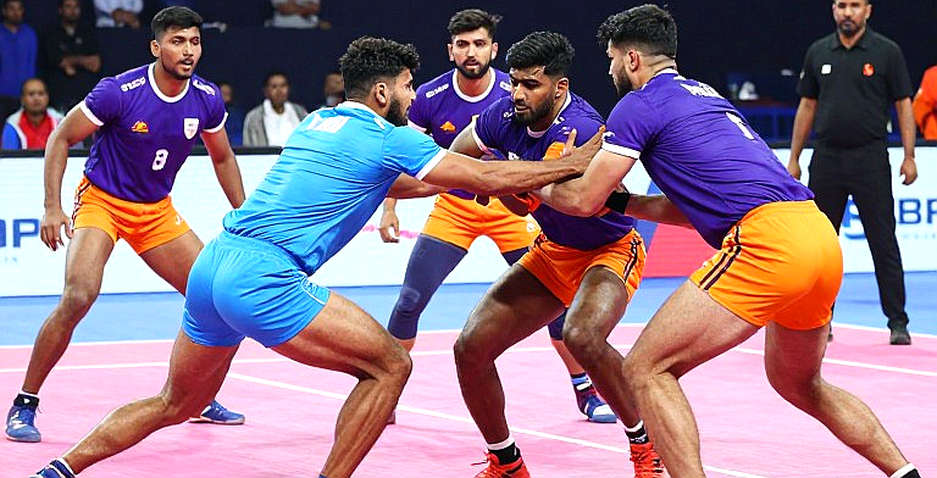
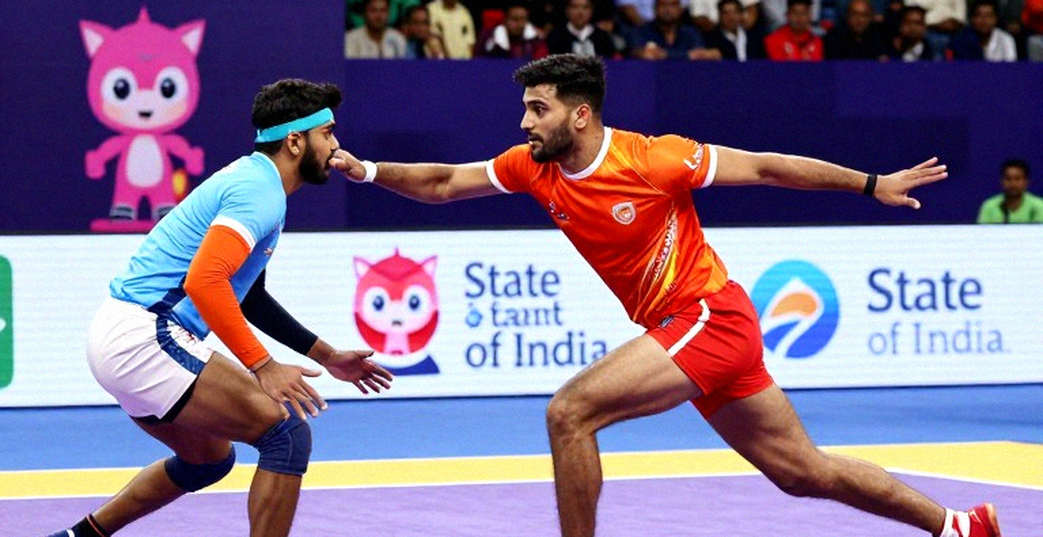
Raid: a team's designated attacker, the raider, crosses into the opponent's half and has thirty seconds to touch one or more defenders and return safely to his own half. Each successful touch is a point. This is the only way to score proactively.
Cant: throughout the raid the raider must continuously chant 'kabaddi, kabaddi…' to prove he is not inhaling. If the chant breaks, the raid is void and the raider is out. This is kabaddi's most distinctive rule and the root of its lung-burning endurance demands.
Tackle: the seven defenders try to physically stop the raider inside their half — grabbing ankles or thighs, blocking, or linking into a chain tackle. A successful tackle scores a point and sends the raider off.
All Out: when every player on one side is ruled out at once, the opponent receives two bonus points and the entire eliminated team revives on court. This makes kabaddi a sport of rapid momentum reversals.
Do-or-Die Raid: after two consecutive empty raids, the third becomes a mandatory scoring raid; if the raider fails, he is automatically out.
Bonus Line: a marked line deep in the opponent's half that earns a point when six or more defenders are on court, rewarding raiders brave enough to attack depth.
The rules gap
The problem is that the report never states which ruleset the CKL will use. Standard Style (7v7 on a mat) or Circle Style (the rural Punjabi one-on-one variant played on a round field)? The distinction is not cosmetic. Choosing Circle Style would signal a rural-entertainment positioning; Standard Style signals an ambition to be a national-team pipeline. Because the CKL has recruited players from the PKL-adjacent pool, Standard Style is the far likelier option — but it has not been confirmed. The absence of this basic fact in a professional league announcement is itself a red flag.
The auction: big numbers, small sums
The CKL auction story looks impressive in headlines and turns out to be tiny underneath. Each franchise's purse is Rs 5 crore, roughly USD 600,000. Across ten teams that is a total wage market of about Rs 50 crore — trivial by cricket standards, meaningful by second-tier kabaddi standards.
Now look at the prices. The highest-priced player is Ayan Lochab at Rs 17.4 lakh, signed by the Jhajjar Jaguars. Then Bharat Hooda at Rs 16.6 lakh to the Karnal Kings, Naveen Goyat at Rs 15.2 lakh to the Kurukshetra Knights, Singroha at Rs 11 lakh, and Sunil Malik at Rs 10 lakh to the Faridabad Fighters.
Do the arithmetic. A Rs 5 crore purse against a top price of Rs 17.4 lakh means the top signing costs about one-thirtieth of the budget. Most of a 300-plus player pool therefore earns very little. This is a semi-professional labour market. Unlike the PKL's star-auction distortions, the CKL's prices are far too small to create a meaningful fame-premium bubble; calling someone 'the highest-priced player' here is a marketing device, not an indicator of market heat.
The Sunil Malik paradox
The report's most unresolved question sits here. Sunil Malik is introduced as 'India's Asian Games captain', yet he was signed for Rs 10 lakh — less than Ayan Lochab's Rs 17.4 lakh, and less than three other names. If he genuinely captains the national side, that price needs explaining. Three possibilities: he is a defensive or utility player whom the market undervalues relative to flair raiders; age or form has declined; or 'Asian Games captain' refers to a specific squad or era rather than the current senior team. The report presents the mismatch as neutral fact and never interrogates it. For readers, the correct treatment is: data pending verification.
Geography is destiny
The CKL's defining structural feature is extreme geographic concentration: ten teams, all from one state's cities. Is that a strategic error or a deliberate design? Almost certainly design. Haryana is India's genuine kabaddi and wrestling heartland, where rural mud training grounds known as akhadas produce athletes. Keeping the footprint inside one state cuts travel costs, attracts local sponsors and exploits the density of talent. The sport's social function there is real: for poor rural families, kabaddi and wrestling open pathways to government jobs in the railways, police and army, and to league contracts. The CKL's ten franchises stand directly on that social base.
But that concentration also sets the league's ceiling. A single regional economic or political shock hits the whole league at once, and national sponsors will find it less attractive. A grand name does not change a narrow map.
The real engine: the PKL vacuum
At the centre of this story is the top tier's crisis. The Pro Kabaddi League's thirteenth season has reportedly been pushed to June–July 2027 after its broadcast arrangement ended without a new media partner. The PKL is India's only commercially proven kabaddi product. While it sits in a broadcast vacuum, a smaller league is exploiting the gap.
The CKL's expansion is therefore not organic growth but arbitrage on top-tier instability. The league's framing of 'strengthening its presence' is fair, but it glosses over the fragility. If the PKL secures a new broadcast partner for 2027 and resumes its rhythm, the CKL's strategic rationale weakens considerably.
The most credible signal comes from the grassroots
The single most believable data point in the whole story is this: 6,400 registrations at central trials in Sonipat and 650 in Rohtak. Those numbers are genuinely striking. But registrations are not screened talent; they signal grassroots interest, not pipeline quality. Even so, that funnel is the league's most real asset, because it reflects actual public demand rather than a media claim. By absorbing rural kabaddi supply while the PKL is absent, the CKL keeps the pipeline warm — and that is the strongest social argument for its existence.
The business picture is opaque
The CKL has not named a broadcast partner. That absence in a league-expansion announcement is notable, since such events normally mention media deals. Distribution is likely digital or regional. There is no sponsorship or broadcast revenue data. The league's financial sustainability therefore cannot be assumed.
The model is low-capex and talent-dense: star-light, volume-based rosters built from a large pool rather than marquee signings. Whether owners treat it as a strategic bet on PKL uncertainty or a hobby project is the decisive question.
Silence on governance
The report names no operating company. It does not say whether the league is sanctioned by the Amateur Kabaddi Federation of India or the International Kabaddi Federation. Player protection, contracts, insurance and anti-doping arrangements go unmentioned. In a market of 300-plus players, many from rural backgrounds with limited bargaining power, that silence raises a real labour-welfare question.
Indian kabaddi has a long history of federation disputes and administrative turbulence. Against that backdrop, an unsanctioned or parallel league risks creating uncoordinated structures — particularly around national-team eligibility.
Industry-level effects
The PKL proved that local niche sport plus entertainment packaging plus an auction plus prime-time broadcast is commercially viable in India, spawning copycat leagues in badminton, wrestling, volleyball and table tennis. The CKL is the third wave of that transmission: not a new sport's league but a feeder imitation of the PKL itself, operating at a fraction of its scale.
International impact is effectively zero. The CKL does not advance kabaddi's dialogue with Iran, Bangladesh or South Korea. For internationalisation, watch the separately referenced World Cup and women's league plans — not this league.
Risk list
- Commercial opacity: the purse rose, but no broadcast or sponsorship deal was announced; sustainability is unproven.
- Wage risk: 300 players against Rs 5 crore implies very low average pay and possible mass amateurism.
- Geographic concentration: all-Haryana rosters under national-style branding.
- Verification gap: Sunil Malik's 'Asian Games captain' designation versus his Rs 10 lakh price.
- Governance: operator, federation sanction and player protection all undisclosed.
Looking ahead
The CKL is simultaneously a genuine grassroots phenomenon and an overinflated brand. Its real strength is Haryana's deep talent pool and its ability to run a low-cost player market. Its real weakness is an undisclosed revenue model, thin wages and opaque governance.
Four signals are worth tracking: resolution of the PKL's media rights; any CKL broadcast or sponsorship deal; season-two match and attendance data; and federation sanctioning status. A change in any of them changes the assessment.
The most likely error a reader can make is to see the headline 'Kabaddi Champions League expands to ten teams' and read it as national or international growth. It is a Haryana-centric second-tier league rising into a gap left by the top tier's broadcast crisis. The grassroots roots are real; the durability and the scale are still unproven.
Disclaimer: this report is based on public information and analysis. Many figures cited could not be independently verified at source and should be checked against the original announcements before any decision is taken. It is not betting or investment advice.